Peppermint Essential Oil: Complete Guide to Safe Use
By Ellen Cooper, independent essential-oil reviewer (hands-on since 2018, no MLM affiliation)
Peppermint is probably the most over-promised oil on the shelf. It genuinely does several useful things – and the single strongest piece of evidence behind it is for a product that isn’t this bottle at all. That distinction trips up almost every guide I read, so let’s get it right: here’s what peppermint oil actually does, what the research really says, and the safety rule that matters most if you have young children or a cat.
Quick answer: Peppermint oil is steam-distilled from Mentha × piperita and is roughly 40% menthol – the compound behind its cooling hit. Best uses: a diluted temple rub for tension headaches, a cooling muscle rub, and a lift when you’re flagging. The famous IBS evidence is for enteric-coated capsules (a swallowed medicine), not the aromatherapy oil – never drink this. Keep it away from infants’ and young children’s faces, and away from cats.
What is peppermint essential oil?
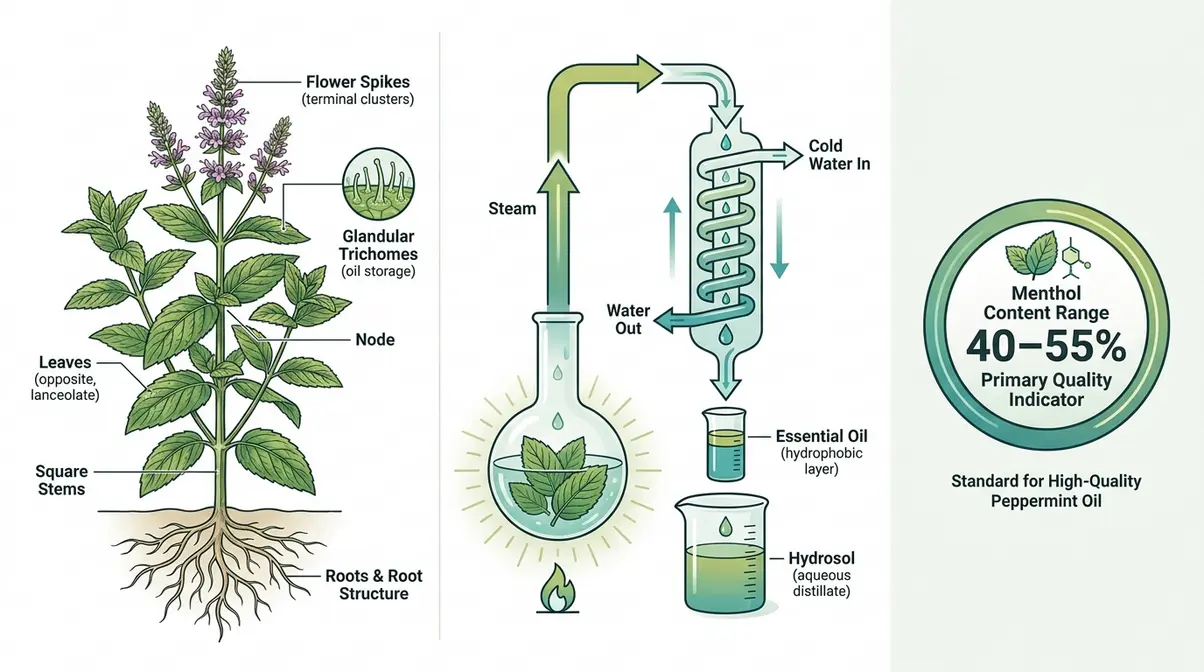
Peppermint oil is steam-distilled from the leaves of Mentha × piperita, a natural hybrid of water mint and spearmint. During distillation the steam carries the volatile compounds up, then condenses into two products: the essential oil, which floats, and the water-based hydrosol beneath it.
Its dominant compounds are menthol (typically around 40%) and menthone. Menthol is the interesting one – it activates the TRPM8 cold receptors in your skin, which is why a diluted peppermint rub feels genuinely cold without changing your actual temperature. That cooling illusion is the mechanism behind most of what peppermint is good for topically.
What the evidence actually supports
Digestive symptoms – strong evidence, but for a different product
This is the claim you’ll see everywhere, and it’s the one most often mis-stated. A 2018 review in Alimentary Pharmacology & Therapeutics found that placebo-controlled studies support peppermint oil for irritable bowel syndrome, with five meta-analyses showing effectiveness – one calculating a number-needed-to-treat of just 3 (Chumpitazi et al., Aliment Pharmacol Ther, 2018, retrieved 2026-07-22).
But read what was actually studied: enteric-coated peppermint oil capsules – a swallowed preparation designed to survive the stomach and release in the intestine. That is a medicinal product, not the bottle of aromatherapy oil in your cupboard. Rubbing peppermint on your stomach or diffusing it has not been shown to do this, and you must never drink essential oil to chase the effect. If IBS is your interest, that’s a conversation with your doctor about the capsules.
Tension headaches – the use I’d actually vouch for
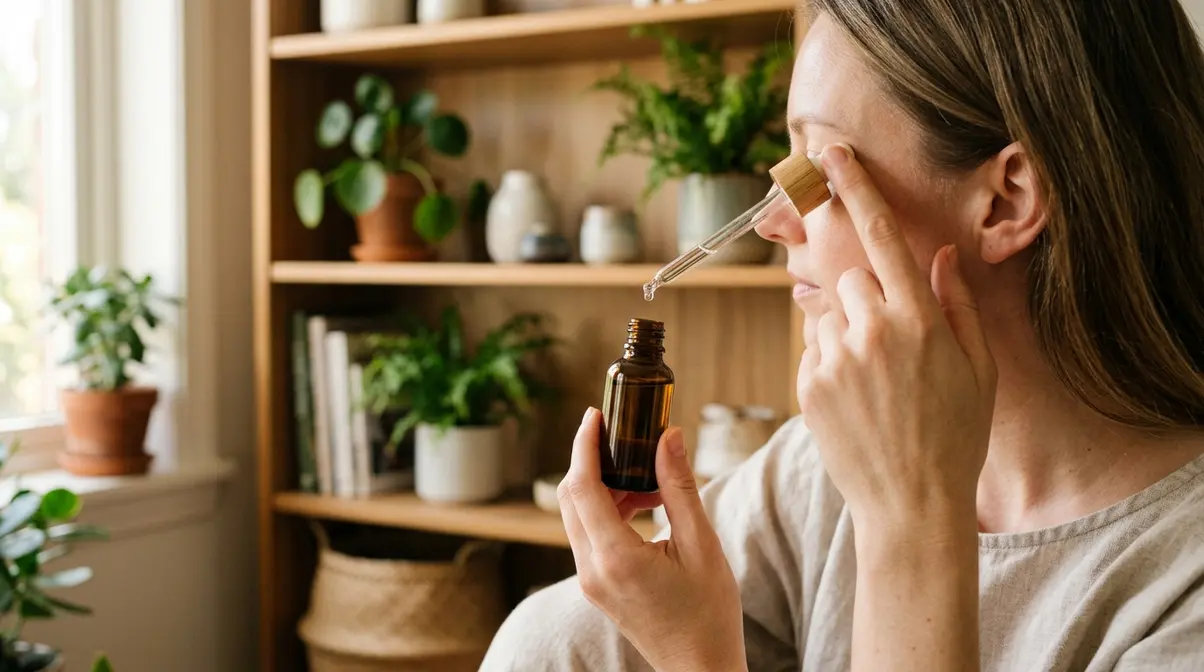
Diluted peppermint applied to the temples and the back of the neck is a long-standing remedy, and the mechanism is plausible: menthol acts as a cooling counter-irritant that appears to interrupt pain signalling. It’s the peppermint use I reach for most. We go deeper in our guide to essential oils for headaches.
Nausea and alertness – genuinely mixed
Here I’ll be blunt where most guides won’t. On nausea, the same 2018 review found the results inconsistent: some aromatherapy studies showed a benefit after surgery, but two randomised double-blind trials found peppermint inhalation was no better than saline or simple controlled breathing. On alertness, the evidence that sniffing peppermint sharpens cognitive performance is preliminary. Both are worth a try – neither is settled.
Hair growth – promising, but it was mice

The study behind every “peppermint beats minoxidil” headline is real, and it’s worth knowing exactly what it was: a 2014 paper in Toxicological Research in which 3% peppermint oil applied to C57BL/6 mice produced about 92% hair regrowth over four weeks versus 55% for minoxidil, apparently by activating the dermal papilla (Oh, Park & Kim, Toxicological Research, 2014).
That’s a striking animal result – and it has not been replicated in a human trial. A 3% scalp massage is cheap and low-risk if you want to try it, but treat “better than minoxidil” as a mouse finding, not a promise about your head.
Peppermint for pests – the short version
Peppermint does repel some insects: its menthol interferes with the chemoreceptors bugs navigate by. The honest caveat is duration – plant-oil repellents wear off far faster than DEET, so you’re re-applying constantly, which is why extension services don’t recommend them where real protection matters (Penn State Extension).
We cover this properly elsewhere rather than repeat it here: see essential oils for mosquito repellent and essential oils for cockroaches for what works, what doesn’t, and the recipes.
Peppermint bottles worth a look:
Popular options on Amazon
As an Amazon Associate we earn from qualifying purchases, at no extra cost to you. Product details and availability are subject to change – check the live listing on Amazon.
| Image | Product | Best for | Buy |
|---|---|---|---|
 | Mighty Mint Peppermint Oil Insect Repellent Spray | Ready-made pest spray | Buy on Amazon |
 | Majestic Pure Essential Oil with Glass Dropper | Glass dropper bottle | Buy on Amazon |
 | Handcraft Blends Peppermint Essential Oil | Large 4 oz value | Buy on Amazon |
 | Organic Peppermint Essential Oil 30 ml | Organic, hexane-free | Buy on Amazon |
 | GreenHealth Peppermint Essential Oil | Bulk 16 oz jug | Buy on Amazon |
Affiliate links · details and availability change · check the live Amazon listing.
How I use it
- Headache roller – 2% in a 10 mL roller (about 4 drops) with jojoba, rolled on temples and the back of the neck. Keep it well away from your eyes; menthol vapour stings.
- Cooling muscle rub – 5 drops peppermint + 4 eucalyptus in 30 mL of carrier, for legs and shoulders after exercise.
- Afternoon lift – 3-4 drops in the diffuser, or a drop on a personal inhaler when I’m flagging.
- Steam for a stuffy nose – 1-2 drops in a bowl of hot water, eyes closed, kept brief. Adults only.
- Scalp massage – 3% in a carrier, massaged in and left 20 minutes before washing out.
Peppermint is potent – it’s one of the oils where a single drop genuinely is enough. New to dilution? See what a carrier oil is and our dilution guide.
Safety – and this one has real teeth
Peppermint is not a gentle oil, and two of its cautions are serious enough that I’d rather over-state them.
- Infants and young children – never apply peppermint or put it near the face of a baby or young child. Menthol can trigger breathing difficulties in the very young. Johns Hopkins recommends caution with essential oils around children generally (Johns Hopkins Medicine).
- Cats – cats can’t metabolise many oil compounds; peppermint is one to keep away from them entirely. Diffuse only where a cat can leave the room.
- Never ingest it. The IBS research is on enteric-coated capsules, a regulated product – not this oil. The FDA regulates aromatherapy oils as cosmetics, not as something to swallow.
- Reflux – peppermint can relax the lower oesophageal sphincter, so it may worsen GERD symptoms for some people.
- Always dilute and patch-test. Neat peppermint can burn, and it’s an easy oil to overdo.
- Pregnancy – check with your provider first.
For an overview of what’s known and not known about essential oil safety, the NIH’s NCCIH page on peppermint oil is a level-headed starting point.
Buying a decent bottle
- Botanical name – it should say Mentha × piperita. “Mint fragrance oil” is a synthetic, not an essential oil.
- Dark glass, steam-distilled – light degrades the oil; plastic isn’t suitable for storage.
- GC/MS testing – reputable brands publish a batch report showing the actual composition. It’s the closest thing to real proof of purity.
- Ignore “therapeutic grade” – it’s marketing language, not an independent certification.
Frequently asked questions
What is peppermint essential oil good for?
Its most reliable everyday uses are a diluted temple rub for tension headaches, a cooling rub for sore muscles, and a quick lift when you’re tired. The strong digestive evidence is for enteric-coated capsules, not the aromatherapy oil.
Can you drink peppermint essential oil for IBS?
No. The IBS research used enteric-coated capsules designed to release in the intestine – a different, regulated product. Never swallow aromatherapy essential oil; talk to your doctor about the capsules instead.
Does peppermint oil really regrow hair?
The well-known 2014 study showing peppermint outperforming minoxidil was done in mice, and it hasn’t been replicated in humans. A 3% scalp massage is low-risk to try, but the evidence isn’t there yet for people.
Is peppermint oil safe for babies and cats?
No to both. Never apply peppermint to, or near the face of, an infant or young child – menthol can cause breathing problems. And keep it away from cats, which can’t process many oil compounds.
How much peppermint oil should I use?
Dilute to 2% for general skin use – about 12 drops per 30 mL of carrier, or 4 drops in a 10 mL roller. Peppermint is strong; one drop usually does more than you expect.
The ratios above are the short version. If you want the reasoning, the carrier comparison and the arithmetic behind those drop counts, we have a full guide to which carrier oil to use and at what ratio.
The bottom line
Peppermint earns its place on the shelf – just for the right reasons. A 2% roller on your temples for a tension headache and a cooling rub for tired legs are the uses I’d stand behind. The IBS evidence belongs to a swallowed capsule, not this bottle; the hair-growth headline belongs to mice. Dilute it, keep it away from small children and cats, and it’s one of the most useful oils you can own.
Medical disclaimer: This article is general information, not medical advice, and does not diagnose or treat any condition. Peppermint essential oil is not a treatment for IBS or hair loss. Never ingest essential oils or apply them undiluted, keep them away from infants, young children and cats, and check with a qualified professional before use during pregnancy or alongside a medical condition.