
Essential Oils for Cockroaches: Do They Actually Work?
By Ellen Cooper, independent essential-oil reviewer (hands-on since 2018, no MLM affiliation)
You’ve probably heard that peppermint oil keeps cockroaches away – and it’s one of those claims that’s half true in a way that really matters. So I read the actual studies and tested a few sprays around my own kitchen, and here’s the honest, complete answer: a handful of oils genuinely repel roaches and make your home a place they’d rather avoid, but almost none of them kill an established infestation. If roaches scatter when you flip the light on, a spray bottle alone won’t fix it. Where oils shine is prevention – keeping them out in the first place, and keeping a treated home from being re-invaded. Let me walk you through which oils work, exactly how to use them, and where the honest line is between “deterrent” and “call a professional.”
Quick answer: In the one lab study that compared five oils, oregano was the strongest cockroach repellent, oregano and rosemary killed the most nymphs, and peppermint, the oil most people reach for, was the weakest at low doses. Most just repel – they create a scent barrier roaches avoid – while oregano and rosemary have shown some actual insecticidal effect at strong concentrations. For an active infestation, oils are a supplement to real pest control, not a replacement. And mind your pets: several of these oils are toxic to cats.
Which essential oils do cockroaches hate most?
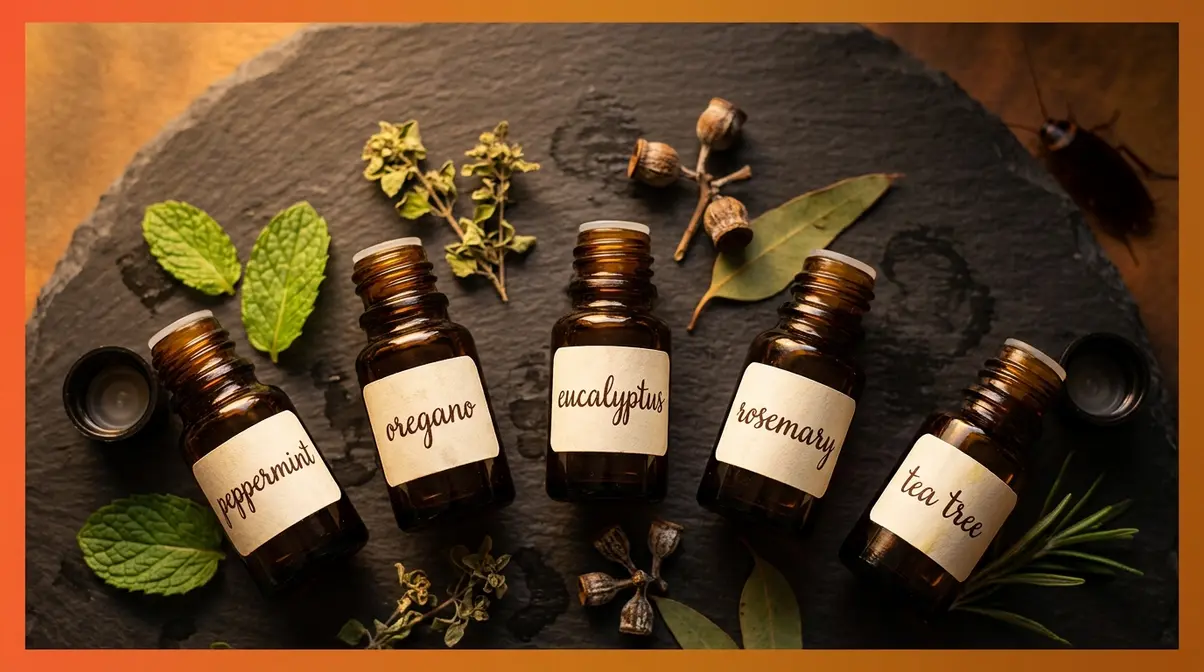
Roaches navigate almost entirely by smell, which is exactly why strong aromatic oils bother them – the scent overwhelms the trails and food cues they rely on. Five oils come up again and again in the research, and they don’t all work the same way.
| Oil | What it does | Evidence |
|---|---|---|
| Peppermint | Strong repellent (scent barrier) | Good – the most-tested |
| Oregano | Repellent + some insecticidal at strength | Moderate |
| Rosemary | Repellent + some insecticidal | Moderate |
| Eucalyptus | Repellent, broad-spectrum | Moderate |
| Tea tree / cedarwood | Repellent (toxic to pets – caution) | Limited |
Peppermint – popular, but weaker than its reputation
This is the one most people reach for, and roaches do avoid the menthol scent. The evidence is thinner than its reputation, though: in the lab study that compared five oils, mint oil was the weakest at low doses (about 5% of nymphs killed at 2.5%), while oregano repelled best (Sharififard et al., 2016). The honest caveat is the one nobody prints – at the concentrations you’d realistically use at home (say 10-20 drops per cup of water), it deters roaches; it doesn’t kill them. That’s great for prevention, useless for a colony already in your walls.
Oregano and rosemary – the ones with a bit of bite
These two are the closest thing to an insecticidal effect among the roach oils. Lab work has shown oregano and rosemary can actually harm roaches, not just repel them – but usually at concentrations higher than a casual kitchen spray, and against particular species (repellency study, PMC; insecticidal-activity study, PubMed). Think of them as a stronger deterrent to fold into a blend, not a standalone exterminator.
Eucalyptus, tea tree and cedarwood – the broad-spectrum backup
These round out a repellent blend and have the bonus of bothering other household pests too. Tea tree and cedarwood are effective but need real caution around pets (more on that below), so I lean on eucalyptus for a general-purpose kitchen spray.
Repel vs. kill – the distinction that matters
Here’s the thing most guides gloss over, and it’s the single most useful idea in this whole article. At home concentrations, essential oils are repellents – they make an area unwelcoming so roaches go elsewhere. A few (oregano, rosemary) show insecticidal effect, but only at strengths beyond a normal spray. So if you’re seeing roaches during the day, finding egg cases, or spotting droppings, no amount of peppermint will clear that – you have an established population, and oils are the wrong primary tool. Use them to prevent and to keep a professionally-treated home roach-free, and use baits, traps or a pro to actually eliminate a colony.
The peppermint oils I use for the prevention spray above:
Recommended on Amazon
As an Amazon Associate we earn from qualifying purchases, at no extra cost to you. Product details and availability are subject to change – check the live listing on Amazon.
| Image | Product | Best for | Buy |
|---|---|---|---|
 | Mighty Mint Peppermint Oil Insect Repellent Spray | Ready-made roach spray | Buy on Amazon |
 | Majestic Pure Essential Oil with Glass Dropper | Ready-made roach spray | Buy on Amazon |
 | Sun Essential Oils | Budget peppermint oil | Buy on Amazon |
 | Handcraft Blends Peppermint Essential Oil | Bulk peppermint | Buy on Amazon |
Affiliate links · details and availability change · check the live Amazon listing.
How to use essential oils for cockroaches: 3 recipes
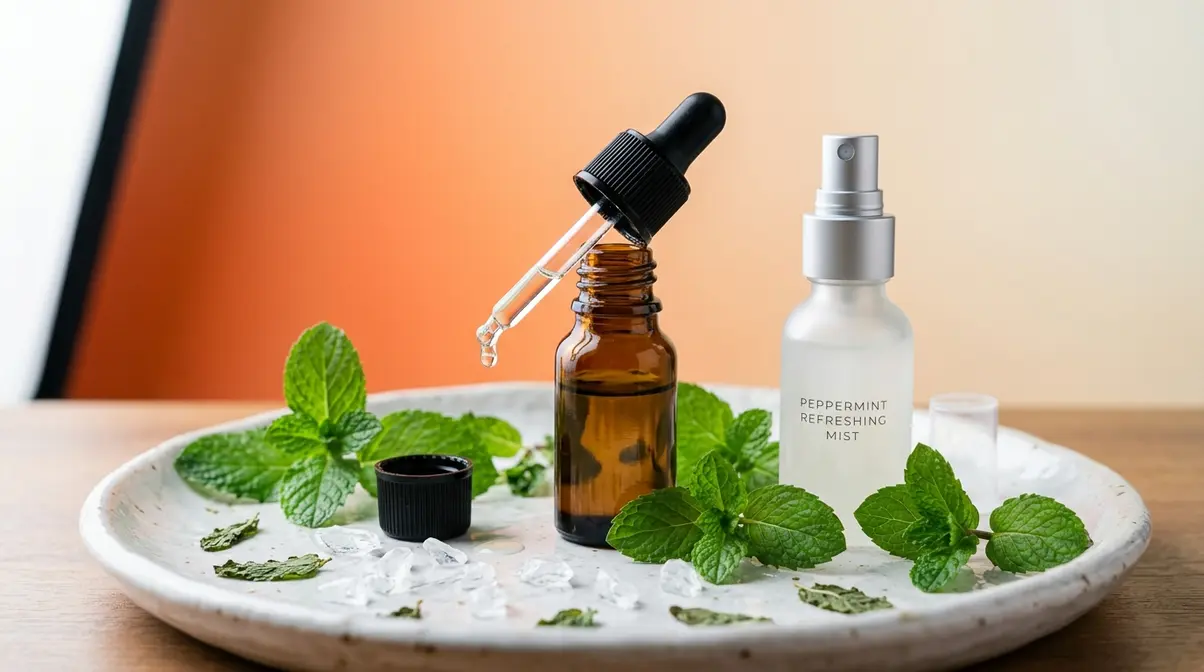
Recipe 1 – basic peppermint spray (prevention). 15-20 drops peppermint oil in a cup of water with a small squirt of dish soap (it helps the oil mix), in a spray bottle. Shake well and spritz along baseboards, under the sink, behind the stove, near drains and door gaps. This is your everyday barrier.
Recipe 2 – multi-oil power spray (stronger deterrent). 10 drops peppermint + 5 drops oregano + 5 drops eucalyptus in a cup of water with dish soap. The oregano adds bite; use this on the worst entry points. Keep it off food-prep surfaces and away from pets.
Recipe 3 – cotton-ball method (hard-to-reach spots). Soak cotton balls in diluted peppermint oil and tuck them into cupboard corners, behind appliances, and in the backs of drawers – the places a spray can’t reach and roaches love. Refresh them every few days.
For diluting oils generally, our dilution guide and beginner’s guide help.
How often should you reapply?
Essential-oil scent fades, and with it the deterrent. Plan to refresh sprays every 2-3 days, and sooner in a warm, well-ventilated kitchen where the aroma dissipates faster. Cotton balls need swapping on a similar schedule. Consistency is doing most of the work here – a barrier that’s allowed to fade is an open door.
The unglamorous half: remove the invitation
Oils reduce the welcome, but roaches come for food, water and shelter – so the spray only works if you also close those off. Fix leaks and dry the sink at night (they need water more than food), seal crumbs and store food in tight containers, take the bins out, and caulk the gaps and cracks they travel through. I think of it as a two-part system: cleanliness and sealing remove the reason to come; the oils make the perimeter unpleasant if they try anyway.
Are essential oils safe around pets and children?
- Cats are the big concern – they can’t process many oil compounds, and peppermint, tea tree, eucalyptus and citrus are all toxic to them. Spray where a cat can’t lick it, keep concentrations low, and check with a vet before regular use.
- Dogs are more tolerant but still at risk from tea tree, clove and strong concentrations – use the same caution.
- Children – store oils out of reach, keep sprays off surfaces little hands touch, and wipe down any counter you’ll prep food on.
When essential oils aren’t enough – and what actually works
If you’re seeing roaches in daylight, finding oval egg cases (oothecae), or noticing a musty smell and droppings, that’s an active infestation – and it’s worth taking seriously, because roaches spread allergens and can worsen asthma. What actually eliminates them is a combination roaches can’t out-breed: gel baits (they carry the poison back to the nest), insect growth regulators, and sanitation – and for a widespread problem, a pest-control professional. Once it’s under control, bring the essential oils back in to help keep them from returning.
Do these oils repel other household pests, too?
Yes – which is a nice bonus for a kitchen spray. Peppermint also deters ants and spiders, cedarwood bothers moths and some fabric pests, and eucalyptus and tea tree have broad repellent activity. So the same peppermint-based barrier you set for roaches quietly pushes back on several other uninvited guests at once.
Frequently asked questions
What smell do roaches absolutely hate?
In lab tests oregano repelled roaches best, with rosemary and peppermint also studied; eucalyptus has broad repellent activity. Roaches navigate by scent, so these strong aromas disrupt them and push them to look elsewhere.
What is the best oil to get rid of cockroaches?
For prevention, oregano has the strongest repellent evidence; peppermint is the popular choice but tested weakest at low doses. Oregano and rosemary have shown some insecticidal effect at stronger concentrations, but no oil reliably eliminates an infestation on its own.
What gets rid of roaches permanently?
A combination: gel baits (which reach the nest), sanitation and sealing entry points, and professional treatment for a serious infestation. Essential oils help prevent and deter, but they won’t permanently clear an established colony.
Is peppermint roach spray safe for pets?
Use caution – peppermint and several other repellent oils are toxic to cats and can affect dogs. Keep concentrations low, spray where pets can’t reach, and check with your vet before regular use.
Do essential oils actually kill cockroaches?
At normal home concentrations, no – they repel. A few (oregano, rosemary) can harm roaches at high strengths in lab settings, but for practical purposes treat oils as a deterrent, not a killer.
Your simple roach plan
Essential oils are a real, if modest, tool against cockroaches as long as you use them for what they actually do: repel and prevent. Tonight, do three things: mix a peppermint spray and hit the baseboards and entry points, dry the sink and seal the obvious food and gaps, and tuck a few oil-soaked cotton balls into the corners a spray can’t reach. Refresh it every couple of days, mind your pets with the stronger oils, and if roaches have already moved in, don’t rely on scent alone – bring in baits or a professional, then let a repellent oil help keep the door shut. For mice, ants, spiders and the other household pests, see our guide to essential oils for bug repellent.
Safety note: This article is general information, not veterinary advice. Several repellent oils are toxic to cats and dogs – keep concentrations low, spray out of pets’ reach, and consult a vet before regular use around animals. Essential oils repel cockroaches but do not eliminate an infestation; use professional pest control for an active problem.