Patchouli Essential Oil: Benefits, Uses & Safety Guide
By Ellen Cooper, independent essential-oil reviewer (hands-on since 2018, no MLM affiliation)
Patchouli has the worst reputation of any oil I keep on the shelf, and almost all of it is undeserved. People remember it as the cloying smell of a market stall in 1997, which tells you how it was used rather than what it is. Two drops of a decent bottle in a blend is warm, dry and faintly sweet. Six drops is the market stall. That gap – between the oil and the way people meet it – is most of what this guide is about.
Quick answer: Patchouli is a thick, earthy base note distilled from the fermented leaves of Pogostemon cablin. Its best-supported use is skin – a 2025 dermatology review lists it among oils used for acne and eczema. Its calming reputation rests mostly on animal research, not human trials. Dilute to 0.5-1% on the face, 1-2% on the body, start at one drop in any blend, and keep it away from cats.
How I put this together: every health claim below comes from a peer-reviewed paper I read at the source, and I say plainly when a finding comes from rats or a petri dish rather than people. I have blended with patchouli for years, but I have not lab-tested the bottles listed further down.
What is patchouli essential oil?
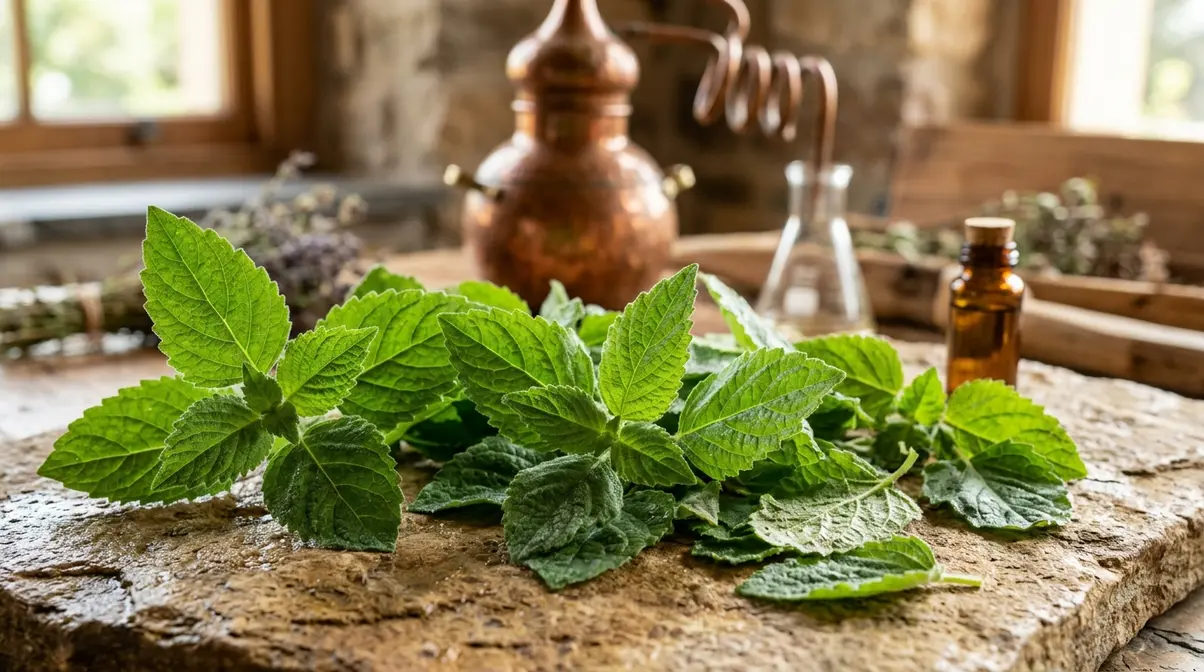
It is a dark, syrupy oil steam-distilled from the dried, fermented leaves of Pogostemon cablin, a shrub in the mint family native to Southeast Asia. The fermentation step is the interesting part. Fresh leaves give something sharp and green; letting them break down first is what produces the deep, wine-ish quality people either love or run from.
Chemically the oil is dominated by patchoulol, also called patchouli alcohol – a sesquiterpene that carries both the smell and most of the studied activity. A 2015 review in Molecules catalogued more than 140 compounds in the plant, with patchouli alcohol the principal one. Indonesia grows most of the world’s supply: a 2023 review, also in Molecules, puts the country’s share at roughly 90%.
It is a cheap oil by essential-oil standards, and a slow-moving market – one industry tracker, Persistence Market Research, values global patchouli oil at US$109.6 million in 2026, rising to US$150.2 million by 2033. That matters to you only in one way: there is no shortage, so you never need to pay a premium price for it.
What does patchouli actually smell like?
Earthy and woody first, with a musky sweetness underneath and a faint spice at the edge. Not fresh-sawn timber – more like dry wood that has been sitting in a warm room. Aged stock turns almost balsamic, which is why perfumers reach for it as a fixative: it evaporates slowly and drags everything above it along for the ride.
The comparison I find most useful is vetiver. Vetiver smells like wet soil; patchouli smells like the dry wood next to it. Both sit at the bottom of a blend, but patchouli brings warmth where vetiver brings damp.
My one practical rule: begin with a single drop. This is a base note, not a headline. At one or two drops it holds a blend together and you barely notice it directly. At five it flattens everything else in the bottle, and that is the smell most patchouli sceptics are actually objecting to.
Dark or light – does the difference matter?
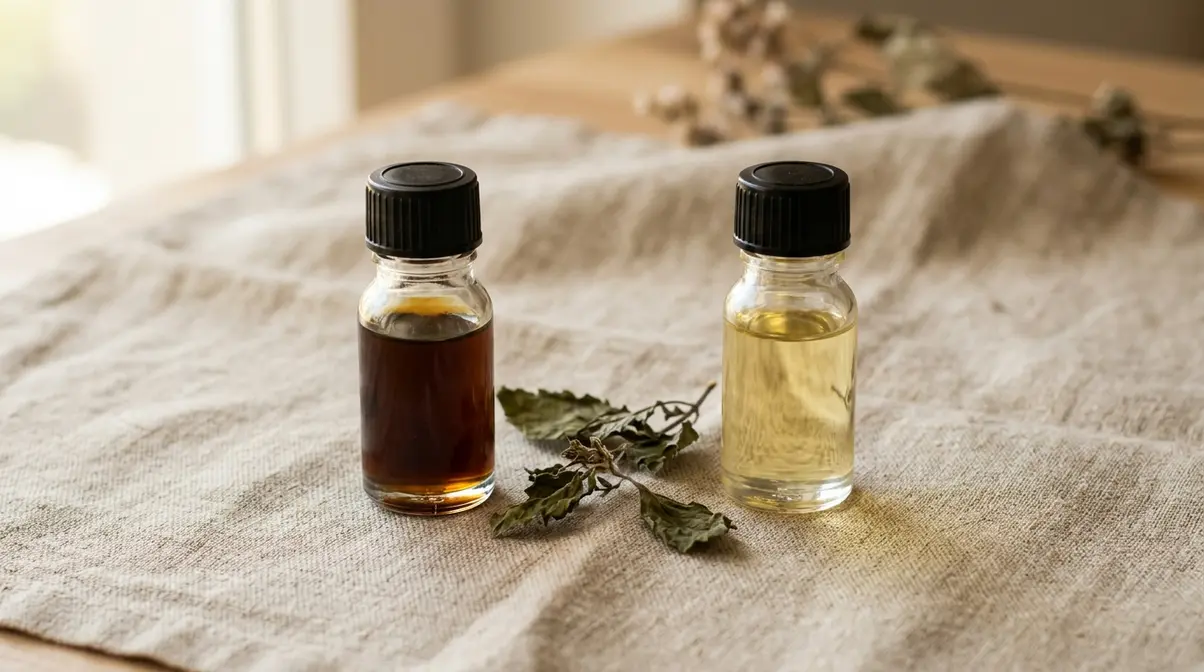
Yes, though less than the labels suggest. Dark patchouli has been aged in iron vessels after distillation, which deepens both colour and aroma into that rich, balsamic register perfumers want. Light patchouli skips the ageing: paler, greener, less imposing.
| Dark | Light | |
|---|---|---|
| Colour | Deep amber to brown | Pale yellow to gold |
| Aroma | Rich, balsamic, wine-like | Fresher, slightly green |
| Made by | Iron-vessel ageing | Distillation alone |
| Suits | Perfume, incense, fixative work | Skincare, everyday blending |
If you are buying your first bottle for general use, take the lighter grade – it is far more forgiving. Reach for dark only when you specifically want a fragrance to last on skin. Plenty of sellers list neither, in which case assume it is light and ask.
What blends well with it?
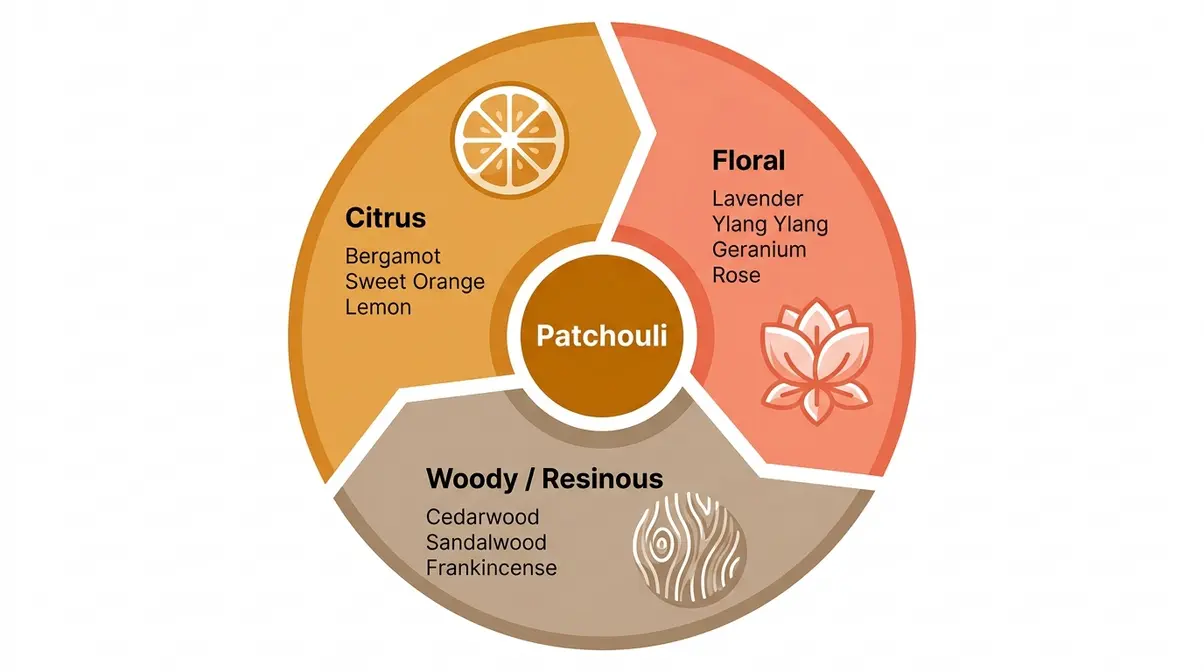
Three families, three different results. Citrus – bergamot, sweet orange, lemon – lifts the earthiness and is the easiest place to start. Florals such as lavender, geranium and ylang ylang round off its edges. Woods and resins including cedarwood, sandalwood and frankincense drive it further down into something meditative.
Keep it to roughly a fifth of any blend. Two I come back to:
- Evening diffuser blend: 3 drops bergamot, 2 cedarwood, 1 patchouli, in 100 ml water. Run it half an hour, not all night.
- Pulse-point roller: 3 drops bergamot, 2 ylang ylang, 1 patchouli in 10 ml fractionated coconut oil – about 3%, fine for wrists and neck, not for the face.
What does the research actually show?
More than folklore, less than the marketing. Below is what I could verify at the source, sorted by how much weight it will bear.
Skin: the best-supported use
A 2025 review of essential oils in dermatology, published in the Journal of Integrative Dermatology, states that patchouli oil “has been used in the treatment of various dermatologic conditions including in the treatment of acne and eczema”, and that it “has demonstrated pharmacological benefits including antioxidant, antimicrobial, and sedative properties”. A 2025 review in Plants reports the same antimicrobial and anti-inflammatory activity from a second, independent group.
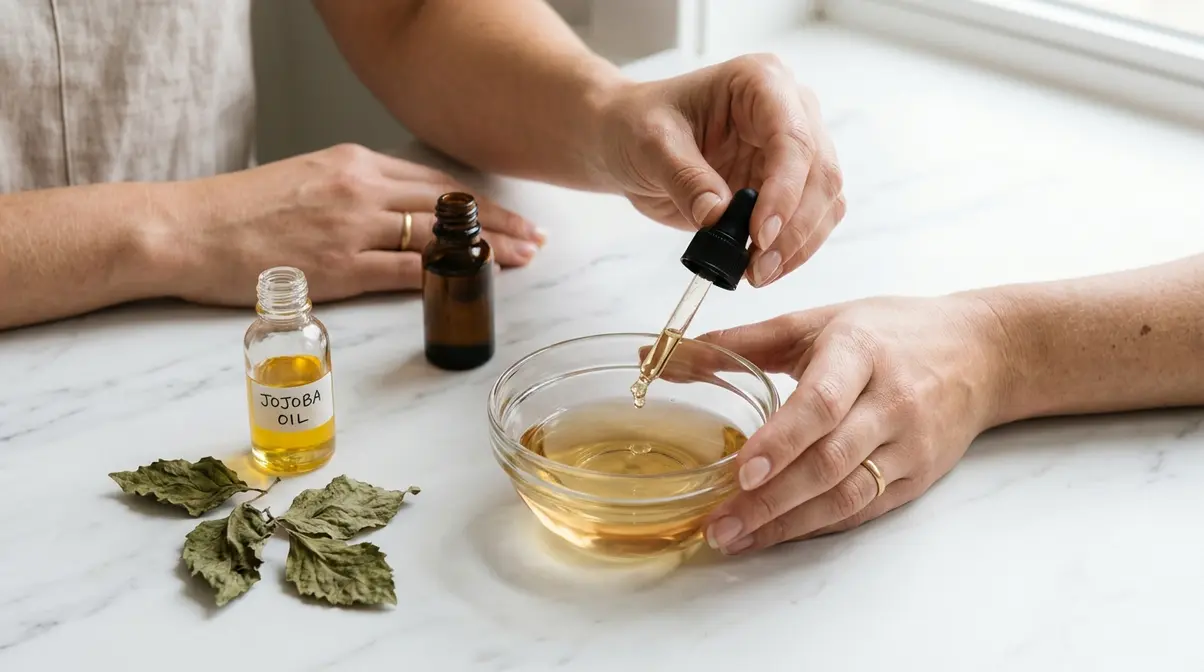
Read that carefully, because it is a description of use and laboratory activity – not a clinical trial showing patchouli clears acne. It is a reasonable oil to fold into a routine at 1% in jojoba, which is non-comedogenic and will not block pores. It is not a treatment for a diagnosed skin condition, and the same Plants review says outright that specific therapeutic applications “require scientific validation and standardisation”.
Mood: a rat study, read honestly
This is where most patchouli articles quietly overreach, so here is the finding in full. A 2022 study in Pharmaceuticals gave rats a vacuum-distilled fraction of patchouli oil containing 60.66% patchouli alcohol, then ran a tail-suspension test. The treated group showed a significant drop in immobility time, second only to fluoxetine, alongside raised dopamine.
That is a genuine result and I am not dismissing it. But three things separate it from “patchouli lifts your mood”: the subjects were rats, the material was a concentrated laboratory fraction rather than the oil in a shop bottle, and it was administered – not inhaled from a diffuser. Nobody has shown the same effect in people sniffing patchouli in a living room.
What can be said plainly is that patchouli has a long documented history in aromatherapy for stress and low mood – the 2015 Molecules review records exactly that traditional use. If diffusing it helps you wind down, that is a good enough reason to use it. Just do not let anyone sell it to you as an antidepressant.
Hair and dandruff: promising, and preclinical
A 2025 paper in Narra J formulated a hair tonic from light-fraction patchouli oil and tested it against Malassezia globosa, the yeast behind most dandruff. At 1.5% the formulation produced a 31.18 mm zone of inhibition, beating ketoconazole at 21.72 mm.
Striking numbers – and a laboratory dish plus rabbit skin, not a human scalp trial, in a hair tonic rather than a shampoo. Worth knowing, not worth abandoning your dermatologist for. If you want to try it, a scalp massage of 2 drops patchouli and 2 drops rosemary in a tablespoon of jojoba, left 20 minutes before washing, is a sane version of the idea.
Using patchouli without overdoing it
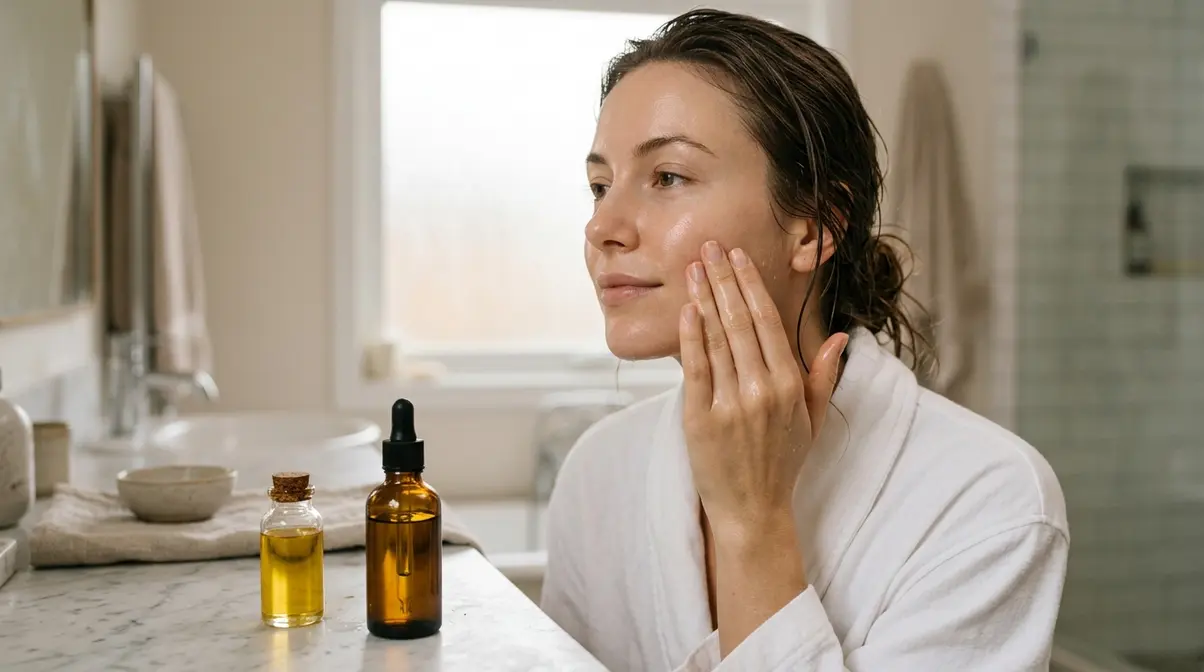
Never neat on skin. Dilution is the whole discipline, and the numbers are not arbitrary:
| Use | Strength | Per 30 ml | Per 10 ml |
|---|---|---|---|
| Face, normal skin | 1% | 6 drops | 2 drops |
| Face, sensitive skin | 0.5% | 3 drops | 1 drop |
| Body | 1-2% | 6-12 drops | 2-4 drops |
Pick a carrier that matches your skin – jojoba if you are oily or breakout-prone, rosehip if you are dry, fractionated coconut if you are neither. Blend into a dark glass bottle, then patch test on the inside of your forearm and give it 24 hours before it goes anywhere near your face. If nothing happens, start every other evening and work up. Our carrier oil guide covers the choices properly, and the beginner’s guide to using essential oils covers the general rules.
For a diffuser, 3-5 drops of a blend in 100 ml of water, half an hour at a time. Running it continuously only deadens your nose and gives everyone else in the house no escape.
Buying a decent bottle
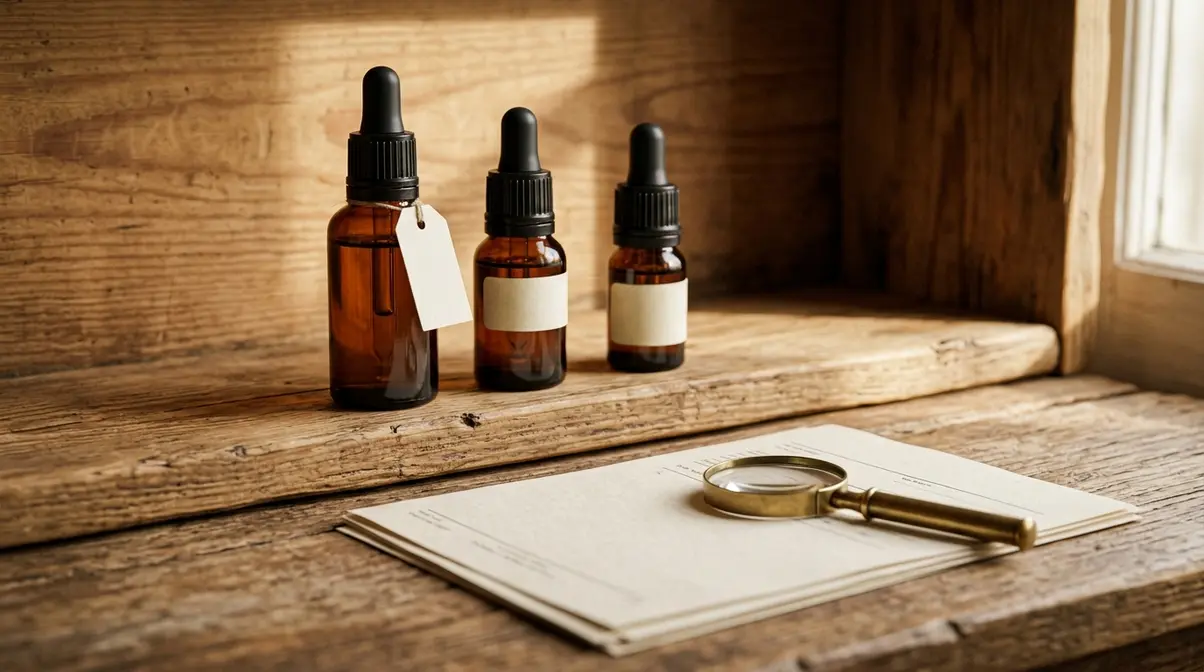
Four things to check, in order of how much they tell you:
- Published GC/MS results. Chromatography is the only way to know what is in the bottle. Look for third-party reports you can actually read, not a brand that merely claims it tests.
- Botanical name and origin. Pogostemon cablin should appear somewhere; Indonesian material is the benchmark.
- Dark or light, stated. A seller who cannot say which grade they ship does not know their supply well.
- Organic certification – worth paying for on your face, optional in a diffuser.
Ignore “therapeutic grade” entirely. It is a marketing phrase with no standard behind it, which is precisely why we take a critical line on the MLM brands that lean on it – our Young Living and doTERRA reviews go through the record. Patchouli is inexpensive and widely available; there is no version of this oil worth MLM pricing. For non-MLM options we have assessed, see our Plant Therapy and NOW Foods reviews.
Where to buy patchouli essential oil
As an Amazon Associate we earn from qualifying purchases, at no extra cost to you. I have not hands-on tested these specific bottles — they are widely available listings that meet the buying criteria above. Details and availability change, so check the live listing before you buy.
| Image | Product | Best for | Buy |
|---|---|---|---|
 | NOW Essential Oils Patchouli Oil, 1 oz | A first bottle — steam-distilled, child-resistant cap, stocked in shops as well as online | Buy on Amazon |
 | 100% Pure Patchouli Essential Oil, 0.34 fl oz | Testing the scent first — a 10 ml bottle goes a long way at 1–2 drops | Buy on Amazon |
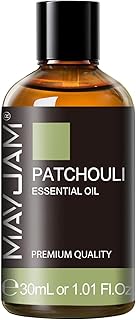 | MAYJAM Patchouli Essential Oil, 1.01 fl oz | Craft use — soap, candles and diffuser blends that get through oil quickly | Buy on Amazon |
 | Auric Blends Patchouly Roll-On Perfume Oil | Wearing it as-is — a ready-made perfume oil, not a pure essential oil | Buy on Amazon |
Affiliate links · details and availability change · check the live Amazon listing.
Is patchouli safe around cats and dogs?
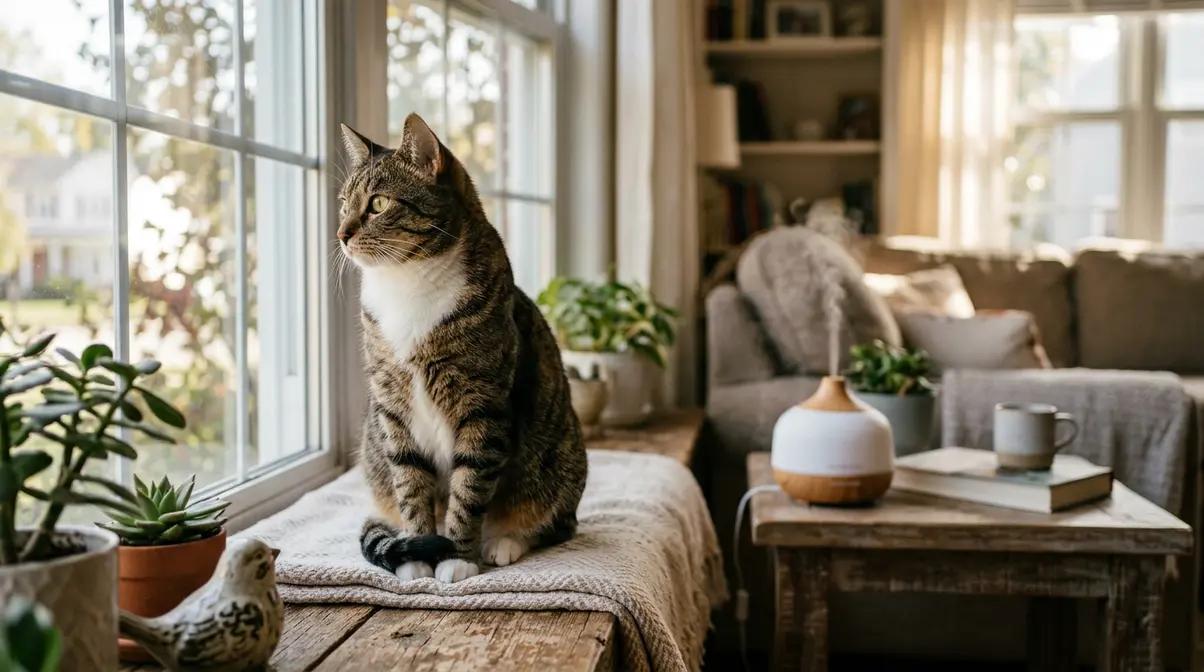
Cats are the serious case, and the reason is physiological. The Merck Veterinary Manual explains that cats “are deficient in the enzyme glucuronyl transferase”, and that this “enzymatic deficiency makes cats very sensitive to phenol and phenolic compounds, which some oils contain”. They cannot clear these compounds the way you or a dog can.
Diffusing is not a safe workaround either. Merck notes that active diffusers emit microdroplets which “can collect on hair or feathers if the pet is in the same room”, after which the oil is “either absorbed directly through the skin or ingested during self-grooming”. A cat’s grooming habit turns an airborne exposure into a swallowed one.
Signs of essential-oil poisoning listed by Merck include vomiting, lethargy, drooling, ataxia and loss of appetite, and in worse cases tremors, seizures, and liver or kidney failure; inhalation can bring watering eyes, nasal discharge, coughing or laboured breathing. If you see these after diffusing, move the animal to fresh air and phone a vet.
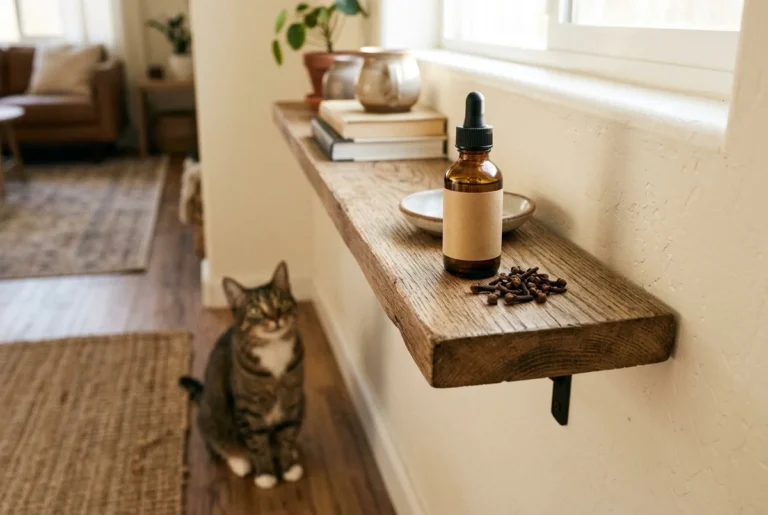
Practically: if you have cats, do not diffuse patchouli in space they can reach, and never apply it to them. Dogs tolerate more, but their noses are vastly more sensitive than ours – diffuse only where the dog can walk away, and leave topical use to your vet. Our guide on essential oil safety around pets goes wider on this.
Who should not use patchouli?
- Anyone pregnant or nursing, without medical advice – the evidence base here is thin, and thin evidence argues for caution rather than confidence.
- Children under two. Between two and ten, 0.5% maximum and supervised.
- Anyone taking anticoagulants, without asking their doctor first.
- Households with cats that cannot be kept clear of a diffuser.
- Anyone with a known allergy to mint-family plants – patch test regardless.
Two absolutes for everyone else: never swallow it, and never apply it undiluted. Repeated neat application is how people sensitise themselves, and once that happens you can react even to a properly diluted blend afterwards. Keep it away from eyes and broken skin; if it does get in an eye, flush with a carrier oil rather than water and get help.
Why patchouli and the 1960s
The association is real and older than people assume. Patchouli was packed with textiles across India and Southeast Asia to keep moths out, so when cashmere shawls reached Victorian Britain they arrived carrying the smell – buyers learned to read it as proof of genuine Eastern goods, and perfumers had adopted it by the mid-1800s. The 1960s reputation has a blunter explanation: a strong, persistent, earthy oil covers cannabis smoke well. It also suited a movement drawn to meditation and the natural world, which is why it still appears in grounding blends. That use is cultural rather than clinical – a perfectly good reason to like an oil, just not evidence of anything.
Frequently asked questions
What is patchouli essential oil good for?
Skin is the best-supported use: a 2025 Journal of Integrative Dermatology review lists it among oils used for acne and eczema. It is also a perfume base note and a traditional moth deterrent. Its mood reputation rests on animal work, not human trials.
What does patchouli smell like?
Earthy and woody with a musky sweetness and a hint of spice – aged wood rather than fresh timber. Older stock turns almost balsamic. Being a base note, it lingers far longer than citrus or florals. Most people who dislike it met it at five drops when it needed one.
Is patchouli oil safe for cats?
No. The Merck Veterinary Manual notes cats lack glucuronyl transferase, the enzyme needed to process phenolic compounds. Diffusing is no safer, because droplets settle on fur and get swallowed during grooming. Keep it out of any space your cat uses.
Does patchouli oil help with depression?
No human evidence supports it. A 2022 study in Pharmaceuticals found antidepressant-like effects and raised dopamine in rats given a concentrated fraction – not people inhaling shop-bought oil. Diffuse it if you find it calming, but it treats nothing.
The bottom line
Patchouli is a good, cheap, genuinely useful oil that has been badly served by how it is usually presented – both by the people who overdose it and by the sites that promise it will fix your mood. The honest position sits between: solid support for topical skin use, real laboratory interest in its antifungal and mood effects that has not yet reached human trials, and a scent that rewards restraint more than almost any oil I own.
Buy a small light-grade bottle from a brand that publishes its GC/MS results. Put one drop with three of bergamot in a diffuser and see what you think. If you have a cat, skip it entirely – that one is not worth the risk.
Medical disclaimer: This article is general information, not medical advice, and does not diagnose or treat any condition. Never apply essential oils neat or ingest them, and check with a qualified professional before using them during pregnancy, while nursing, around children, with a medical condition, or alongside medication. Contact a vet immediately if a pet shows drooling, vomiting, unsteadiness or breathing difficulty after exposure to essential oils.