doTERRA Essential Oils Reviews: Honest 2026 Verdict
By Ellen Cooper, independent essential-oil reviewer (hands-on since 2018, no MLM affiliation)
doTERRA is the biggest name in essential oils and the one people ask me about most, usually in the form: is it worth the money, and is the criticism fair? The short version is that the oil is good, the price is high for structural reasons, and the regulatory trouble mostly attaches to distributors rather than the company. Those distinctions matter, so this review keeps them apart.
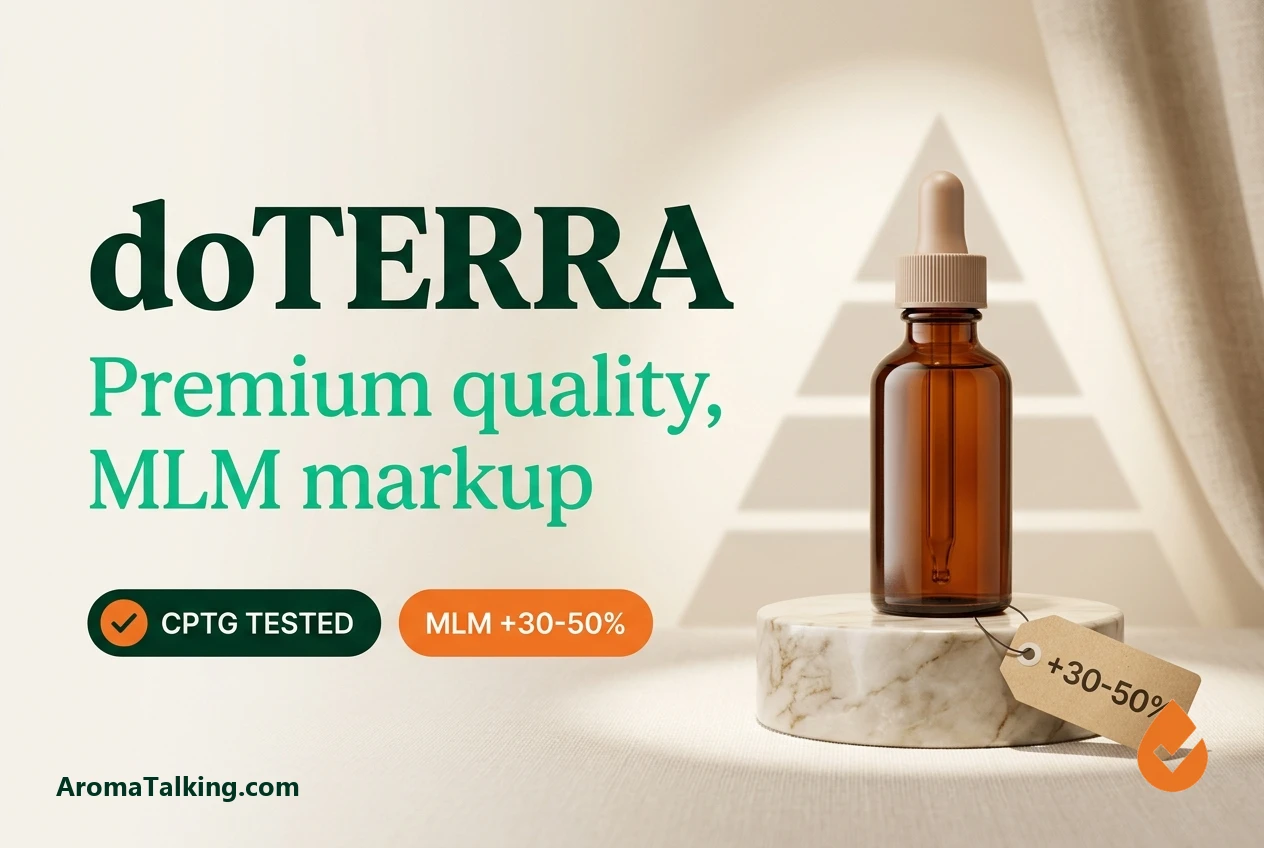
Quick answer: doTERRA sells genuine, well-tested oil at roughly 3.8x the price per millilitre of comparable non-MLM brands. CPTG is a real testing programme but a proprietary one – doTERRA’s own standard, not an independent certification. The FTC actions on record were against individual distributors, not the company.
So what would an independent check look like? Our essential oil purity guide sets out what laboratory testing actually measures, and the four things on a batch report that decide whether it proves anything.
doTERRA reviews and complaints: what the record actually shows

Let me separate three things that routinely get blurred together.
Actions against distributors, not the company. In March 2023 the FTC took action against three doTERRA distributors – Tina Wong, Eliza Johnson Bacot and Lauren Busch – each paying a $15,000 civil penalty plus a court order over false COVID-19 health claims made in early-2022 webinars. Note carefully who was penalised: the distributors, individually. doTERRA the company was not the respondent.
A warning letter to the company. Separately, in April 2020 the FTC sent doTERRA International LLC a warning letter – one of ten sent to MLMs over COVID-era claims circulating in their networks. That is a warning, not an enforcement action, but it is on the record.
Self-regulatory findings. A DSSRC compliance report noted that doTERRA removed 13 of 14 flagged deceptive health and income claims from distributor social media. The NAD has also reviewed claims made for doTERRA products.
The honest reading: doTERRA responds when regulators point at it, and the recurring problem is a sales network of thousands of independent people making medical claims the company then has to clean up. That is a structural feature of the model, not an accident.
On the customer side, the picture is more ordinary than either the brand’s fans or its critics suggest. Public feedback on Trustpilot skews toward two themes that have nothing to do with chemistry: enrolment and billing friction on one side, and genuine enthusiasm for specific blends on the other. People rarely complain that the oil is bad. They complain about how it is sold to them.
That is worth holding onto when you read a one-star review. A bad experience with a distributor, an auto-ship you struggled to cancel, or a pushy recruitment pitch are all real problems – but they are problems with the model, and they tell you very little about what is in the bottle. Judge the oil on the lab documentation and the model on the paperwork above.
Is doTERRA FDA approved?
No, and neither is any other essential oil brand – the question contains a false premise worth unpicking.
The FDA does not approve essential oils as a category. Oils sold for aroma or topical use fall under cosmetics, which are not pre-approved, and the moment a seller claims a product treats or prevents a disease, that product is legally an unapproved new drug. That is exactly the line distributors cross when they claim an oil cures something, and it is why both doTERRA and Young Living have letters on file over distributor claims.
So “FDA approved” is not a badge any oil brand can hold. What you can look for instead is independent laboratory verification of what is in the bottle – which brings us to CPTG.
Is CPTG a real quality standard?

Real, yes. Independent, no.
CPTG – Certified Pure Tested Grade – is a genuine multi-test protocol covering GC/MS, heavy metals, microbial contamination and more, and doTERRA uses a mix of in-house and third-party laboratories. I have no reason to think doTERRA sells adulterated oil, and plenty of reason to think it does not.
The catch is in the word “Certified”. doTERRA defines CPTG, doTERRA administers CPTG, and doTERRA owns the trademark. No outside body audits the standard itself. Compare that with Plant Therapy or Edens Garden, where an external lab tests each batch and publishes the report for your specific lot: you read the chromatogram yourself rather than trusting a company’s summary of it.
Both approaches can produce clean oil. Only one lets you verify it without taking the seller’s word.
Why is doTERRA so expensive?

doTERRA runs at roughly 3.8 times the price per millilitre of comparable non-MLM brands. Some of that premium buys real things: co-impact sourcing arrangements, an extensive testing programme, and a supply chain the company genuinely invests in.
The rest funds the network. Every bottle carries commission for the person who sold it and their upline – that is the business model working as designed, not a scandal. But it means a large share of what you pay never reaches the oil, and no amount of sourcing philosophy closes a 3.8x gap on its own.
How doTERRA compares
| Brand | Testing | MLM? | Verification you can read |
|---|---|---|---|
| doTERRA | CPTG, proprietary (in-house + third-party) | Yes | Company’s own summary |
| Young Living | Seed to Seal, proprietary | Yes | Company’s own summary |
| Plant Therapy | Third-party GC/MS, per batch | No | Published lot report |
| Edens Garden | Batch GC/MS via Essential Oil University | No | Published lot report |
| NOW Foods | GC/MS via specialised third-party lab | No | Lot-level Certificate of Analysis |
Our essential oil brand reviews hub covers each in depth, including Rocky Mountain Oils.
If you are buying doTERRA anyway

Many people reading this already like the oils, or buy from a friend, and want a straight answer rather than a sermon. Reasonable.
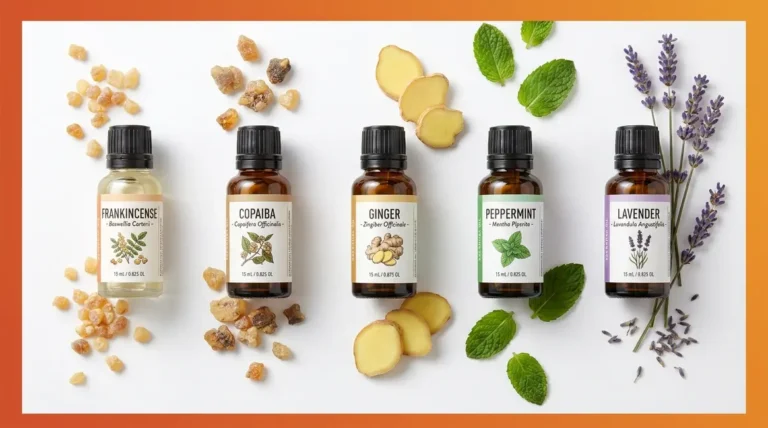
Buy singles rather than enrolment kits – lavender, peppermint, lemon and frankincense cover most real use, and kits pad the total with blends you will not finish. Ignore any advice about internal use that does not come from a clinician; “food grade” is not a regulatory category and a pure oil is still concentrated enough to burn mucous membranes. Our guide to using essential oils covers the three safe methods, and the most popular oils guide is a better shopping list than any kit.
Where to buy doTERRA
Officially through a distributor or the company site. Marketplace listings exist but you lose the provenance chain, which is most of what the premium buys – so buy through the official channel or choose a different brand.
Non-MLM Essential Oils to Try Instead
As an Amazon Associate we earn from qualifying purchases, at no extra cost to you. Product details and availability are subject to change – check the live listing on Amazon.
| Image | Product | Best for | Buy |
|---|---|---|---|
 | Lagunamoon Essential Oils Aromatherapy Set | Budget starter set | Buy on Amazon |
 | Essential Oils Set by Pure Aroma | Affordable gift set | Buy on Amazon |
 | SVA Cedarwood Essential Oil 4 Fl Oz | Grounding, woodsy scent | Buy on Amazon |
 | Cliganic Organic Lavender Essential Oil | Organic & calming | Buy on Amazon |
 | Cliganic Organic Essential Oils Set | Organic starter set | Buy on Amazon |
Affiliate links · details and availability change · check the live Amazon listing.
The verdict
doTERRA sells good oil with a serious testing programme, at a price set by its distribution model rather than by chemistry. The complaints that stick are about claims made inside that network – three distributors penalised by the FTC in 2023, a company warning letter in 2020, and a self-regulatory file of removed health claims.
Buy it if you value the sourcing story and the community support, and can afford roughly 3.8x. If what you actually want is verified purity, buy Plant Therapy or NOW Foods, read the batch report for your lot, and keep the difference.
Frequently asked questions
Is doTERRA legit?
Yes, as a company selling genuine essential oils with a substantial testing programme. The legitimate criticisms are about price relative to non-MLM brands and about health claims made by independent distributors – three of whom were penalised $15,000 each by the FTC in 2023 – rather than about the oil being fake or unsafe.
What are the main doTERRA complaints?
Price (around 3.8x per millilitre versus comparable non-MLM oils), the proprietary nature of CPTG certification, and distributor health claims. The FTC penalised three distributors over COVID-19 claims in 2023 and sent doTERRA International a warning letter in 2020; a DSSRC report noted the company removed 13 of 14 flagged deceptive claims from distributor social media.
Is doTERRA FDA approved?
No, and no essential oil brand is. The FDA does not approve essential oils as a category – oils sold for aroma or topical use are regulated as cosmetics, which are not pre-approved. Any product marketed as treating a disease becomes an unapproved new drug, which is the line distributor claims cross.
Is CPTG a real certification?
CPTG is a real testing protocol but a proprietary one: doTERRA defines, administers and owns it, and no independent body audits the standard. That differs from brands publishing per-batch reports from an outside laboratory, where you can read the lab result for the exact bottle you bought.
Is doTERRA better than Young Living?
They are close competitors with the same structure – both MLM, both proprietary quality standards, both with regulatory files concerning distributor claims. doTERRA’s testing documentation is somewhat more detailed; Young Living owns more of its own farms. Neither offers the independent per-batch verification the non-MLM brands publish.
How we review essential oil brands
I buy what I write about, I take no free samples, and affiliate links never influence a rating. Assessments rest on regulatory filings, self-regulatory decisions and published testing documentation rather than marketing. Where an action was taken against distributors rather than the company, I say so explicitly, because the difference is material.
Medical disclaimer: This article is general information, not medical advice, and does not diagnose or treat any condition. Never apply essential oils neat or ingest them, and check with a qualified professional before using them during pregnancy, while nursing, around children, with a medical condition, or alongside medication.