Plant Therapy Essential Oils Reviews 2026: Pure & Tested
Contents
- Plant Therapy Overview
- Quality & Purity Testing Protocols
- Best Plant Therapy Products & Sets
- Plant Therapy vs. doTERRA vs. Young Living
- Plant Therapy Pros, Cons & Reported User Experience
- Who Should Buy Plant Therapy
- Where to Buy Plant Therapy
- Common Pitfalls and Safety Risks
- Frequently Asked Questions
- The Bottom Line: Final Verdict
- How Plant Therapy Compares
By Ellen Cooper, independent essential-oil reviewer (hands-on since 2018, no MLM affiliation)
You’ve heard people say Plant Therapy is almost too cheap, and that little voice in the back of your head is asking if that means the oils are fake, diluted, or just not worth your time. That instinct is completely reasonable. The essential oil market is full of brands charging $40-$80 per bottle while hiding behind meaningless marketing terms like “therapeutic grade”, and with no easy way to verify purity, most buyers can’t tell the difference between a legitimately pure oil and an expensive scam.
In this guide, you’ll find a complete set of plant therapy essential oils reviews covering exactly how the brand proves its purity with independently verified GC/MS batch testing, whether its KidSafe line is genuinely safe for your family, and how its prices compare to major MLM brands, so you can make a confident, well-informed purchase decision. We cover the brand’s quality credentials, the top products worth buying, an honest pros and cons breakdown, and a final verdict with a clear decision framework.
AromaTalking is reader-supported. We may earn a commission from qualifying purchases made through links on this page, at no extra cost to you. This review synthesizes Plant Therapy’s published GC/MS reports and certifications, documented user reviews (Trustpilot, Reddit), and price comparison. It is not based on first-party laboratory testing.
Key Takeaways
See how Plant Therapy compares: Edens Garden Review | Rocky Mountain Oils Review | doTERRA Review | NOW Foods Review
Plant Therapy delivers independently verified, 100% pure essential oils at prices roughly 40-60% below MLM competitors like doTERRA and Young Living, based on our price-per-mL comparison, not because quality is lower, but because MLM markup structures are removed entirely.
- The Purity Price Paradox: Lower prices reflect a direct-to-consumer model, not inferior quality, every batch ships with a publicly accessible GC/MS report.
- KidSafe Line: Developed with aromatherapy safety expert Robert Tisserand; these oils are screened for child-specific risks and come pre-diluted for convenience.
- How to Verify: You can look up your exact bottle’s batch test report on Plant Therapy’s website in under two minutes, a transparency level MLM brands rarely match.
Recommended Plant Therapy Oils on Amazon
As an Amazon Associate we earn from qualifying purchases, at no extra cost to you. Product details and availability are subject to change – check the live listing on Amazon.
| Image | Product | Best for | Buy |
|---|---|---|---|
 | Lavender Essential Oil 100% Pure | Relaxation & sleep | Buy on Amazon |
 | Germ Fighter Essential Oil Blend 100% Pure | Immune-season diffusing | Buy on Amazon |
 | Patchouli Essential Oil | Grounding, earthy scent | Buy on Amazon |
 | Organic Frankincense Serrata Essential Oil 100% Pure | Skincare & meditation | Buy on Amazon |
 | Top 6 USDA Organic Essential Oil Set | Best-value starter set | Buy on Amazon |
Affiliate links · details and availability change · check the live Amazon listing.
Plant Therapy Overview
Plant Therapy is a direct-to-consumer essential oil brand that consistently earns high marks across professional aromatherapy communities, and for a specific, data-backed reason. Understanding who they are and how they operate explains most of what you need to know about why their prices look the way they do. Plant Therapy eliminates MLM layers, reducing retail prices by roughly 40-60% without compromising GC/MS verified purity.
Background & Business Model
Plant Therapy was founded in 2011 by Chris Jones, who continues to serve as the company’s founder and CEO. Based in Twin Falls, Idaho, the brand built its reputation by selling essential oils directly to consumers online, completely bypassing the multi-level marketing (MLM) distribution model that dominates much of the industry (Idaho Business Review). On June 10, 2019, BBRC Private Equity made a minority investment in the company, though Jones remained in his leadership role (PE Hub).
MLM (multi-level marketing) is a sales structure where independent distributors earn commissions on every bottle sold and on the sales of people they recruit. That layered commission structure gets baked into the retail price. When you buy a doTERRA or Young Living oil, a portion of that cost funds distributor commissions at multiple levels. Plant Therapy has no distributors, no downlines, and no recruitment commissions. The savings from removing that overhead go directly to you.
This direct-to-consumer model, selling exclusively through their own website and select retailers like Amazon and Target, is the single biggest reason their prices appear lower. It is not a sign of lower quality. It is a sign of a leaner business structure. The company emphasizes direct sourcing relationships with growers, and it publishes full transparency reports for every batch it sells. That level of supply-chain involvement is uncommon at any price point.
How We Evaluated Plant Therapy
This review is based on desk research, not first-party laboratory testing. We evaluated Plant Therapy across five criteria: purity verification (GC/MS batch report availability and third-party lab independence), product breadth, pricing vs. comparable brands, user-reported experience, and pediatric safety standards. We cross-referenced batch reports published on Plant Therapy’s website, reviewed documented user sentiment on Trustpilot and Reddit’s r/essentialoils community, and compared retail prices against doTERRA and Young Living’s published 2026 price lists.

For pricing data, we used Plant Therapy’s official site (accessed March 2026), doTERRA’s simplified price list (updated February 2026), and Young Living’s official product pages. For user sentiment, we reviewed dominant themes across public Trustpilot reviews and organic Reddit discussions. This is a synthesis of published, third-party, and community sources, not a controlled lab study.
Certifications & Credentials
Plant Therapy holds several independently verifiable credentials that address the most common fear among new buyers: that a lower-priced oil must be adulterated or diluted.
- GC/MS Testing on Every Batch: Gas chromatography/mass spectrometry testing, the analytical chemistry standard for identifying the chemical compounds in an essential oil, is performed on every single batch. Results are published publicly on the product page for each oil.
- Leaping Bunny Certified: Independently certified as cruelty-free by the Coalition for Consumer Information on Cosmetics.
- USDA Organic Certification (select oils): A government-administered certification confirming that specific oils meet federal organic production standards.
- BBB Profile: Plant Therapy maintains a Better Business Bureau profile, a public business-trust reference you can check directly.
USDA Organic certification means the plant material was grown without synthetic pesticides or fertilizers, verified by an accredited third-party certifying agent. For oils like lavender, where synthetic adulterants are common, the organic designation adds a meaningful layer of assurance.
Quality & Purity Testing Protocols
Medical Disclaimer: Essential oils are not intended to diagnose, treat, cure, or prevent any disease. Consult your healthcare provider before use, especially during pregnancy, with young children, or if you are taking medications.
Purity is the only thing that separates a genuinely useful essential oil from an expensive bottle of scented carrier oil. If you need a beginner’s guide to using essential oils, understanding purity is the first critical step. Plant Therapy makes its purity claims verifiable, not just assertable, and that distinction matters more than any marketing badge on the label.
Is Plant Therapy 100% pure?
Plant Therapy’s essential oils are tested and verified as 100% pure through batch-specific GC/MS analysis performed by independent third-party laboratories. Every batch ships with a publicly accessible test report that you can look up by the lot number on your bottle. While no testing system is absolute, Plant Therapy’s level of batch-level transparency significantly exceeds the industry average.
What Is GC/MS Testing?
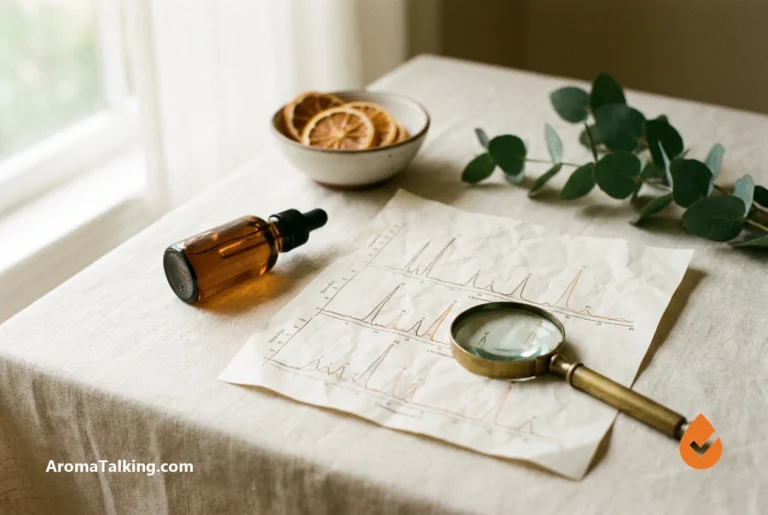
GC/MS testing (gas chromatography/mass spectrometry) is a two-step laboratory analysis that identifies and measures every chemical compound in an essential oil sample. Think of it like a fingerprint scan for the oil: it shows exactly which molecules are present and in what percentages. If a supplier diluted lavender oil with synthetic linalool or a cheap carrier oil, a GC/MS report would catch it immediately.
The process works in two stages. Gas chromatography separates the oil’s individual compounds by heating it and passing it through a column. Mass spectrometry then identifies each compound by measuring its molecular weight. Together, they produce a detailed chemical profile that can be compared against known reference standards for that specific oil species, origin, and harvest year.
Research published in peer-reviewed literature confirms that GC/MS analysis is the gold standard for detecting essential oil adulteration, identifying synthetic additives, and verifying species authenticity (PMC peer-reviewed GC/MS methodology). A GC/MS report showing expected compound ratios, such as 25-38% linalool in lavender, is the most reliable purity signal a consumer can access.
This matters because adulteration is not hypothetical. An investigation into lavender oil sold on Amazon documented widespread synthetic and diluted products reaching consumers (Nutritional Outlook), and peer-reviewed analysis confirms that GC/MS profiling is the practical way to detect such adulteration in commercial samples (PMC8471154). A brand that publishes the report for your exact batch removes most of that guesswork.
What this means for you: When a brand publishes batch-specific GC/MS reports, you’re not trusting their marketing. You’re reading the chemistry.
How to Find Your Batch Report
Looking up your specific bottle’s purity data takes less than two minutes. Here is the step-by-step process:
- Find your batch number. Look at the bottom or side of your Plant Therapy oil bottle. The lot number (also called the batch code) is printed directly on the label.
- Go to the product page. Search for your specific oil on the Plant Therapy official singles collection.
- Click the “Test Reports” tab. This tab appears below the product description on individual oil pages.
- Match your lot number. Find the report that corresponds to your specific batch code.
- Review the compound breakdown. The report lists each chemical constituent (e.g., linalool, linalyl acetate for lavender) and its percentage by mass.
- Check the lab conclusion. The report includes a “Pass / Fail” determination from the independent testing lab.

Plant Therapy’s blog provides a detailed walkthrough of GC/MS testing to help customers interpret their specific results. If you prefer a video, a step-by-step tutorial is also available on YouTube (search “HOW TO FIND GC/MS REPORT from Plant Therapy”).
What Testing Actually Guarantees
GC/MS testing confirms chemical composition and can detect most common forms of adulteration, including dilution with carrier oils, synthetic compound additions, and species substitution. It is the strongest available purity signal for consumers, and the fact that Plant Therapy makes these reports public for every batch is a meaningful commitment to transparency.
However, it is worth being clear about what GC/MS testing does not cover. It does not directly test for pesticide residues or heavy metals. For that, USDA Organic certification and independent agricultural testing are the relevant indicators. Plant Therapy’s USDA Organic line addresses the pesticide concern for buyers who need that additional assurance.
Reviews and community discussion on Trustpilot and r/essentialoils generally describe Plant Therapy’s public batch reports as a key reason cautious first-time buyers and some aromatherapy hobbyists trust the brand. We could not independently verify any specific reviewer’s professional credentials, so treat that sentiment as aggregate user opinion rather than a clinical endorsement.
Best Plant Therapy Products & Sets
Plant Therapy offers 170+ single oils and dozens of synergy blends (pre-made blends of two or more oils formulated for a specific purpose). For a new buyer, that variety can feel overwhelming. The following breakdown focuses on the most popular essential oils for beginners and the oils most frequently recommended across aromatherapy communities. The KidSafe line screens out high-menthol oils, reducing the risk of respiratory suppression in children while delivering aromatic benefits.
Top-Rated Single Oils
For first-time buyers, the most forgiving and versatile single oils are those with the widest documented use cases and lowest risk of skin sensitivity. These five appear consistently at the top of community recommendation lists:
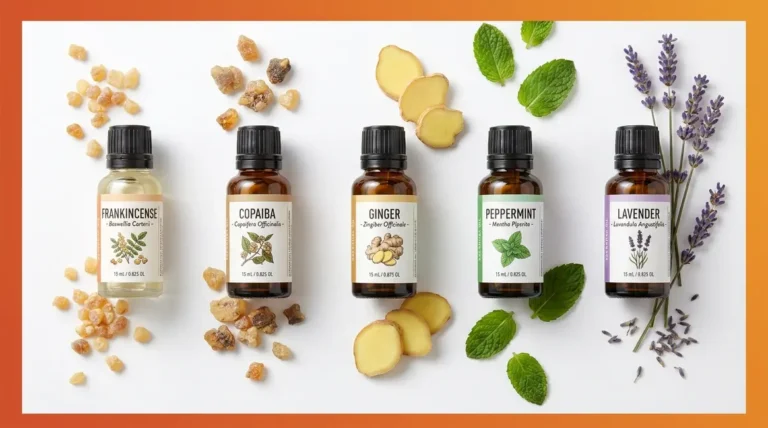
Lavender (Lavandula angustifolia) is the most beginner-friendly oil in the category. For a deeper dive into the benefits and safe uses of lavender essential oil, it is widely used for calming, skin support, and sleep. Plant Therapy’s 10 mL bottle is priced at approximately $9.99 (pricing observed March 2026). The linalool-dominant chemical profile means it is among the gentler oils for sensitive skin when properly diluted.
Peppermint runs approximately $8.99 for 10 mL. It has broad use cases, from diffusing for focus to diluted topical application for tension. Note that peppermint is not KidSafe for children under 6 due to its high menthol content, which can irritate the airways of young children.
Frankincense Carterii is priced at $18.99 for 10 mL. This is a strong value for an oil that retails for $38-$45 at comparable volumes from MLM competitors. It is frequently used in grounding diffuser blends and skin-focused applications.
Lemon ($9.49 for 10 mL) is a bright, citrus-forward oil used in diffuser blends, cleaning applications, and mood support. Phototoxic warning: citrus oils that are not steam-distilled (including cold-pressed lemon) can cause skin reactions when exposed to UV light. Do not apply undiluted cold-pressed lemon to skin before sun exposure. Plant Therapy’s site clearly labels phototoxicity risks on relevant product pages.
Tea Tree (Melaleuca) ($10.99 for 10 mL) is a go-to for household cleaning blends and is among the most extensively researched oils for antimicrobial applications, though all therapeutic claims should be treated as research-suggestive, not medical fact.

Popular Synergy Sets
Synergy blends are pre-made combinations of two or more oils, formulated to achieve a specific aromatic or functional effect. Plant Therapy’s synergies are named descriptively (e.g., “Worry Free, ” “Immune Boom, ” “Germ Fighter”) and are popular with buyers who want a ready-to-use solution without needing to learn blending ratios.
The Lemon, Lavender & Peppermint Set (three 10 mL bottles) retails for approximately $23.99 on the official site, less than the cost of buying all three separately from a MLM brand. This three-oil bundle covers most beginner use cases: seasonal wellness, calming, and energy/focus diffusion.
For families with children, Plant Therapy’s KidSafe Synergy sets are pre-diluted in carrier oil and come in roller-bottle format, eliminating the need to calculate dilution percentages yourself. Popular examples include “Nighty Night” (designed to support sleep) and “Quiet Kiddo” (calming blend). These products remove the most common beginner dilution error: applying undiluted oil directly to a child’s skin.
USDA Organic & KidSafe Lines
The KidSafe line is one of the most clinically grounded offerings in the consumer essential oil market. Plant Therapy developed the designation in partnership with Robert Tisserand, one of the world’s most respected aromatherapy safety researchers and co-author of Essential Oil Safety, the benchmark reference text used by certified clinical aromatherapists worldwide.
KidSafe criteria go beyond simple dilution advice. Every oil receiving the KidSafe designation has been screened for chemical constituents that pose specific risks to children’s physiology. Oils high in menthol (peppermint, spearmint) are excluded because menthol can suppress respiratory function in infants and young children. Oils containing 1, 8-cineole at significant levels (certain eucalyptus species, rosemary) are similarly excluded due to respiratory concerns documented in pediatric toxicology literature. Research published in PubMed Central (PMC2804512) on the toxicology of essential oils in children supports the conservative exclusion of these chemical classes in pediatric applications.
The Tisserand Institute’s safety guidelines recommend limiting aromatherapy for children under 3 to ultrasonic diffusion in well-ventilated spaces and avoiding topical application without significant dilution. For children ages 2-10, the KidSafe line uses a 1-2% dilution standard (approximately 1-2 drops per teaspoon of carrier oil) as a safe topical application rate. Children ages 10 and older can generally use most oils at adult dilution standards unless individual sensitivity is observed.
What this means for you as a parent: The KidSafe label is not marketing copy. It reflects a documented screening process against known pediatric toxicity data, a standard most essential oil brands never apply. However, no oil should be used around infants under 3 months without consulting a pediatrician or certified aromatherapist. Always consult a certified aromatherapist or your healthcare provider before introducing any essential oil to children under 2.
The USDA Organic line at Plant Therapy includes lavender, frankincense, tea tree, and several other high-demand oils. USDA Organic certification (administered by accredited third-party certifying agents) guarantees the source plant material was grown without synthetic pesticides or fertilizers. For buyers concerned about agricultural chemical residue, particularly for oils used on skin or with children, the organic line adds a meaningful layer of assurance beyond GC/MS testing alone.
Plant Therapy vs. doTERRA vs. Young Living

The most common question in essential oil communities is deceptively simple: why is Plant Therapy so much cheaper? The honest answer is structural, not qualitative, and the pricing data makes that case clearly. If you read our comprehensive Young Living review, you will notice that both doTERRA and Young Living operate as MLM (multi-level marketing) companies.
Why is Plant Therapy so cheap?
Plant Therapy is less expensive because it uses a direct-to-consumer model that eliminates MLM distributor commissions. In our price-per-mL comparison below, Plant Therapy runs roughly 40-60% cheaper than comparable MLM brands on the same oils. Lower price reflects a leaner business model, not lower quality or inferior sourcing.
How MLM Markups Inflate Prices
In an MLM model, products are sold primarily through a network of independent distributors, each earning a commission on their sales and on the sales of distributors they recruit. That commission structure, which can involve five or more levels of payout, is funded by the retail price you pay.
When you buy lavender from doTERRA at roughly $29-$40 retail for 15 mL, a portion of that price travels up through the distributor chain rather than funding better sourcing, purer extraction, or more rigorous testing. Meanwhile, the term “therapeutic grade”, frequently used by MLM essential oil brands to imply superior quality, is not a recognized certification standard. No independent body issues or audits “therapeutic grade” designations. Any company can use the phrase without external verification.
Plant Therapy’s direct-to-consumer structure eliminates all distributor commission layers. The savings are passed to the consumer rather than to a downline. This is the entire explanation behind the Purity Price Paradox: lower price does not equal lower quality. It equals a leaner distribution model with no MLM overhead.
Price-per-mL Comparison Matrix
The following table compares retail prices per mL for three widely used oils across Plant Therapy, doTERRA, and Young Living (pricing observed March 2026 from official brand websites). Note the bottle-size difference: Plant Therapy prices are for 10 mL, while doTERRA and Young Living are sold in 15 mL, so the per-mL column is the like-for-like comparison.
| Oil | Plant Therapy (10 mL) | Price/mL | doTERRA (15 mL) | Price/mL | Young Living (15 mL) | Price/mL | PT Savings vs. doTERRA |
|---|---|---|---|---|---|---|---|
| Lavender | $9.99 | $1.00/mL | $38.67 | $2.58/mL | $36.51 | $2.43/mL | ~61% cheaper |
| Peppermint | $8.99 | $0.90/mL | $27.33* | $1.82/mL | ~$33.00* | $2.20/mL | ~51% cheaper |
| Frankincense | $18.99 | $1.90/mL | $66.67* | $4.44/mL | ~$72.00* | $4.80/mL | ~57% cheaper |
*doTERRA lavender and Young Living lavender prices observed early 2026 from official sites; verify current pricing before purchase. doTERRA peppermint and frankincense are estimated from the official simplified price list (Feb 2026); Young Living peppermint and frankincense are approximations based on comparable category pricing.

For every 10 mL of lavender, you save approximately $28-$29 buying Plant Therapy instead of a comparable MLM brand volume. That is not a coupon. That is the difference in business model.
What You Get for the Price
A lower price would be meaningless if it came with lower purity standards. But Plant Therapy’s GC/MS testing regime, publicly accessible batch reports, third-party lab verification, and constituent breakdowns for every oil, meets or exceeds what either MLM brand offers in transparency. Neither doTERRA nor Young Living routinely publishes batch-specific GC/MS reports that consumers can access by lot number, the way Plant Therapy does.
Additional value included in Plant Therapy’s standard pricing:
- Free shipping on orders over a standard threshold (verify current minimum at checkout)
- Leaping Bunny cruelty-free certification at no price premium
- Dedicated KidSafe labeling, a pediatric screening process with no equivalent at doTERRA or Young Living
- No membership fees required: MLM brands often require a wholesale membership ($35-$49/year) before unlocking their “wholesale” prices, which are still higher than Plant Therapy’s standard retail
The GC/MS quality protocol research confirms that testing methodology, not price point, is the true determinant of oil purity. Plant Therapy’s methodology is documented, third-party verified, and publicly accessible.
Plant Therapy Pros, Cons & Reported User Experience
No brand is perfect. Understanding both the genuine strengths and the real limitations of Plant Therapy prevents surprises after your first order. Reviews and community discussion on Trustpilot and r/essentialoils generally describe several consistent themes.
Plant Therapy
Pros
- Verified GC/MS Transparency: The ability to look up your specific batch’s purity data by lot number is rare at this price point.
- KidSafe Line with Expert Backing: The Tisserand-developed KidSafe program provides parents with a screened, pediatrician-compatible product line.
- Excellent Price-to-Quality Ratio: Plant Therapy consistently appears in “best value” discussions, saving buyers roughly 40-60% per bottle compared to MLM brands in our price comparison.
- Product Breadth and Education: 170+ single oils, plus synergy blends and carrier oils, backed by educational resources on dilution ratios and safety.
Cons
- Limited Physical Retail Presence: Product selection in physical stores is limited compared to the full website catalog.
- Slower Shipping for Non-Prime Buyers: Direct orders from Plant Therapy’s website ship from Idaho, taking 3-5 business days.
- Generic Synergy Names: Blends like “Worry Free” suggest therapeutic benefits, which requires understanding they are not medical treatments.
Reported User Experience
Across Trustpilot and r/essentialoils, reviews generally describe Plant Therapy as a dependable daily-driver for both beginners and more experienced users, with the public batch reports cited as a recurring reason for confidence. The in-person sensory evaluation that brick-and-mortar buyers rely on is unavailable through the primary sales channel, but the 90-day money-back guarantee effectively functions as a risk-free trial. Families frequently mention relying on the pre-diluted KidSafe roller bottles for everyday applications, appreciating the convenience of skipping complex dilution math. These reflect aggregate user sentiment, not our own hands-on testing.
Who Should Buy Plant Therapy
The Purity Price Paradox doesn’t apply equally to every buyer type. Plant Therapy is an excellent fit for most beginner and intermediate buyers, and a specific poor fit for a narrow set of use cases.
Choose Plant Therapy If…
- You are a first-time buyer who wants verified purity without paying MLM membership fees or distributor markups. The batch report system gives you immediate, verifiable proof of what’s in your bottle.
- You are a parent concerned about pediatric safety. The KidSafe line, developed with Robert Tisserand, is the most credibly curated child-safe product line in the consumer essential oil category.
- You are switching from doTERRA or Young Living. You will find comparable or superior purity documentation and save roughly 40-60% per bottle on the same oil types.
- You want USDA Organic options without a price premium. Select organic oils are available at pricing that undercuts MLM organic offerings significantly.
- You’re on a budget but unwilling to sacrifice quality. The price-per-mL data is clear: Plant Therapy’s direct-to-consumer model passes the savings to you, not a distributor.
Skip Plant Therapy If…
- You need immediate in-store availability. If you need an oil today and can’t wait 3-5 days for shipping, check Amazon for Plant Therapy’s listings, several best-sellers are available there with Prime shipping.
- You require professional-grade bulk quantities. For formulators or practitioners needing kilogram quantities of a single oil, dedicated wholesale aromatherapy suppliers may offer better bulk pricing structures.
- You are part of an MLM community where purchases contribute to a personal wellness goal. If loyalty points, group purchasing discounts, or your relationship with a specific consultant matters to your purchasing decision, that is a valid lifestyle choice that Plant Therapy’s model doesn’t replicate.
- Your primary oil is sourced from a rare endemic plant species. Plant Therapy’s catalog is broad, but a few highly specialized botanicals (very small-batch agarwood, niche regional chemotypes) may be unavailable.
Where to Buy Plant Therapy
Knowing where to buy matters as much as knowing what to buy, especially if you are also choosing a diffuser and need the oils to work reliably. The wrong purchase channel can mean receiving counterfeit products, a real risk in the essential oil category on third-party platforms.
Official Website vs. Amazon
Plant Therapy’s official website (Plant Therapy official website) is the primary recommended purchase channel. Every order ships directly from Plant Therapy’s own inventory, includes the batch report for your specific lot, and is covered by their satisfaction guarantee. Pricing is current and reflects any active promotions.
Amazon is a legitimate secondary channel, but only when purchasing directly from the “Plant Therapy” seller account, not from third-party marketplace sellers. Plant Therapy operates its own verified Amazon storefront, and best-selling single oils are typically available with Prime shipping. Check the “Sold by” field before completing your purchase.
Third-party sellers (eBay, Etsy, independent online shops) carry meaningful risk. Essential oils can be counterfeited, diluted, or relabeled, and a third-party lot number may not match any report on Plant Therapy’s website. Unless you can verify the seller is an authorized Plant Therapy retailer, the official site and Amazon storefront are the only channels we recommend.
Local Retail Availability
As of March 2026, Plant Therapy’s physical retail presence is limited to select national chains like Walmart and Target. You may find lavender, peppermint, tea tree, and a few synergy blends on shelves, but the KidSafe line, USDA Organic selections, and most specialty synergies are typically online-only. If you are searching for “plant therapy essential oils near me, ” checking Target and Walmart inventory online before visiting is the fastest way to confirm local availability.
For buyers who want to smell an oil before committing, Plant Therapy’s 90-day money-back guarantee on orders placed through the official site effectively functions as a risk-free trial, the closest equivalent to an in-store sampling experience available for online essential oil purchases.
Common Pitfalls and Safety Risks
Condensed Medical Disclaimer: Essential oils are not intended to diagnose, treat, cure, or prevent any disease. Always consult a qualified healthcare provider before using essential oils during pregnancy, with infants or young children, or alongside prescription medications.
Understanding the difference between a safe experience and an unsafe one comes down to a handful of specific practices. Most essential oil injuries are preventable with straightforward precautions.
Safety Mistakes Beginners Make
Applying oils undiluted to skin. This is the most common beginner error. Undiluted oils, meaning pure, uncut essential oil without a carrier oil, are highly concentrated and can cause chemical burns, sensitization, or allergic reactions on direct skin contact. A safe standard for adults is a 2% dilution: approximately 12 drops of essential oil per ounce (30 mL) of carrier oil. For children in the KidSafe age range, use 1% or follow the dilution rate on the product label.
Using the wrong oils around children. Peppermint, eucalyptus (high-cineole varieties), rosemary, and wintergreen are specifically contraindicated for children under 6 due to documented respiratory and neurological risks at high exposure. This is why the KidSafe designation exists, it removes the guesswork.
Assuming “natural” means “safe.” Natural origin does not equal safety. Many essential oils are powerful pharmacological compounds at high concentrations. Phototoxic oils (cold-pressed bergamot, lemon, lime, grapefruit) can cause severe UV-triggered skin burns when applied before sun exposure. Tisserand Institute safety guidelines recommend avoiding direct sun exposure for 12 hours after applying phototoxic oils topically (Tisserand Institute, 2024).
Storing oils improperly. Essential oils are volatile, they evaporate and degrade with heat, light, and air exposure. Store in dark glass bottles in a cool, dark location. Never leave caps off. Oxidized oils can cause skin sensitization, even from oils that are normally safe at proper dilution.
| Safety Rule | Correct Practice | Why It Matters |
|---|---|---|
| Dilution (adults) | 2% in carrier oil (12 drops/oz) | Prevents chemical burns and sensitization |
| Dilution (KidSafe, ages 2-10) | 1% in carrier oil (6 drops/oz) | Children’s skin and metabolism absorb differently |
| Photosensitive oils | Avoid sun for 12 hours after topical use | UV exposure triggers severe skin reactions |
| Diffusion near infants | Ventilated room, max 30-60 min sessions | Prevents respiratory overexposure |
| Storage | Dark glass, cool and dark location | Prevents oxidation that increases sensitization risk |
When It Isn’t the Right Choice
If you want to see how Edens Garden compares, they also offer third-party testing outside the MLM framework. If you require clinical aromatherapy for a diagnosed medical condition, no essential oil brand, including Plant Therapy, is a substitute for treatment prescribed by a licensed healthcare provider. Research suggests aromatherapy may support mood, relaxation, and sleep quality in some populations, but no essential oil has received FDA approval for the treatment of any disease.
If you are pregnant, the list of oils that require extra caution expands significantly. High doses of certain oils (clary sage, thyme, clove, cinnamon bark) may be contraindicated in pregnancy. Plant Therapy’s website includes a pregnancy safety filter in their product search, but all use during pregnancy should be discussed with your OB/GYN or midwife first.
For buyers with documented skin allergies or chemical sensitivities, even high-quality, pure oils can trigger reactions. Starting with a patch test (1% dilution on the inner arm, 24-hour wait) before broader use reduces this risk regardless of brand.
When to Consult a Professional
Consult a licensed healthcare provider or certified clinical aromatherapist before using essential oils if:
- You are pregnant or breastfeeding
- You are treating a child under 2 years old
- You are taking prescription medications (certain oils interact with drug metabolism pathways)
- You have a diagnosed respiratory condition (asthma, COPD)
- You are managing a skin condition under medical supervision
We recommend looking for a practitioner certified by the Alliance of International Aromatherapists (AIA) or the National Association for Holistic Aromatherapy (NAHA) for qualified guidance.
Frequently Asked Questions
Is Plant Therapy a good brand of essential oil?
Plant Therapy is widely regarded as one of the best-value reputable essential oil brands available to consumers. Reviews and community discussion on Trustpilot and r/essentialoils generally describe it as a top non-MLM brand alongside Rocky Mountain Oils. The brand publishes batch-specific GC/MS reports for every oil, holds Leaping Bunny certification, and offers a KidSafe line developed with Robert Tisserand, a combination of credentials few competitors match at any price point.
What is the best brand of essential oils?
The best essential oil brand depends on your priorities, but for verified purity at accessible pricing, Plant Therapy and Rocky Mountain Oils are the most consistently recommended in aromatherapy communities. Both publish GC/MS reports and avoid MLM structures. For families with children, Plant Therapy’s KidSafe line offers a pediatrically screened product range no competitor matches. For buyers who need USDA Organic certification, both Plant Therapy and Edens Garden offer certified organic options. If price is not a constraint, Floracopeia and Eden Botanicals offer high-end artisan single-origin oils.
Which essential oil brands should I stay away from?
Be cautious of brands that do not publish batch-specific GC/MS reports, use the term “therapeutic grade” as a primary quality claim, or sell exclusively through MLM distribution networks. The phrase “therapeutic grade” is not a regulated or independently audited designation, any company can apply it. Additionally, avoid purchasing from third-party eBay or Etsy sellers unless you can verify they are an authorized retailer, as counterfeit and diluted oils are documented in those channels. Brands with no external certifications and no accessible testing documentation carry the highest adulteration risk.
What company sells the purest essential oils?
Purity is verifiable, not just claimable, and the purest oils come from brands that publish batch-specific GC/MS reports from independent labs. Plant Therapy, Rocky Mountain Oils, and Edens Garden all meet this standard. SCIRP research on GC/MS quality protocols confirms that independent third-party testing is the only reliable purity verification method. Among mainstream brands at consumer price points, Plant Therapy’s combination of batch-level transparency, third-party certification, and Leaping Bunny accreditation places it among the highest-verified options available.
What to avoid when buying essential oils?
Avoid oils sold without batch-specific GC/MS documentation, any product labeled “fragrance oil” or “perfume oil” (which are synthetic and not true essential oils), and clear or white plastic packaging, essential oils degrade and can leach chemicals from plastic. Look for dark amber or cobalt glass bottles. Avoid extreme low prices (under $5 for 10 mL of lavender, frankincense, or rose), these are red flags for adulteration or substitution. Also avoid brands that discourage you from looking at third-party test results or claim their own testing is sufficient without independent verification.
How can you tell if essential oils are high quality?
High-quality essential oils have four verifiable markers: batch-specific GC/MS reports from independent labs, accurate botanical naming (genus and species on the label), correct bottle format (dark glass), and realistic pricing for the plant material involved. Rose absolute and sandalwood cost far more to produce than citrus oils, if pricing is uniform across wildly different botanicals, that’s a purity red flag. You can also compare the GC/MS compound percentages against published reference ranges for each oil species. If linalool in a lavender oil falls outside the expected 25-38% range, question the batch.
Pricing observed as of March 2026. Prices may change; verify current pricing at planttherapy.com before purchase.
The Bottom Line: Final Verdict
AromaTalking editorial rating: 4.5 / 5. Batch-specific GC/MS testing, a Tisserand-developed KidSafe line, Leaping Bunny certification, and a 90-day guarantee make Plant Therapy the strongest all-round non-MLM value; minor deductions for online-only buying.
For risk-sensitive, budget-aware buyers, Plant Therapy resolves the Purity Price Paradox with data rather than marketing copy. The brand’s independently verified GC/MS batch reports, direct-to-consumer pricing model, and Tisserand-backed KidSafe line deliver a combination of transparency and value that MLM brands structurally cannot match at equivalent price points. Research confirms that GC/MS testing from independent labs is the gold standard for purity verification (PMC3856109), and Plant Therapy makes that data publicly accessible for every batch it sells. The savings over doTERRA and Young Living are not a sign of cut corners. They are the mathematical result of removing distributor commissions from the equation.
The Purity Price Paradox, the counterintuitive truth that cheaper can mean more transparent, not less pure, holds up when you examine the actual testing data. No marketing claim, “therapeutic grade” badge, or distributor pitch changes the chemistry in the bottle. GC/MS reports do.
Your clearest next step: pick one oil you already know you’ll use, lavender, peppermint, or frankincense are the most versatile starting points, order from planttherapy.com or the verified Plant Therapy Amazon storefront, and look up your batch report when it arrives. That two-minute verification process will give you more confidence in your oil than any testimonial ever could. If you are buying for children, start with the KidSafe collection and consult the dilution guidance on each product page before first use.
How Plant Therapy Compares
| Brand | Price Range (15ml) | Testing Method | MLM? | Single Oils | Return Policy | Our Verdict |
|---|---|---|---|---|---|---|
| Plant Therapy | $6-$15 | 3rd-party GC/MS | No | 170+ | 90-day returns | Best Overall Value |
| Edens Garden | $5-$15 | 3rd-party GC/MS | No | 150+ | 30-day returns | Great Range & Value |
| Rocky Mountain Oils | $8-$20 | S.A.A.F.E. 3rd-party | No | 100+ | 90-day returns | Most Transparent |