NOW Foods Essential Oils Review 2026: Honest Verdict on Quality & Value
By Ellen Cooper, independent essential-oil reviewer (hands-on since 2018, no MLM affiliation)
NOW Foods is the brand I point beginners at more often than any other, and the reason is unglamorous: it is cheap enough that you will actually use it. A 30 ml bottle of their lavender costs less than a sandwich, which matters more than it sounds – people who spend $40 on a bottle tend to hoard it, and an oil you are afraid to use is worth nothing. What follows is what NOW does well, what it genuinely does badly, and the one question people ask about it more than any other: whether you can swallow it.
Quick answer: Yes, NOW Foods is a legitimate budget brand. The oils are pure single-species oils, purity testing is run by a specialised third-party lab, and you can pull a Certificate of Analysis for your exact lot. The weak spots are labelling and guidance, not the oil. And no – “food grade” does not mean drinkable.
Is NOW Foods a good essential oil brand?
Yes, for what it is. NOW is a supplement manufacturer that happens to sell essential oils, not a boutique aromatherapy house, and the difference shows in both directions. You get industrial-scale quality control and lot-level paperwork that most small brands cannot match. You also get labels written by a supplements company, which is where it falls down.
The company has been family-owned since 1968 and manufactures in Bloomingdale, Illinois under GMP certification. It sells through shops and ordinary online retail – no distributors, no downline, no “wholesale membership” that turns out to be a recruitment pitch. For a category as saturated with multi-level marketing as this one, that alone puts NOW in a different conversation from the brands in our essential oil brand reviews.
How does NOW Foods test its essential oils?
This is the part worth reading carefully, because it is routinely misreported – including, until recently, by this article.
NOW states that GC-MS identity and purity testing for its essential oils is performed by a specialised third-party laboratory, while the company builds out its own in-house GC-MS programme with statistical batch analysis (NOW Foods, essential oil identity and purity testing). Externally-run testing is a stronger signal than in-house testing, not a weaker one: the lab has no commercial stake in the result.
If those method names mean nothing to you, that is normal. We break down what each test actually detects, and which four things on a certificate decide whether it is worth anything, in our essential oil purity guide.
Around that sits an orthogonal battery – refractive index, optical rotation and specific gravity to confirm the oil behaves physically like the species on the label; ICP-MS screening for arsenic, cadmium, lead and mercury; an in-house pesticide-residue programme using LC-MS/MS and GC-MS/MS; and plain organoleptic assessment, which is a chemist smelling it. Any one of these can be gamed. Together they are hard to fake.
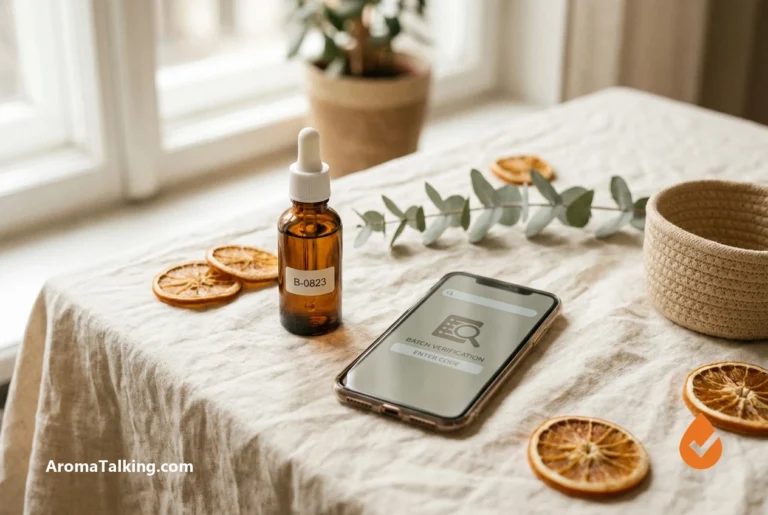
Since February 2023 you can look up the Certificate of Analysis for your exact lot number at cofa.nowfoods.com (Vitamin Retailer, 2023). One limit worth knowing: this covers pure single oils only – blends are not individually certified. NOW also states it runs over 31,000 tests a month across all product lines (NOW Foods Quality), though that figure is self-reported and covers far more than oils.
Credit where it is due on marketing language, too. NOW’s own quality page says grading labels “could be misleading” and notes there is no grading standard used consistently across the industry. A brand telling you its category’s favourite marketing term means nothing is a brand worth listening to.
Are NOW Foods essential oils food grade or safe to ingest?
No. Do not swallow them. This is the question I get asked most about NOW, usually because someone has seen “food grade” on a forum, and the honest answer needs a bit of regulatory background – because the confusion is real and it comes from a real rule.
Some essential oils genuinely do appear in United States food regulation. 21 CFR 182.20, titled “Essential oils, oleoresins (solvent-free), and natural extractives (including distillates)”, lists a long roster of plant oils and states they are generally recognised as safe “for their intended use, within the meaning of section 409 of the Act.”
Everything hinges on that phrase. The intended use is flavouring, at flavouring concentrations – the peppermint in a sweet, the lemon in a soft drink. These are trace amounts measured in parts per million. GRAS status describes a compound appearing in a food product at that level. It is not a clearance to put drops of concentrated oil in water and drink it, and it says nothing about therapeutic doses.
Worth being blunt about: “food grade” and “therapeutic grade” are both marketing phrases, not regulatory categories. There is no consumer-facing “ingestible grade” for essential oils. A bottle can be pure, third-party tested and completely genuine – and still be unsafe to drink, because purity and edibility are different questions.
NOW’s own bottles carry external-use guidance, and their oils are not sold as ingestible products. Internal use of essential oils, where it is appropriate at all, belongs with a clinician who can weigh dose and interactions – not a forum post. If you want the general rules for using oils safely, our beginner’s guide to essential oils and carrier oil guide cover dilution properly.
Why is NOW Foods so cheap?
Because the price you pay for most essential oils is not mostly the oil.
NOW sells through ordinary retail. There is no distributor taking a cut, no upline above them, no compensation plan to fund. When you buy an MLM bottle, a meaningful slice of the price funds the network that sold it to you – that is the business model, not an accusation. Our doTERRA and Young Living reviews go through what that markup actually buys. Strip that layer out and buy at supplement-manufacturer volume, and the same oil costs a fraction as much. Our Plant Therapy, Edens Garden and Rocky Mountain Oils reviews cover the rest of the non-MLM range, and the brand tag collects them all.
Cheap does raise a fair question about whether corners are cut on sourcing, and NOW is genuinely more exposed here than a boutique brand: it does not grow its own plants, and its range is broad rather than deep. The worry is not paranoid, either: in one peer-reviewed GC-MS investigation of 28 lavender oils sold on Amazon, the large majority failed authenticity testing against ISO standards through dilution, synthetic additives or species substitution (Nutritional Outlook; PMC). Adulteration is common in online retail regardless of price. The answer to that worry is the testing paperwork above: buy the lot, check the CofA, and you are not relying on anyone’s promises.
Which NOW oils are worth starting with?
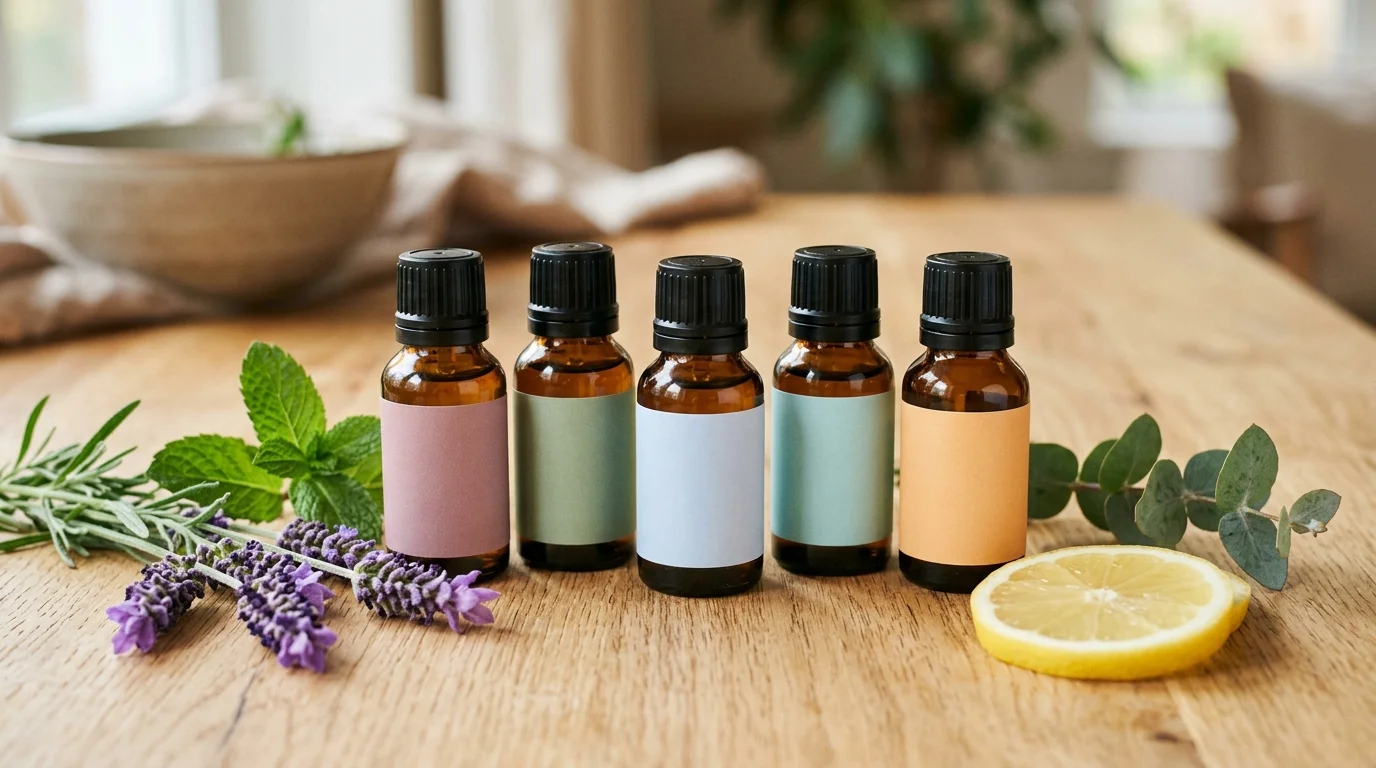
Lavender first, always – it is the most forgiving oil in my cabinet and the one I reach for most. Then sweet orange, which is cheap, pleasant to almost everybody, and hard to overdo in a diffuser. Peppermint for the sharp, clearing scent. Eucalyptus if you want something for a stuffy room. Tea tree only if you have a specific use for it; it is potent and the smell divides people. If you are still deciding what to stock, our guide to the most popular essential oils ranks them by what people actually use.
Skip the blends at first. They are convenient, but you learn nothing about how an oil behaves on its own, and the CofA lookup does not cover them anyway.
Where NOW Foods falls short
The oil is fine. The paperwork around it is not always.
Dilution guidance on the labels is vague, which is a real problem for a brand this many beginners start with. “Dilute before use” tells a first-time buyer nothing actionable, and I have watched people guess at it rather than look it up. Some label information has been contradictory across products. The recipes on their website have historically lacked oil-specific safety warnings, and there is no dedicated kid-safe or pet-safe line the way Plant Therapy has with KidSafe. The CofA portal, genuinely good as it is, stops at pure oils.
None of this makes the oil worse. It makes NOW a brand that assumes you already know what you are doing – which is an odd assumption for the brand most beginners start with.
Where to buy NOW Foods essential oils
Health-food shops, the usual online retailers, and NOW’s own site. If you are shopping for a diffuser at the same time, our ultrasonic diffuser picks pair well with these oils. I buy mine in a shop when I can, for one small reason: you get to read the actual bottle – botanical name, country of origin, the lot number you will need for the CofA lookup – before you commit.
Recommended NOW Foods Oils on Amazon
As an Amazon Associate we earn from qualifying purchases, at no extra cost to you. Product details and availability are subject to change – check the live listing on Amazon.
| Image | Product | Best for | Buy |
|---|---|---|---|
 | NOW Essential Oils | Energy & focus | Buy on Amazon |
 | NOW Essential Oils | Calm & sleep | Buy on Amazon |
 | NOW Essential Oils | Clear breathing | Buy on Amazon |
 | NOW Essential Oils | Skin & surfaces | Buy on Amazon |
 | NOW Essential Oils | Fresh, uplifting scent | Buy on Amazon |
Affiliate links · details and availability change · check the live Amazon listing.
The verdict
NOW Foods is the brand I recommend for a first bottle more than any other – pure single oils, third-party purity testing, lot-level Certificates of Analysis, and no MLM markup. Buy it if you want honest oils at an honest price and you are comfortable looking up dilution ratios yourself.
Look elsewhere if you want hand-holding: a beginner buying for a child or a pet is better served by a brand with an explicit kid-safe line and clearer labels. And whatever you buy, keep it out of your mouth.
Frequently asked questions
Are NOW Foods essential oils good quality?
Yes, for the price. They are pure single-species oils with GC-MS purity testing run by a specialised third-party lab, backed by heavy-metal and pesticide-residue screening, and you can pull a Certificate of Analysis for your lot. Quality control is the strong part; labelling and beginner guidance are the weak part.
Are NOW Foods essential oils food grade?
No. “Food grade” is not a regulatory category for essential oils. Some oils appear in 21 CFR 182.20 as generally recognised as safe “for their intended use” – meaning flavouring at parts-per-million levels in food products, not drops taken neat. NOW’s oils are sold for external use and should not be swallowed.
Can you use NOW essential oils internally?
Not on your own. Purity and edibility are separate questions, and a pure, well-tested oil is still a highly concentrated substance that can irritate or burn mucous membranes. Internal use, where appropriate at all, belongs with a qualified clinician who can judge dose and drug interactions.
Are NOW Foods essential oils pure?
The single oils are sold as 100% pure with no synthetic fillers, and the third-party GC-MS testing plus the lot-level Certificate of Analysis let you verify that for the bottle in your hand rather than taking it on trust. The CofA lookup covers pure oils only – blends are not individually certified.
Is NOW Foods an MLM?
No. NOW Foods is a family-owned manufacturer founded in 1968 that sells through retail shops and ordinary online retailers. There are no distributors, no downline and no membership tier, which is a large part of why the oils cost what they do.
How we review essential oil brands
I buy the products I write about, I take no free samples, and affiliate links never influence a rating. More about me and this site is on the about page. Brand assessments here rest on published testing documentation, regulatory records and label evidence – not on manufacturer marketing. Where a claim comes from the brand rather than an independent source, I say so in the sentence.
Medical disclaimer: This article is general information, not medical advice, and does not diagnose or treat any condition. Never apply essential oils neat or ingest them, and check with a qualified professional before using them during pregnancy, while nursing, around children, with a medical condition, or alongside medication.