Essential Oils for Headaches: Best Oils & Safe Use
Contents
- What Are the Best Essential Oils for Headaches?
- Peppermint Oil: The Tension Headache Specialist 🟢 Strong Evidence
- Lavender Oil: Best for Migraine Relief 🟢 Strong Evidence
- Eucalyptus Oil: Natural Sinus Decongestant 🟡 Emerging Evidence
- Rosemary Oil: Circulation and Pain Relief 🟡 Emerging Evidence
- Chamomile Oil: Stress and Hormonal Headaches 🟡 Emerging Evidence
- How to Use Essential Oils for Headaches Safely
- Which Essential Oil Works Best for Your Headache Type?
- DIY Essential Oil Recipes and Blends for Headaches
- Special Considerations: Pregnancy, Children, and Pets
- doTERRA and Young Living: Brand-Specific Recommendations
- What Does the Science Actually Say About Essential Oils for Headaches?
- Frequently Asked Questions About Essential Oils for Headaches
- What to Do the Next Time a Headache Strikes
⚕️ Medical Disclaimer: The information in this article is for educational purposes only and is not a substitute for professional medical advice, diagnosis, or treatment. Always consult a qualified healthcare provider before using essential oils, especially if you are pregnant, nursing, or managing a medical condition.
By Ellen Cooper, independent essential-oil reviewer (hands-on since 2018, no MLM affiliation)
- Table of Contents:
- What Are the Best Essential Oils for Headaches?
- How to Use Essential Oils for Headaches Safely
- Which Essential Oil Works Best for Your Headache Type?
- DIY Essential Oil Recipes and Blends for Headaches
- Special Considerations: Pregnancy, Children, and Pets
- doTERRA and Young Living: Brand-Specific Recommendations
- What Does the Science Actually Say About Essential Oils for Headaches?
- Frequently Asked Questions
You’ve probably already seen the “top 10 essential oils for headaches” lists. They all say the same things, recommend the same oils, and leave you no closer to understanding which one will actually help your throbbing head and neck pain — or whether any of them will work at all. Most of that content either overpromises results or skips the safety warnings entirely, leaving cautious readers frustrated and no better informed.
This guide takes a different approach. It introduces The Evidence Tier System — a framework that grades each essential oil by the actual quality of scientific research behind it, not just its popularity on wellness blogs. By the end, you’ll know exactly which essential oils are best for your specific headache type, how to apply them safely, and what the clinical evidence honestly supports. We cover the five most relevant oils, three application methods, DIY recipes, and a full safety guide for pregnancy, children, and pets.
Peppermint and lavender essential oils have the strongest clinical evidence for headache relief — peppermint for tension headaches, lavender for migraines.
- Always dilute: Never apply essential oils directly to skin — mix 2–3 drops with 1 tsp of carrier oil first (standard 2% adult dilution).
- Match oil to headache type: Peppermint for tension, lavender for migraines, eucalyptus for sinus.
- The Evidence Tier System: Not all oils are equally supported by research — this guide grades each one honestly across three tiers (🟢 Strong / 🟡 Emerging / 🔴 Traditional Use Only).
- Safety first: Several oils are unsafe during pregnancy and around pets — check the Special Considerations section before use.
- Evidence is promising but limited: A 2023 meta-analysis found results are inconclusive; use oils as a complement to, not a replacement for, medical care.
What Are the Best Essential Oils for Headaches?

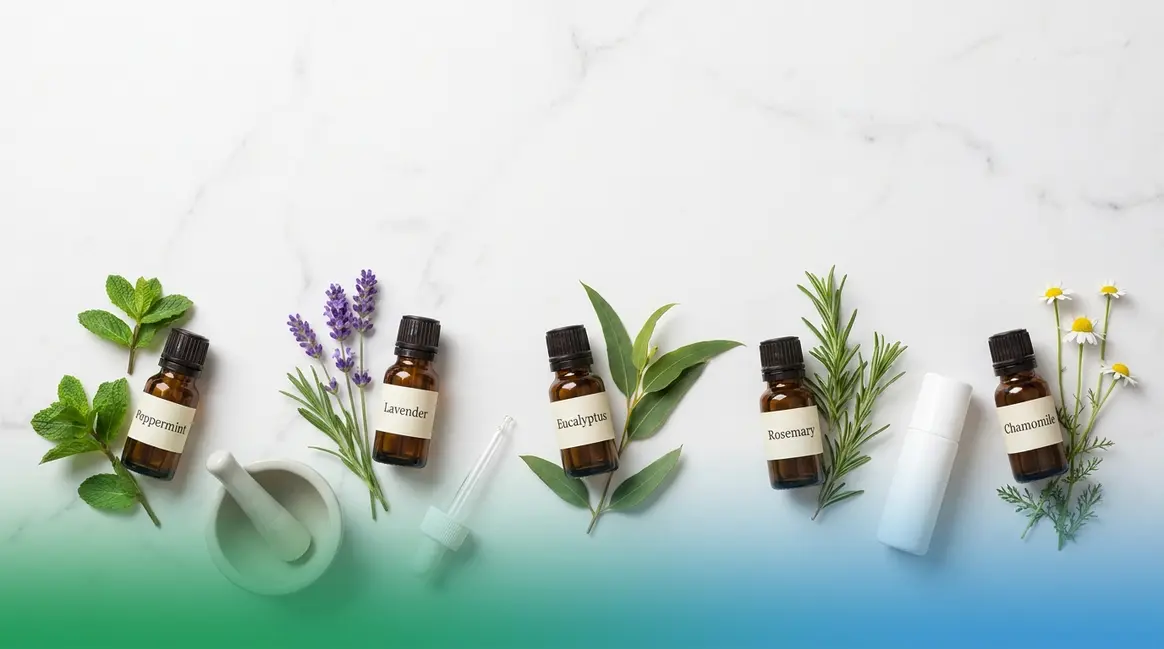
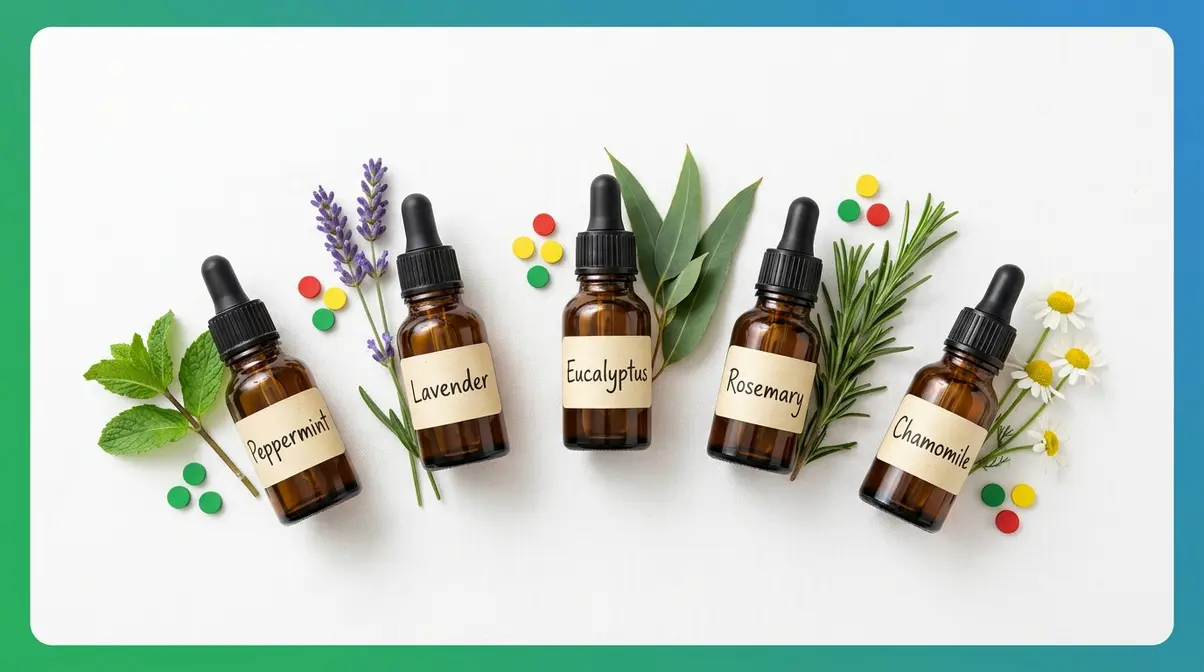
The best essential oils for headaches include peppermint, lavender, eucalyptus, rosemary, and chamomile — but they are not equally supported by research. The Evidence Tier System used throughout this guide grades each oil across three levels: 🟢 Strong Evidence (multiple randomized controlled trials), 🟡 Emerging Evidence (limited trials or observational data), and 🔴 Traditional Use Only (historical or anecdotal use, no clinical trials). Of these five oils, only peppermint and lavender reach the 🟢 Strong Evidence tier.
This distinction matters. Most “best essential oils” lists recommend the same oils without explaining why some are better supported than others. Knowing the evidence tier helps you set realistic expectations — and avoid spending money on oils whose headache benefits exist mainly in tradition, not clinical studies.
Peppermint Oil: The Tension Headache Specialist 🟢 Strong Evidence
Peppermint oil earns its place at the top of any evidence-based list of essential oils for tension headaches. The active compound, menthol, triggers TRPM8 cold receptors in the skin, producing the familiar cooling sensation. This process inhibits serotonin receptors and reduces pain signaling along the trigeminal nerve pathway — in plain English, it interrupts the pain message before it fully registers.
The clinical support is meaningful. A 2016 review of controlled trials found topical peppermint oil was effective for tension-type headaches, significantly outperforming placebo when applied to the forehead and temples. Johns Hopkins on peppermint oil relief confirms that peppermint’s cooling effect stimulates blood flow and may relieve tension headaches.
For application, dilute 2–3 drops in a teaspoon of carrier oil and massage into the temples and forehead. Keep it away from the eyes, and note that undiluted peppermint can cause skin irritation. Peppermint is also not recommended for children under 6 — menthol can cause respiratory distress in young children (more on this in the Special Considerations section).
Lavender oil takes a different approach — instead of cooling, it works on the nervous system itself, making it the go-to choice for migraine sufferers.
Lavender Oil: Best for Migraine Relief 🟢 Strong Evidence
Picture this: it’s the middle of the afternoon, and the familiar throb behind your eyes is building — the kind of throbbing head and neck pain that signals a migraine taking hold. You reach for a diffuser, add a few drops of lavender oil, and within 15 minutes the intensity begins to ease. That scenario isn’t wishful thinking. It reflects what a landmark clinical trial actually found.
A clinical trial on lavender oil for migraines published in 2012 found that inhalation of lavender essential oil for 15 minutes was an effective and safe treatment for acute migraine management in a placebo-controlled study — one of the most rigorous designs in clinical research. The mechanism involves linalool, lavender’s primary compound, which demonstrates anti-inflammatory and mild sedative properties that calm the neurological hypersensitivity characteristic of migraines. Ongoing research into lavender oil continues in a registered randomized controlled trial examining lavender inhalation’s effects on headache severity and anxiety in migraine patients, signaling sustained scientific interest.
For use during a migraine, add 2–3 drops to a diffuser in a darkened room, or inhale directly from the bottle for 15 minutes. You can also dilute it and apply to the back of the neck. Lavender is one of the few oils considered relatively safer during pregnancy in low dilutions — but check the Special Considerations section for full guidance before using it. For more depth, see our guide exploring the benefits of lavender oil.
For headaches rooted in congestion and sinus pressure, eucalyptus oil works through a completely different mechanism — one that targets the airways directly.
Eucalyptus Oil: Natural Sinus Decongestant 🟡 Emerging Evidence

Eucalyptus oil works differently from peppermint and lavender — its target isn’t pain signaling or the nervous system, but the congested airways that cause sinus headaches in the first place. The primary active compound, 1,8-cineole (also called eucalyptol), has demonstrated anti-inflammatory and mucolytic — that is, mucus-thinning — properties in laboratory and animal studies. By helping open blocked nasal passages, it relieves the built-up pressure that translates into sinus headache pain.
The evidence tier here is 🟡 Emerging Evidence. Laboratory findings are promising, but large-scale human randomized controlled trials specifically for sinus headaches remain limited. That honest caveat doesn’t mean it’s ineffective — it means the evidence base is thinner than for peppermint or lavender.
The most effective delivery method for sinus headaches is steam inhalation: add 3–4 drops of eucalyptus oil to a bowl of hot (not boiling) water, drape a towel over your head, and inhale gently for 5–10 minutes. Alternatively, use it in a diffuser. One important safety note: eucalyptus is toxic to cats and should never be used in homes where cats roam freely — cross-reference the Special Considerations section before use.
Rosemary oil is less well-known for headaches but has an interesting mechanism involving circulation — worth understanding if your headaches feel like pressure or tightness.
Rosemary Oil: Circulation and Pain Relief 🟡 Emerging Evidence
Rosemary oil contains two notable compounds — camphor and 1,8-cineole — that may improve peripheral circulation and carry mild analgesic properties. Some small studies suggest topical application can reduce pain perception, possibly by increasing blood flow to tense muscle tissue. For headaches that present as a heavy pressure or tightness across the scalp and neck, this circulatory mechanism makes rosemary a logical secondary option.
The evidence tier is 🟡 Emerging Evidence. Human trials are limited, and most support comes from preliminary or observational research combined with its long history of traditional use. It’s worth trying as a complement to peppermint — not as a standalone primary treatment.
Apply diluted rosemary oil to the back of the neck or temples, or diffuse it alongside peppermint for a combined effect. One important caution: rosemary may interact with blood pressure medications and blood thinners. If you take either, consult your doctor before use. Rosemary is also on the list of oils to avoid during pregnancy.
Finally, chamomile oil rounds out the list — particularly useful when your headache is driven by stress, anxiety, or hormonal fluctuations.
Chamomile Oil: Stress and Hormonal Headaches 🟡 Emerging Evidence
Roman chamomile (Chamaemelum nobile) takes a different route to headache relief than any other oil on this list. Its primary active compound, apigenin, is a flavonoid that binds to GABA receptors in the brain — producing a mild sedative and anxiolytic (anxiety-reducing) effect. For headaches triggered by stress, tension, or hormonal fluctuations, chamomile addresses the underlying trigger rather than just the symptom.
The evidence tier is 🟡 Emerging Evidence. Chamomile’s anxiolytic properties are better studied than its direct headache-specific effects — the headache benefit is largely inferred from its well-documented stress-reduction mechanism. That said, if stress is a consistent trigger for your headaches, chamomile is a genuinely rational choice.
Use it aromatically: diffuse in the evening or inhale directly. Chamomile pairs particularly well with lavender for a synergistic calming blend — 2 drops chamomile plus 3 drops lavender creates a gentle combination that addresses both sleep disruption and stress-related headache prevention. To discover other popular essential oils that complement these five, aromatalking.com covers a broad range of options.

Knowing which oil to reach for is only half the equation. The how matters just as much — both for safety and for getting results.
How to Use Essential Oils for Headaches Safely

There are three main ways to use essential oils for headaches: topical application, diffusion, and a pre-made roll-on. For topical use, the single most important rule is always diluting with a carrier oil — a neutral base oil like coconut, jojoba, or sweet almond oil — before applying to skin. Skipping this step isn’t just a minor mistake. Applying essential oils undiluted, known as “neat” application, can cause sensitization: a permanent allergic reaction that makes the oil unusable for you forever.
The table below summarizes the standard dilution ratios recommended by aromatherapy safety guidelines for adult use:
| Application | Carrier Oil | Essential Oil Drops | Dilution % |
|---|---|---|---|
| Adult topical (general) | 1 tsp (5 ml) | 2–3 drops | 2% |
| Sensitive skin / elderly | 1 tsp (5 ml) | 1 drop | 1% |
| Roll-on bottle (10 ml) | Fill to shoulder | 4–6 drops | 2% |
| Bath soak | 1 tbsp carrier | 5–8 drops | Mix first |
A 2% dilution ratio — approximately 12 drops of essential oil per 1 oz (30 ml) of carrier oil — is the standard safe concentration for adult topical use recommended by aromatherapy safety guidelines. For sensitive skin, older adults, or pregnancy, drop that to 1% (approximately 6 drops per 1 oz). The 10 ml roll-on column above reflects the same 2% standard scaled to that smaller volume.
Topical Application: Where to Apply Essential Oils for Headaches

For most tension and migraine headaches, topical application delivers the oil directly where it’s needed. Follow these steps:
- Choose your carrier oil. Coconut oil, jojoba oil, and sweet almond oil all work well. Fractionated coconut oil stays liquid at room temperature and absorbs cleanly without a greasy residue.
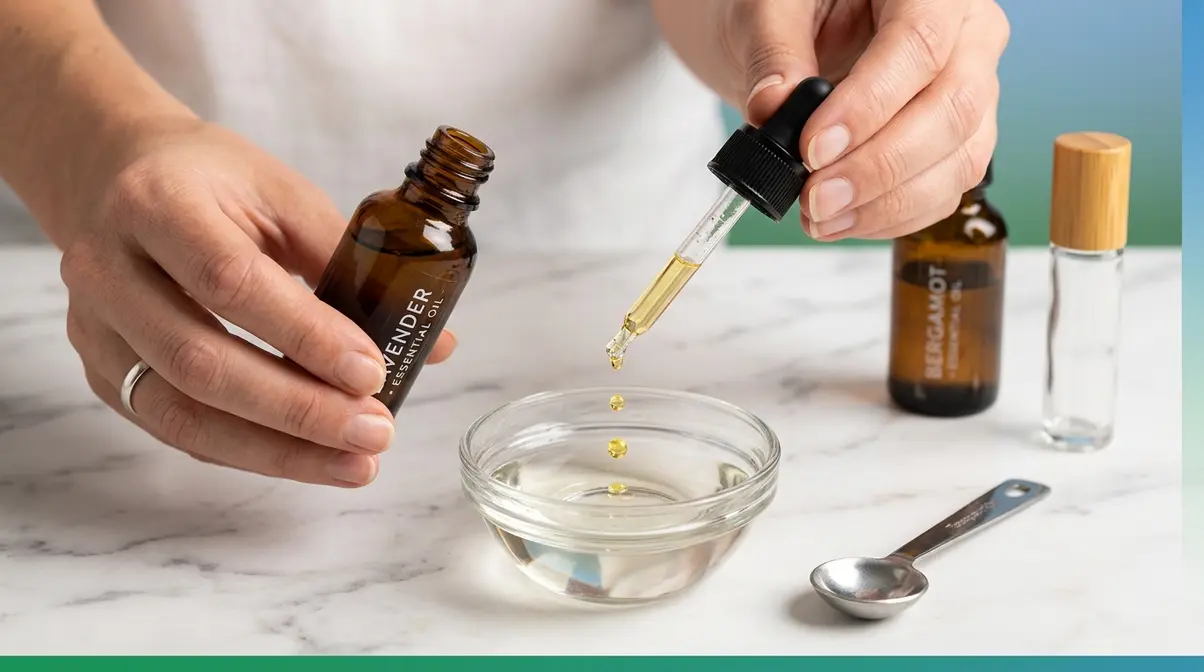
- Measure your oils. Add 2–3 drops of your chosen essential oil to 1 teaspoon (5 ml) of carrier oil.
- Mix in your palm. Swirl the oils together using a fingertip — don’t shake.
- Apply to the right points. Use gentle circular massage at: temples and forehead (direct contact with tension headache sites), back of neck (muscle tension and referred pain), and behind the ears (general relaxation and lymphatic drainage).
- Massage for 1–2 minutes. The mechanical action of massage itself helps release muscle tension alongside the oil’s active compounds.
The controlled trials summarized in a 2016 review point to the temples and forehead as the highest-priority application points for tension-type pain — direct contact with the affected area is what drives the cooling-and-relief effect (peppermint oil tension headache study, National Library of Medicine, 2016).
A practical scenario: if you feel a tension headache building at your desk, mix 2 drops of peppermint oil with a teaspoon of coconut oil and massage into your temples for 1–2 minutes. The cooling sensation typically begins within a few minutes.
Common mistakes to avoid: Never apply essential oils near the eyes, on broken or irritated skin, or directly to the nostrils. These are the most frequent errors that cause irritation — and in the case of the eyes, real discomfort. For a broader foundation, a complete beginner’s guide to using essential oils covers everything from storage to blending basics.

If you prefer not to apply anything to your skin, diffusion is an equally effective method — and it fills your whole room with headache-relieving aroma.
Aromatherapy Diffusion: Best Oils for Your Diffuser

Ultrasonic diffusers work by dispersing micro-particles of essential oil into the air. When you inhale them, the aromatic compounds interact with olfactory receptors that connect directly to the limbic system — the brain’s emotional and pain-processing center. This is why inhaled lavender can reduce migraine severity: the pathway is neurological, not just psychological.
Practical instructions for using an essential oils for headaches diffuser:
- Add 3–5 drops of essential oil to the diffuser’s water reservoir
- Run for 30–60 minutes — no longer
- After 60 minutes, take a break of at least 30 minutes before running it again
That 60-minute limit is counterintuitive but important. Extended diffusion causes olfactory fatigue, where your nose stops detecting the scent — and in sensitive individuals, prolonged exposure can actually trigger a headache rather than relieve one.
- Best oils for headache diffusion by type:
- Lavender — migraine relief (neurological calming)
- Peppermint — tension headache (cooling, muscle relaxation)
- Eucalyptus — sinus headache (decongestant)
For a migraine, try 3 drops of lavender in your diffuser in a darkened, quiet room for 30 minutes. The NCI on aromatherapy for stress and anxiety notes that human clinical trials have investigated aromatherapy for treating stress and anxiety — two of the most common headache triggers — supporting the case for aromatherapy as a complementary approach (NCI, 2024). For choosing the right equipment, see our guide on choosing the right essential oil diffuser.
For on-the-go headache relief, a DIY roll-on gives you the benefits of topical application in a convenient, pre-diluted format you can carry anywhere.
DIY Roll-On: How to Make a Headache Relief Blend
A 10 ml glass roll-on is one of the most practical tools for headache relief — pre-diluted, portable, and ready to apply the moment you feel a headache coming on. Here’s what you need and how to make it:
You’ll need: a 10 ml glass roll-on bottle, fractionated coconut oil or jojoba oil (both stay liquid and resist going rancid), and your chosen essential oils.
- Add your essential oils first. Drop them into the empty bottle before adding the carrier oil.
- Pour in carrier oil to the shoulder of the bottle — not the very top, to leave room for the roller ball.
- Replace the roller ball and cap securely.
- Roll gently between your palms for 10–15 seconds to blend.
- Apply to temples, forehead, and back of neck at the first sign of a headache.
A simple, effective blend: 3 drops peppermint + 2 drops lavender + 1 drop eucalyptus in 10 ml fractionated coconut oil. This gives you cooling relief (peppermint), nervous system calming (lavender), and mild decongestant support (eucalyptus) — three complementary mechanisms in one blend. The total of 6 drops in 10 ml sits right at the 2% dilution threshold.
One critical mistake to avoid: never use a plastic roll-on bottle. Essential oils degrade plastic over time, leaching chemicals into your blend. Always use glass or stainless steel. For more on why the carrier oil you choose matters, see our piece on understanding the importance of carrier oils.
Now that you know how to apply essential oils safely, the next question is which oil to reach for — because the answer depends on what type of headache you’re dealing with.
Which Essential Oil Works Best for Your Headache Type?
Essential oils for headaches work differently depending on your specific headache type — there is no single answer that works for everyone. Peppermint leads for tension headaches, lavender for migraines, eucalyptus for sinus congestion. Applying that evidence grading here adds another layer: the evidence quality varies not just by oil, but by headache type. Peppermint has 🟢 Strong Evidence for tension headaches specifically, but only 🟡 Emerging Evidence for migraines — a distinction most competitor content misses entirely. That evidence-first framing is what separates genuinely useful guidance from generic wellness lists.
| Headache Type | Top Oil | Evidence Tier | Application |
|---|---|---|---|
| Tension | Peppermint | 🟢 Strong | Topical — temples/forehead |
| Migraine | Lavender | 🟢 Strong | Inhalation — 15 min |
| Sinus | Eucalyptus | 🟡 Emerging | Steam inhalation |
| Hormonal/Stress | Chamomile or Lavender | 🟡 Emerging | Diffusion |
| Barometric Pressure | Peppermint + Eucalyptus blend | 🔴 Traditional | Topical + diffusion |

Migraine Headaches: Why Lavender Is Your Best Option
Migraines involve neurological inflammation and hypersensitivity to sensory input — light, sound, and strong scents can all intensify the pain. Lavender’s primary compound, linalool, has demonstrated anti-inflammatory and sedative properties in studies, making it one of the few oils that addresses migraine’s neurological mechanism rather than just masking discomfort. As noted earlier, a 2012 placebo-controlled trial found lavender inhalation effective for acute migraine management (National Library of Medicine, 2012) — and registered research continues to examine its effects on headache severity and anxiety in migraine patients.
Here’s the nuance most lists skip: peppermint oil can actually trigger migraines in some people. Its strong scent is a known sensory trigger for individuals whose migraines are scent-sensitive. If you’ve ever found that strong smells worsen your migraine, avoid peppermint during an active attack.
For application during a migraine, use 2–3 drops in a diffuser or inhale directly from the bottle. Avoid topical application on the head during an active attack — skin sensitivity is heightened during migraines, and even a diluted oil may feel overwhelming.
Tension headaches — the most common type — respond best to peppermint’s cooling action, which works through a completely different mechanism.
Tension Headaches: Peppermint’s Cooling Mechanism
Tension headaches arise from muscle contractions in the head, scalp, and neck — the kind that builds gradually after hours at a screen or under stress. Peppermint’s menthol compound works directly on this mechanism: it relaxes the contracted muscles and inhibits serotonin receptors, reducing the pain signals transmitted along the nerve pathways. A 2016 review (Göbel, National Library of Medicine, 2016) summarized controlled trials finding topical application significantly outperformed placebo.
For tension headaches specifically, topical application outperforms inhalation. Direct contact with the temples, forehead, and back of the neck puts the menthol where it’s needed — in contact with the affected muscles and the skin overlying the pain site. Inhalation still provides some benefit, but the physical cooling-and-relaxation effect is the primary mechanism here.
Rosemary oil is worth considering as a secondary option for tension headaches with a strong circulation or tightness component — its camphor content may improve blood flow to tense scalp and neck muscles.
Sinus headaches require a different strategy entirely — one focused on clearing the airways rather than relaxing muscles.
Sinus Headaches: Eucalyptus and the Decongestant Approach
Sinus headaches are caused by inflammation and mucus buildup within the sinus cavities — the pressure this creates translates directly into the characteristic pain behind the eyes, cheeks, and forehead. Eucalyptus oil’s eucalyptol compound reduces inflammation and thins mucus, addressing the structural cause of the headache rather than just dampening pain perception.
Steam inhalation is the most effective delivery method for sinus headaches. The hot steam helps loosen and thin mucus independently, and the eucalyptus amplifies this effect. Method: boil water, pour into a heat-safe bowl, add 3–4 drops of eucalyptus oil, drape a towel over your head, and inhale gently for 5–10 minutes with eyes closed.
For a synergistic decongestant effect, add 2 drops each of eucalyptus and peppermint to the steam bowl. Peppermint’s menthol opens the airways from a different angle, creating a one-two punch against congestion. Keep eyes firmly closed during the entire session — the steam and oils together are irritating to eyes.
Hormonal and stress-triggered headaches are the most overlooked category — and they respond best to oils that address the root cause rather than the pain itself.
Hormonal and Stress Headaches: Chamomile and Lavender
Stress headaches aren’t simply “tension headaches caused by stress” — they involve elevated cortisol triggering a cascade: muscle tension, disrupted sleep, and increased pain sensitivity, all feeding into each other. Chamomile’s apigenin and lavender’s linalool both act on the GABA system to reduce anxiety and cortisol response, which means they address the trigger rather than just the resulting pain.
Hormonal headaches — those tied to the menstrual cycle or perimenopause — are driven by estrogen fluctuations. Clary sage is sometimes used traditionally for hormonal balance and is listed as 🔴 Traditional Use Only; the direct evidence for headache relief is minimal, though its calming properties are recognized. If you experience predictable monthly headaches, an evening aromatherapy routine timed around your cycle may help reduce frequency.
A practical evening diffusion routine: 3 drops lavender + 2 drops chamomile in a diffuser 30 minutes before bed. This combination addresses both sleep disruption and stress headache prevention simultaneously — the two most common hormonal headache contributors outside of estrogen itself.
Once you know which oil to use, the next step is making it work for you at home — and that’s where DIY blends and recipes come in.
DIY Essential Oil Recipes and Blends for Headaches

Making your own essential oil blends for headaches is straightforward, cost-effective, and allows you to customize for your specific headache type. The key rule: limit blends to 2–3 oils maximum. More than three oils creates unpredictable interactions and makes it far harder to identify which oil is causing a reaction if one develops.
Tension Relief Roll-On Recipe
You’ll need: 10 ml glass roll-on bottle, fractionated coconut oil, 3 drops peppermint oil, 2 drops lavender oil, 1 drop rosemary oil.
- Drop the essential oils directly into the empty glass roll-on bottle.
- Fill to the shoulder with fractionated coconut oil — this gives a 2% dilution for the 10 ml total volume.
- Replace the roller ball and cap.
- Roll gently between your palms for 15 seconds to blend.
- Apply to temples, forehead, and back of neck at the first sign of a headache.
Why this blend works: Peppermint provides immediate cooling relief via menthol — the same mechanism confirmed in the peppermint oil tension headache evidence from the 2016 review of controlled trials (National Library of Medicine, 2016). Lavender adds nervous system calming; rosemary supports circulation in the neck and scalp — three complementary mechanisms in a single convenient format.
Safety note: This blend is not recommended during pregnancy (peppermint and rosemary are both on the avoid list) and is not appropriate for children under 6. For a broader overview of essential oil safety standards, the NCI aromatherapy safety guidelines provide a useful reference for household use.
Storage: Stored in a cool, dark place, this roll-on retains its therapeutic properties for 12–18 months. Essential oil blends stored in dark glass bottles away from heat and light generally retain potency for 1–2 years, depending on the carrier oil used.

Migraine Diffuser Blend
Ingredients: 3 drops lavender oil, 2 drops chamomile oil, 1 drop frankincense oil (optional — 🔴 Traditional Use Only, but widely used for its calming and grounding properties). Frankincense is listed as Traditional Use Only because, while it has a long history of use in aromatherapy, clinical trials specifically examining its headache-relief properties remain limited — making it a complementary addition rather than a primary treatment.
- Instructions:
- Add all drops to your diffuser’s water reservoir.
- Run in a darkened, quiet room for 30 minutes.
- Take a 30-minute break, then repeat if needed.
Why this blend works: Lavender addresses neurological inflammation and calms the hypersensitivity that characterizes migraines; chamomile reduces cortisol and anxiety, which often escalate during a migraine episode; frankincense adds a grounding, resinous note that many people find deepens the calming effect.
Important note: If strong scents are a known migraine trigger for you, start with lavender alone — just 1–2 drops — before adding other oils. Introduce additional oils only once you’ve confirmed lavender alone doesn’t worsen your symptoms.
Sinus Clearing Steam Blend
Ingredients: 3 drops eucalyptus oil, 2 drops peppermint oil, 1 drop tea tree oil (optional — antimicrobial, useful if your sinus headache is related to an active infection).
- Instructions:
- Bring water to a boil and pour into a heat-safe bowl — allow it to cool for 60 seconds so steam is warm but not scalding.
- Add the essential oil drops to the water surface.
- Drape a towel over your head and the bowl to capture the steam.
- Inhale slowly and gently for 5–10 minutes with eyes closed.
- Repeat up to three times daily during a sinus headache episode.
Why this blend works: Eucalyptus thins mucus and reduces sinus inflammation; peppermint opens the airways via menthol; tea tree’s antimicrobial properties address any bacterial component contributing to the congestion.
Safety notes: Keep eyes closed throughout — steam plus essential oils is seriously irritating to eyes. This blend is not appropriate for children under 10 (eucalyptus) and is not safe around cats (eucalyptus, peppermint, and tea tree are all toxic to felines). Steam blends are single-use and do not require storage — prepare fresh each time for best results.
Before you try any of these recipes, there’s one more section you should read — especially if you’re pregnant, have young children, or share your home with pets.
Special Considerations: Pregnancy, Children, and Pets

Essential oils are not universally safe, and certain populations face real risks from oils that are perfectly fine for healthy adults. Pregnant women, young children, and pets require specific precautions — and these precautions are not vague. Here’s the honest reality that most wellness content glosses over: “natural” does not mean “safe.” Many plant compounds are biologically active precisely because they’re potent — and potency works in both directions. This section covers what the evidence and safety guidelines actually say.
Essential Oils During Pregnancy
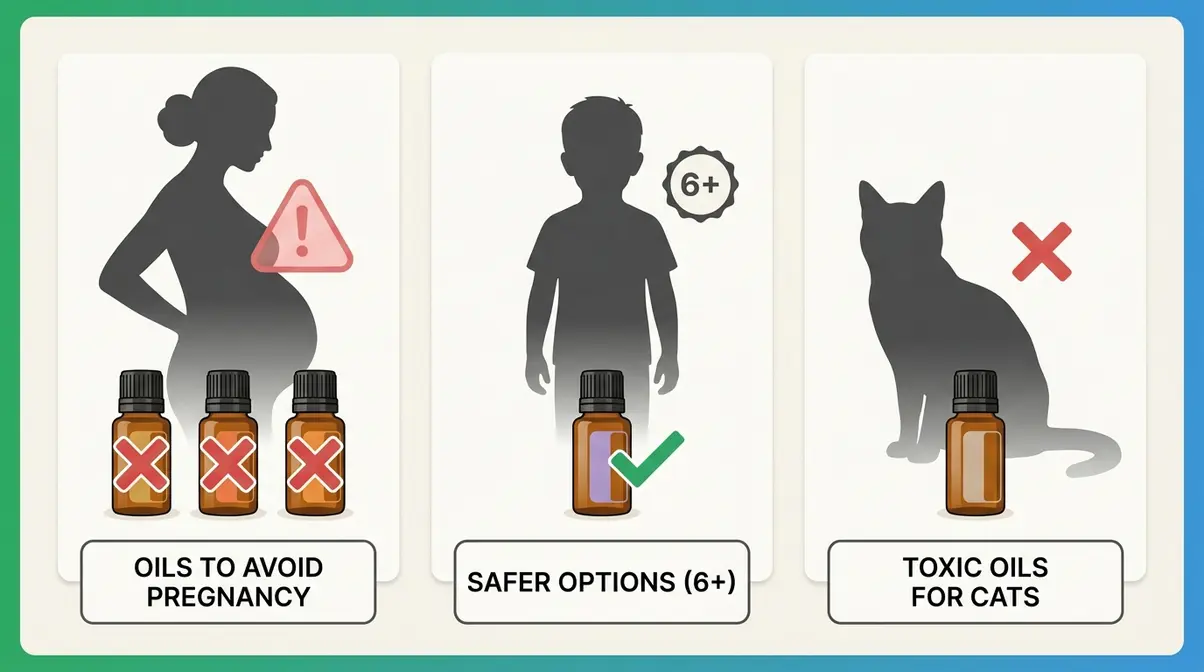
Pregnancy — particularly the first trimester — is when essential oil caution matters most. Several oils stimulate uterine contractions or otherwise pose risks to a developing pregnancy:
- Oils to avoid during pregnancy:
- Clary sage — acts as a uterine stimulant and is contraindicated throughout pregnancy
- Rosemary — may increase blood pressure and is generally avoided, especially in the first trimester
- Wintergreen — contains methyl salicylate, a compound chemically similar to aspirin, which carries similar risks in pregnancy
- Basil and thyme — both have uterine-stimulating properties and are typically avoided
Relatively safer options: Lavender (in low dilution, 0.5–1%) and peppermint (for nausea and headaches) are considered relatively safer by many practitioners. Mayo Clinic on peppermint oil in pregnancy notes that some women have successfully managed headaches during pregnancy with peppermint oil, but advises caution and consultation with a healthcare provider before use (Mayo Clinic, 2023).
Always use the lowest effective dilution — 0.5% — during pregnancy. Avoid steam inhalation in the first trimester. Never ingest essential oils under any circumstances, pregnant or not. For a broader look at essential oil safety during pregnancy, that guide covers the most common concerns in detail.
Essential Oils for Children with Headaches
Children’s bodies metabolize essential oil compounds differently from adults, and the consequences of getting it wrong range from respiratory distress to seizure risk in extreme cases.
- Age-based restrictions:
- Peppermint: Not recommended for children under 6. Menthol can cause respiratory distress and, in very young children, slow breathing reflexes.
- Eucalyptus: Not recommended for children under 10. The eucalyptol compound poses similar respiratory risks in young children.
- Safer options for children:
- Lavender (diluted to 0.5–1%) is generally considered safe for children over 2 and is the most widely recommended option for childhood headaches
- Roman chamomile is another gentle option for stress-related headaches in children
Application method for children: Diffusion in a well-ventilated room with an open door is safer than topical application. Never apply essential oils to a child’s face, near the nose, or on the hands (children put their hands in their mouths and eyes). For guidance on lavender specifically, our guide on lavender essential oil for anxiety and stress relief includes child-appropriate usage notes.
Keeping Pets Safe Around Essential Oils
Of all household animals, cats are the most vulnerable to essential oil toxicity. They lack glucuronyl transferase, the liver enzyme that metabolizes many essential oil compounds in humans. Without this enzyme, the compounds accumulate to toxic levels. Oils toxic to cats include: tea tree, eucalyptus, peppermint, lavender (in high concentrations), and citrus oils — all five of which appear in common headache blends.
Dogs are less sensitive than cats but still at risk from high concentrations of tea tree, cinnamon, and clove oils.
- Safe practices around pets:
- Diffuse only in a well-ventilated room with an open door so pets can leave voluntarily
- Never apply essential oils directly to a pet’s skin or fur
- Store all oils in a closed cabinet or drawer, out of reach of curious animals
- If your pet shows signs of lethargy, drooling, trembling, or difficulty breathing after exposure to diffused oils, contact a veterinarian immediately
The NCI’s aromatherapy overview provides a useful safety framework for household use precautions relevant to all populations (NCI, 2024).
If you use doTERRA or Young Living products, the next section covers their specific headache-focused oils and blends — so you can apply everything you’ve learned to the products already in your collection.
doTERRA and Young Living: Brand-Specific Recommendations
Both doTERRA and Young Living offer headache-specific blends alongside their single oils — and both brands are direct-sales (MLM) companies whose products are priced at a premium relative to comparable quality oils from other suppliers. That business model doesn’t change the chemistry: doTERRA’s peppermint and lavender are subject to the same evidence grading as any quality essential oil. The brand name doesn’t alter what menthol does to TRPM8 receptors.
doTERRA’s PastTense blend and Young Living’s PanAway blend both contain peppermint and wintergreen as primary ingredients — the same compounds with the strongest evidence for tension headache relief.
doTERRA Oils for Headaches
doTERRA’s most relevant headache products map directly to those evidence tiers:
PastTense is doTERRA’s dedicated headache blend — a pre-diluted roll-on containing peppermint, wintergreen, lavender, rosemary, basil, marjoram, and frankincense. Apply to temples and back of neck at the first sign of a headache. The peppermint and lavender components earn 🟢 Strong Evidence — backed by the same peppermint clinical evidence for tension headaches that applies to any quality peppermint oil (National Library of Medicine, 2016); the remaining oils in the blend sit at 🟡 Emerging or 🔴 Traditional Use Only. It’s a convenient option, but the proprietary formula means you can’t adjust individual oil concentrations.
Deep Blue (doTERRA’s muscle and tension blend) contains wintergreen, camphor, peppermint, and blue tansy. It’s designed primarily for muscle pain but works well for tension headaches with a pronounced neck and shoulder muscle component.
Single oils: doTERRA’s peppermint and lavender single oils are their most evidence-supported headache options — and the same dilution and application rules apply here as with any other brand.
Safety note: PastTense contains wintergreen (methyl salicylate) — avoid during pregnancy. The Mayo Clinic on wintergreen safety in pregnancy advises caution with methyl salicylate-containing products during pregnancy (Mayo Clinic, 2023). For a full honest review of doTERRA essential oils, aromatalking.com covers quality, pricing, and sourcing in detail.
Young Living Oils for Headaches
Young Living’s headache-relevant lineup covers similar ground with a different formulation approach:
PanAway is Young Living’s pain and tension blend, containing wintergreen, helichrysum, clove, and peppermint. Apply diluted to temples and the back of the neck for tension headaches. Helichrysum is traditionally used for its anti-inflammatory properties (🔴 Traditional Use Only); peppermint brings the 🟢 Strong Evidence component.
Stress Away is a gentler option for stress-triggered headaches — its formula includes copaiba, lime, cedarwood, vanilla, ocotea, and lavender. Diffuse it or apply a few drops to the wrists. This blend targets the stress-headache trigger rather than acute pain relief.
Single oils: Young Living’s peppermint and lavender remain their most evidence-supported headache options. The same evidence grading applies regardless of brand — and the same dilution ratios, safety warnings, and application methods in the relevant section above apply here without exception.
Safety note: PanAway contains both clove and wintergreen — avoid during pregnancy and keep away from pets, particularly cats. For more detail, learn more about Young Living’s products at aromatalking.com.
Before you reach for any of these oils, it’s worth understanding what the clinical research actually says — because the honest answer is more nuanced than most wellness sites will tell you.
What Does the Science Actually Say About Essential Oils for Headaches?
The scientific picture for essential oils as a headache treatment is genuinely mixed — and being honest about that is more useful to you than overstating the evidence. A meta-analysis is a study that pools results from multiple individual trials to identify overall patterns; it’s considered a higher level of evidence than any single study. The findings from a 2023 meta-analysis on this topic are worth examining directly, because they complicate the simple “yes, they work” narrative.
The 2023 Meta-Analysis: What It Actually Found
The 2023 PMC meta-analysis (Murtey, PMC/NIH, 2023) reviewed existing studies on essential oils for headache and migraine relief, examining lavender, peppermint, chamomile, anise, basil, rose, and mixed essential oils. While individual studies showed that several of these oils reduced migraine intensity and frequency, the overall conclusion was inconclusive.
Why? The studies were small — often under 100 participants. They used different oils, different concentrations, different application methods, and different outcome measures. This methodological inconsistency makes direct comparison difficult and prevents the kind of pooled confidence that would support a strong clinical recommendation. A 2023 systematic review published in PMC found that while individual studies show promise, the overall evidence for essential oils as a headache treatment remains inconclusive due to small sample sizes and methodological inconsistencies (PMC/NIH, 2023).
The intellectual honesty required here is straightforward: “promising results” and “proven treatment” are not the same thing. That distinction matters — wellness content that blurs it ultimately fails the readers it’s supposed to help.
Separately, a systematic review and meta-analysis of the same body of research noted no significant difference between essential oils and placebo in managing migraine headaches overall — reinforcing that the positive individual-study results don’t yet aggregate into a definitive treatment recommendation.
Where the Evidence Is Strongest: Peppermint and Lavender
Despite the inconclusive meta-analysis, two oils emerge with meaningful individual RCT support. Peppermint has the 2016 Springer-Verlag controlled study (National Library of Medicine, 2016) demonstrating efficacy for tension-type headaches specifically. Lavender has the 2012 SAGE Publications placebo-controlled trial (National Library of Medicine, 2012) demonstrating effectiveness for acute migraine management via 15-minute inhalation.
These are the two oils that earn 🟢 Strong Evidence in The Evidence Tier System — not because a meta-analysis endorsed them, but because they each have individual RCTs with positive results. The distinction is important: the meta-analysis found the overall body of evidence inconclusive, but that doesn’t erase the positive findings from these specific, well-designed trials.
All other oils in this article — eucalyptus, rosemary, chamomile — sit at 🟡 Emerging Evidence or 🔴 Traditional Use Only. Use them as complementary additions to a primary peppermint or lavender approach, not as standalone treatments for serious headache conditions.
When Essential Oils Are Not Enough: Seek Medical Help
Essential oils are a reasonable complementary approach for mild to moderate headaches. They are not a diagnostic tool, and they are not a substitute for medical evaluation of chronic or severe headache disorders.
- Seek immediate medical attention for:
- A sudden, severe “thunderclap” headache — the worst headache of your life, coming on in seconds
- Headache accompanied by fever and stiff neck (possible meningitis)
- Headache following a head injury
- Headache with vision changes, confusion, or weakness on one side
- Headache that wakes you from sleep consistently
- See your doctor if:
- Headaches occur more than 15 days per month
- Over-the-counter medications are no longer providing relief
- Headaches are progressively worsening over weeks or months
- You’re relying on essential oils as your only headache management strategy
The AANMC on essential oils as complementary migraine therapy notes that current research suggests essential oils, particularly lavender and peppermint, show potential as complementary therapies for migraine — the key word being complementary. They work alongside medical treatment, not instead of it.
Frequently Asked Questions About Essential Oils for Headaches
What are the best essential oils for headaches?
Peppermint and lavender essential oils have the strongest clinical evidence for headache relief. Peppermint works best for tension headaches — its menthol compound produces a cooling sensation that relaxes muscles and reduces pain signals. Lavender is most effective for migraines, particularly when inhaled for 15 minutes during an acute attack. For sinus headaches, eucalyptus oil acts as a natural decongestant. The right choice depends on your specific headache type.
For the full clinical evidence review, see the 2023 PMC meta-analysis.
How do you safely apply essential oils for headaches?
Always dilute essential oils with a carrier oil before applying to skin — never use them undiluted. Mix 2–3 drops of essential oil with 1 teaspoon of coconut, jojoba, or almond oil. Apply to your temples, forehead, or the back of your neck using gentle circular massage. You can also add 3–5 drops to a diffuser and inhale for 30 minutes. Undiluted application can cause permanent skin sensitization.
What gets rid of a headache fast?
For fast natural relief, topical peppermint oil applied to the temples is one of the most evidence-supported options. Mix 2 drops with a teaspoon of carrier oil and massage into your temples — the cooling sensation typically begins within minutes. For migraines, inhaling lavender oil directly from the bottle or via a diffuser for 15 minutes has shown effectiveness in clinical studies. Staying hydrated and resting in a dark, quiet room amplifies the effect of either oil.
Can cortisol give you a headache?
High cortisol doesn’t directly cause headaches, but it triggers the stress response that is one of the most common headache contributors. Elevated cortisol leads to muscle tension, disrupted sleep, and increased pain sensitivity — all of which feed into tension headaches and migraines. Chamomile and lavender essential oils act on the GABA system to reduce anxiety and cortisol response. Using them in a diffuser before bed may help reduce the frequency of stress-related headaches over time.
What is the Chinese trick for headaches?
The “Chinese trick for headaches” typically refers to acupressure at the LI4 point — the fleshy web between your thumb and index finger. Applying firm pressure to this point for 30–60 seconds is a technique used in Traditional Chinese Medicine to relieve headache pain. Some practitioners combine this with topical peppermint oil applied to the same point. Evidence for acupressure is limited but it’s generally considered safe to try alongside other approaches.
How do you cure a headache in 30 minutes?
A 30-minute headache relief routine combining multiple approaches tends to work better than any single method: apply diluted peppermint oil to your temples (tension headaches) or start a lavender diffuser (migraines), drink a full glass of water, and rest in a dark, quiet room. Dehydration is one of the most overlooked headache triggers, and hydration often amplifies the effect of essential oils. This combination addresses the most common headache causes simultaneously.
What essential oil kills staphylococcus aureus?
Tea tree oil (Melaleuca alternifolia) has the strongest laboratory evidence for antimicrobial activity against Staphylococcus aureus, including some methicillin-resistant strains (MRSA). Oregano oil and thyme oil also show significant antibacterial activity in laboratory studies. These findings come from in vitro (lab) studies, not clinical trials in humans — so they don’t translate directly to treating infections. Tea tree oil should never be ingested and is toxic to cats and dogs. For a broader aromatherapy safety overview, see the NCI aromatherapy safety overview.
What to Do the Next Time a Headache Strikes
For adults dealing with tension headaches, migraines, or sinus pain, essential oils offer a reasonable complementary approach — particularly peppermint and lavender, which carry the strongest clinical evidence. A 2016 controlled study found topical peppermint oil significantly outperformed placebo for tension headaches (National Library of Medicine, 2016). The most effective strategy combines the right oil for your headache type, proper dilution with a carrier oil, and the correct application method — the three pillars this guide has covered from the start.
The Evidence Tier System exists for one reason: to help you make genuinely informed decisions in a wellness space full of overclaiming. Not every oil on a popular “top 10” list has clinical backing — and knowing the difference between 🟢 Strong Evidence and 🔴 Traditional Use Only is what separates a useful remedy from wishful thinking. Peppermint and lavender are the only two oils with RCT-level evidence — start there, not with the longest list.
Start with the simplest approach: mix 2 drops of peppermint oil with a teaspoon of coconut oil and apply to your temples at the first sign of a tension headache. If migraines are your primary concern, try 3 drops of lavender in a diffuser for 15 minutes. Give it two or three headache cycles before drawing conclusions — and consult your doctor if headaches are frequent, progressively worsening, or no longer responding to any approach.