Essential Oils for Stress Relief at Home: A 5-Step Routine
By Ellen Cooper, independent essential-oil reviewer (hands-on since 2018, no MLM affiliation)
Most stress-and-essential-oils articles spend all their words telling you which oil to buy and none telling you what to actually do with it. This one is the opposite. Assume you’ve got a bottle of lavender and a diffuser sitting there – here’s the routine I’d build around them, step by step, from the dilution maths to where on your body to put it and how to make it a habit that survives a bad week.
Quick answer: Pick one method (diffuse, roller, or bath), dilute anything topical to 2%, run the diffuser 30-60 minutes rather than all day, apply to pulse points where skin is thin and warm, and anchor it to something you already do – morning coffee, evening shower. Aromatherapy is a support for stress, not a treatment; pair it with breathing and sleep habits, which do the heavier lifting.
Before you start: what you need
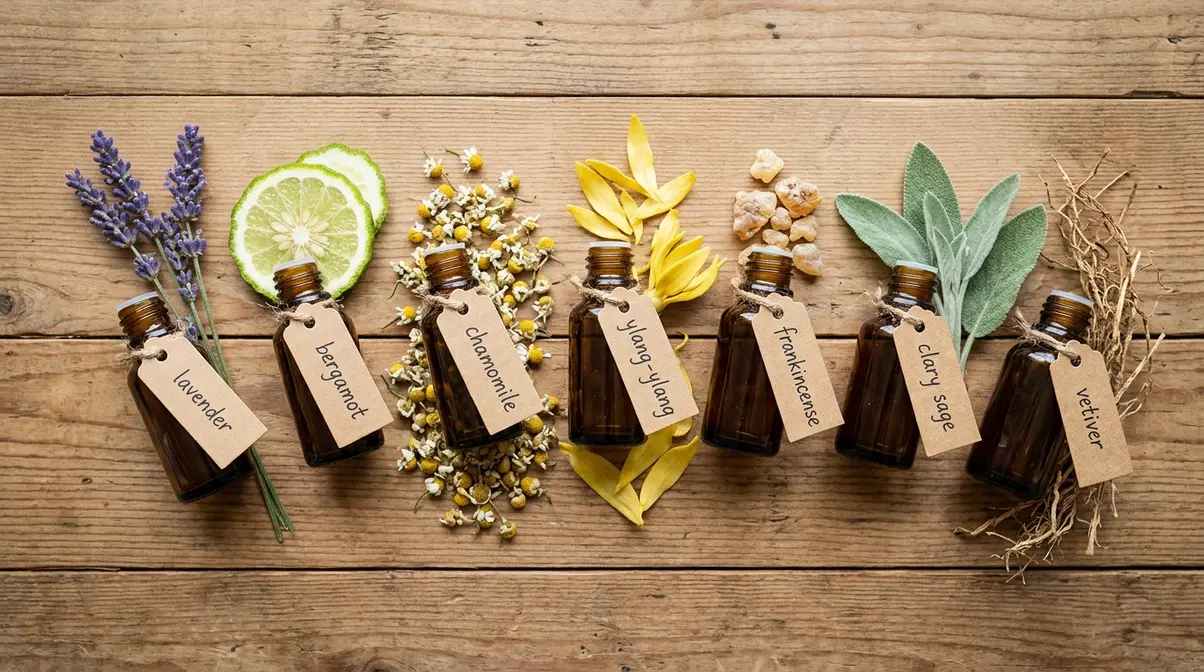
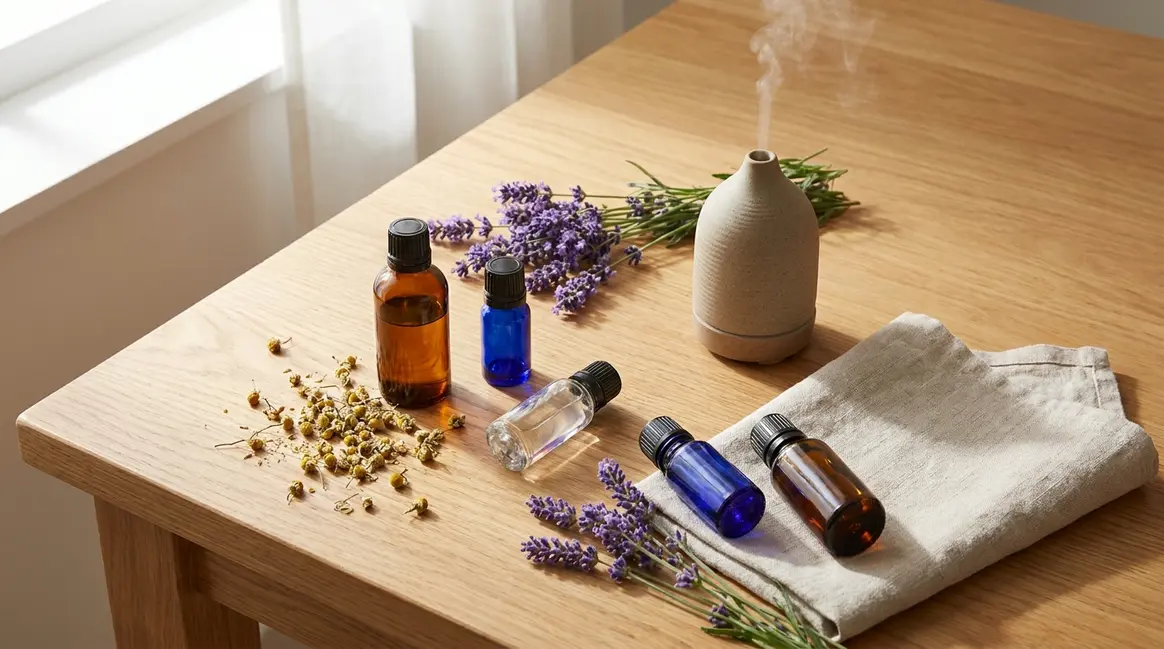
Three things, and you probably have two of them:
- One or two oils you like. Lavender is the sensible anchor – it’s the most-studied calming oil and it blends with almost everything. Bergamot if you want something brighter.
- A carrier oil for anything touching skin – jojoba or fractionated coconut. See what a carrier oil is if that’s new.
- A delivery method – a diffuser, a 10 mL roller bottle, or just a bath. You don’t need all three.
I’m deliberately not re-litigating which oils have the best evidence here – that’s a whole article of its own, and we’ve written it: see essential oils for anxiety for what the research actually supports, and bergamot if that’s the scent you’re drawn to. This guide is about the doing.
Step 1: Pick one method
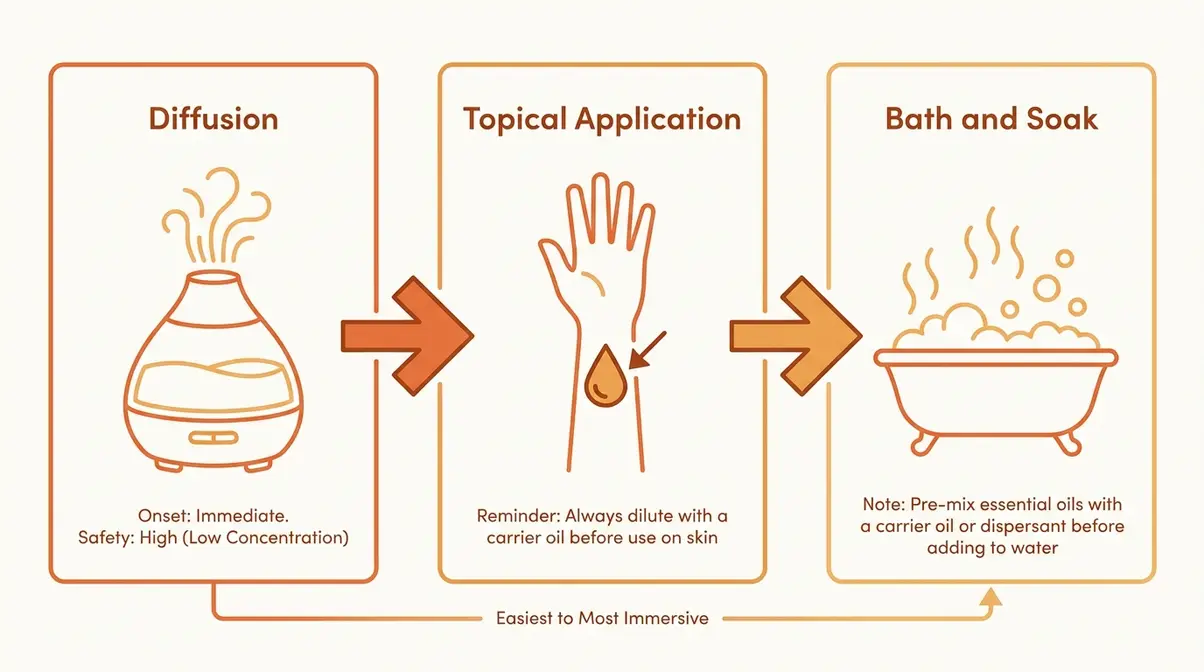
Trying all three at once is how people end up with a drawer of half-used bottles. Pick the one that fits your day.
| Method | Best when | Effort |
|---|---|---|
| Diffusion | You’re home and want a whole room to shift | Lowest – fill and press |
| Roller on pulse points | You need it portable, at work or out | Low – mix once, use for weeks |
| Bath or shower | Evening wind-down, whole-body | Medium – needs a carrier first |
If you’re not sure: start with the roller. It’s the most portable, hardest to overdo, and it doubles as a physical cue – the act of rolling it on your wrists becomes part of the signal.
Step 2: Dilute properly
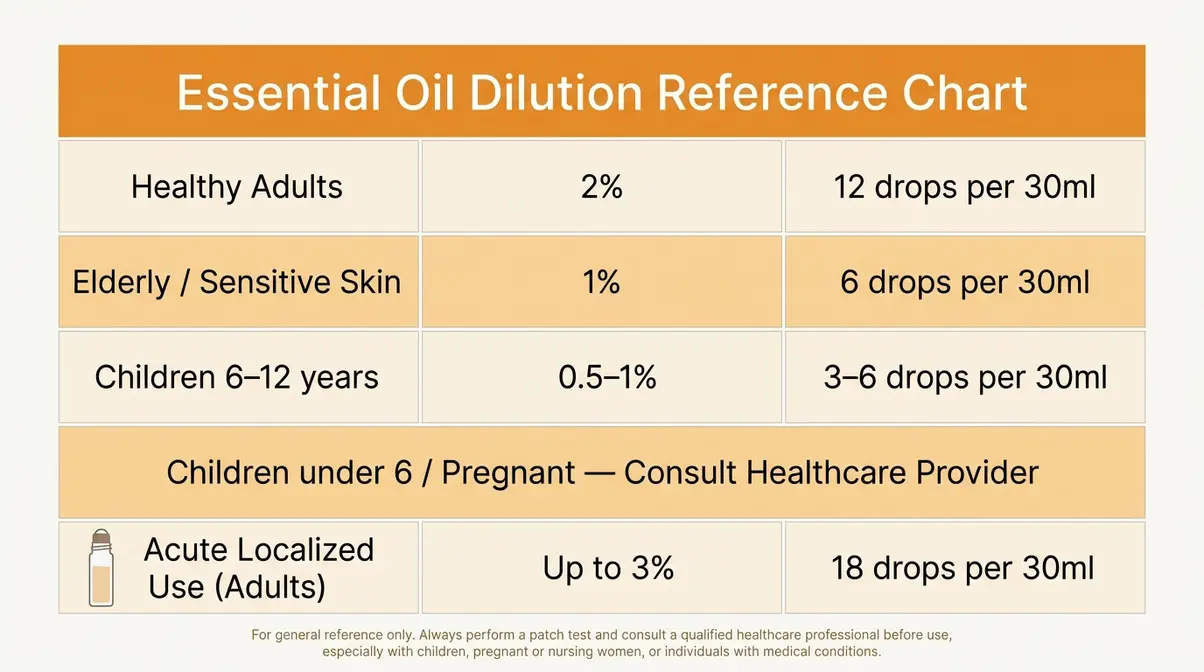
Anything going on skin gets diluted. This isn’t optional caution – neat oils can burn and can sensitize you permanently, meaning you’d react to that oil for life.
| Use | Dilution | Drops |
|---|---|---|
| 10 mL roller bottle | 2% | about 4 drops |
| 30 mL massage oil | 2% | about 12 drops |
| Face or sensitive skin | 1% | halve the above |
| Bath | 5-8 drops | pre-mixed into 1 tbsp carrier |
Patch-test first, every time you make a new blend. Dab a little on your inner forearm, leave it uncovered, wait 24 hours. Test the finished blend, not the plain oil – a reaction can come from either part. Full details in our dilution guide.
Step 3: Set the diffuser up properly
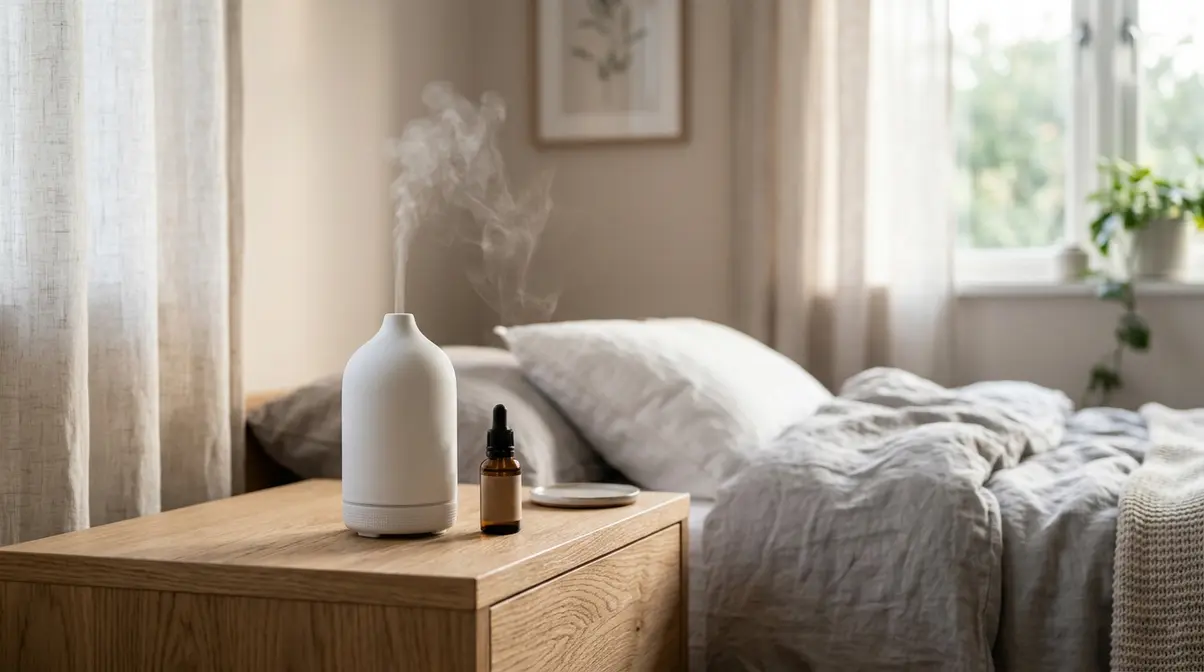
Most diffuser mistakes are the same three:
- Too many drops. 3-5 drops per 100 mL of water is plenty. More doesn’t smell better – your nose adapts within minutes and you just burn through oil.
- Running it all day. 30-60 minutes is the sweet spot, then off. Continuous exposure dulls your perception of the scent and can bother sensitive people and pets.
- Bad placement. Put it a few feet away and off to the side, not directly under your face. Never add carrier oil to an ultrasonic diffuser – it clogs the membrane.
Rinse the reservoir between different oils so yesterday’s blend doesn’t muddy today’s.
Step 4: Apply to pulse points
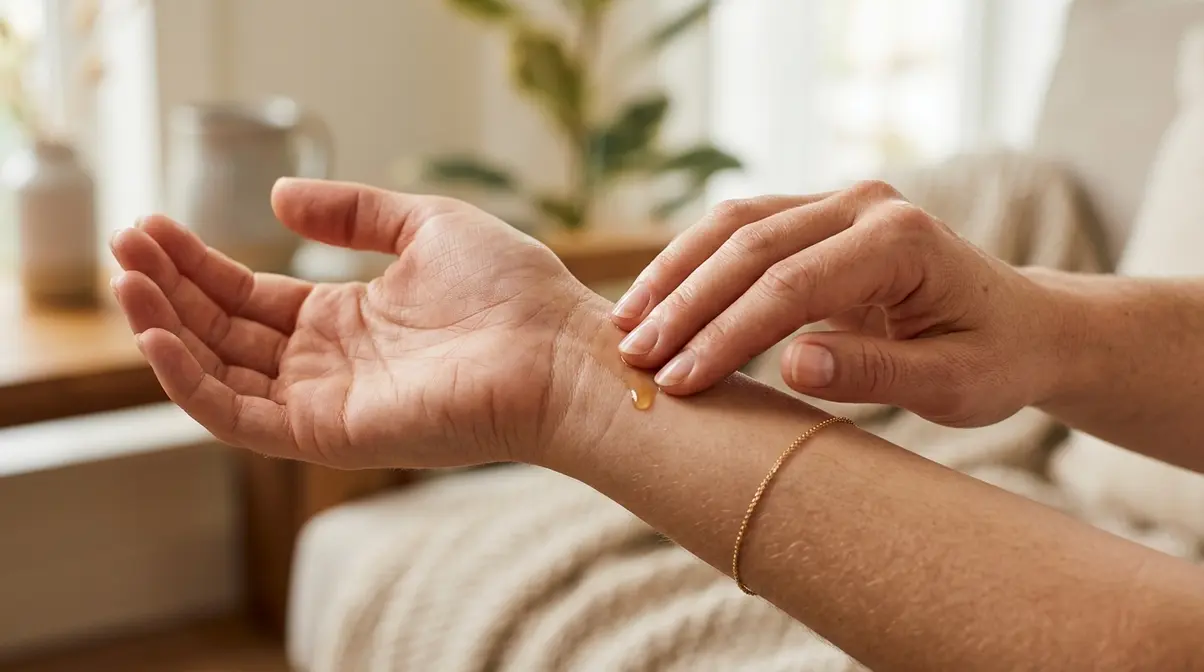
Pulse points are where blood vessels sit close to the surface – the skin is thin and warm, so the scent lifts steadily. The useful ones: inner wrists, the back of the neck, behind the ears, and the inner elbows.
Technique matters more than people think. Roll on, then press – don’t rub hard. Rubbing your wrists together crushes the top notes and makes the blend smell flat faster. Then cup your hands loosely near your face and take three slow breaths; that’s the part that actually does something, and it takes ten seconds.
Keep it away from your eyes, and skip broken or irritated skin.
The lavender I keep for these blends:
Popular options on Amazon
As an Amazon Associate we earn from qualifying purchases, at no extra cost to you. Product details and availability are subject to change – check the live listing on Amazon.
| Image | Product | Best for | Buy |
|---|---|---|---|
 | Majestic Pure Essential Oil with Glass Dropper | Glass dropper bottle | Buy on Amazon |
 | Organic Lavender Essential Oil 30 ml | Organic, hexane-free | Buy on Amazon |
 | Handcraft Blends Lavender Essential Oil | Large 4 oz value | Buy on Amazon |
 | Plant Therapy Lavender Essential Oil 100% Pure | Trusted mid-range brand | Buy on Amazon |
 | MAYJAM Lavender Essential Oil for Diffuser Soap… | Budget diffuser bottle | Buy on Amazon |
Affiliate links · details and availability change · check the live Amazon listing.
Five blends to build the routine on
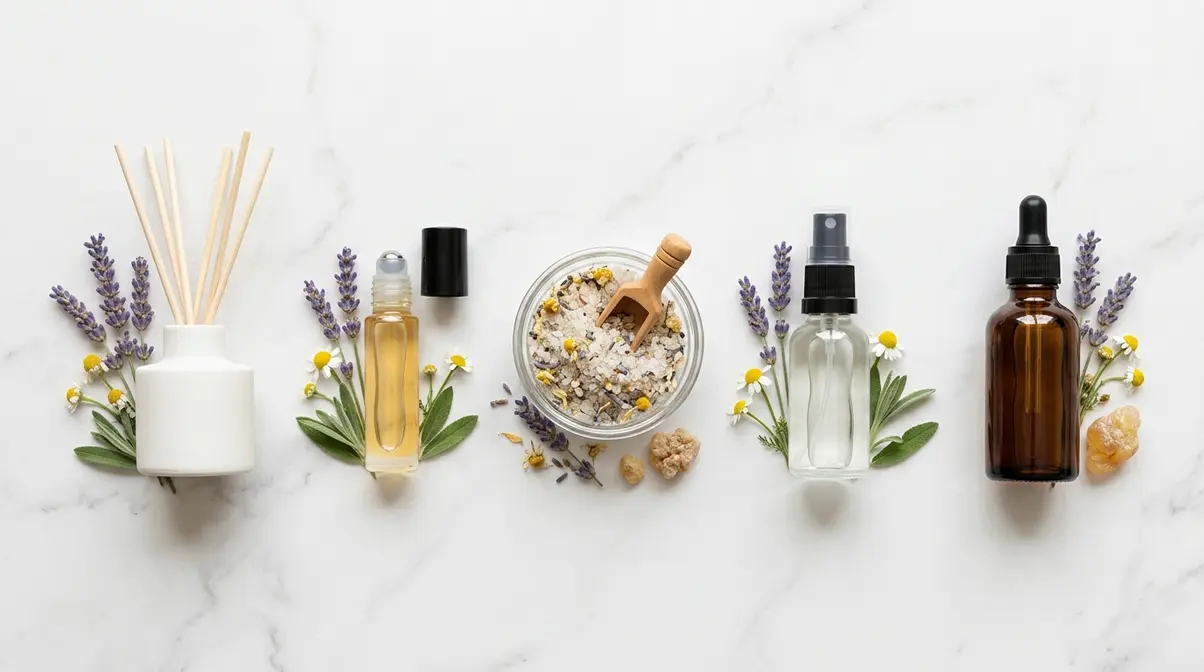
- Calm mind (diffuser) – 3 lavender + 2 bergamot + 1 frankincense. For a racing head at the end of the day.
- Tension release (roller) – 2 lavender + 1 marjoram + 1 peppermint in a 10 mL roller with jojoba. For a tight neck and shoulders.
- Emotional reset (bath) – 4 lavender + 2 roman chamomile pre-mixed into a tablespoon of carrier, stirred into a cup of Epsom salts.
- Sleep sanctuary (linen spray) – 15 lavender + 5 cedarwood in a small bottle of distilled water with a splash of witch hazel. Mist the pillow, shake first.
- Full-body calm (massage oil) – 6 lavender + 4 bergamot + 2 ylang-ylang in 30 mL of carrier.
Write down what you mix – you’ll want to repeat the one that works. More on pairing scents in our blending chart.
Step 5: Make it a routine that sticks
A blend you use twice does nothing. The trick isn’t discipline, it’s anchoring – attach it to something you already do without thinking.
- Morning – roller on the wrists while the kettle boils. Three slow breaths. That’s it.
- Work reset – one application at the point in the afternoon you usually flag.
- Evening – diffuser on for 30-45 minutes as you start winding down, or the linen spray as you turn the bed down.
Give it two weeks before you judge it. What you’re building is partly a conditioned cue: after a while the scent itself starts signalling “we’re standing down now,” which is a real and useful effect even where the pharmacology is modest.
Pair it with what actually moves the needle
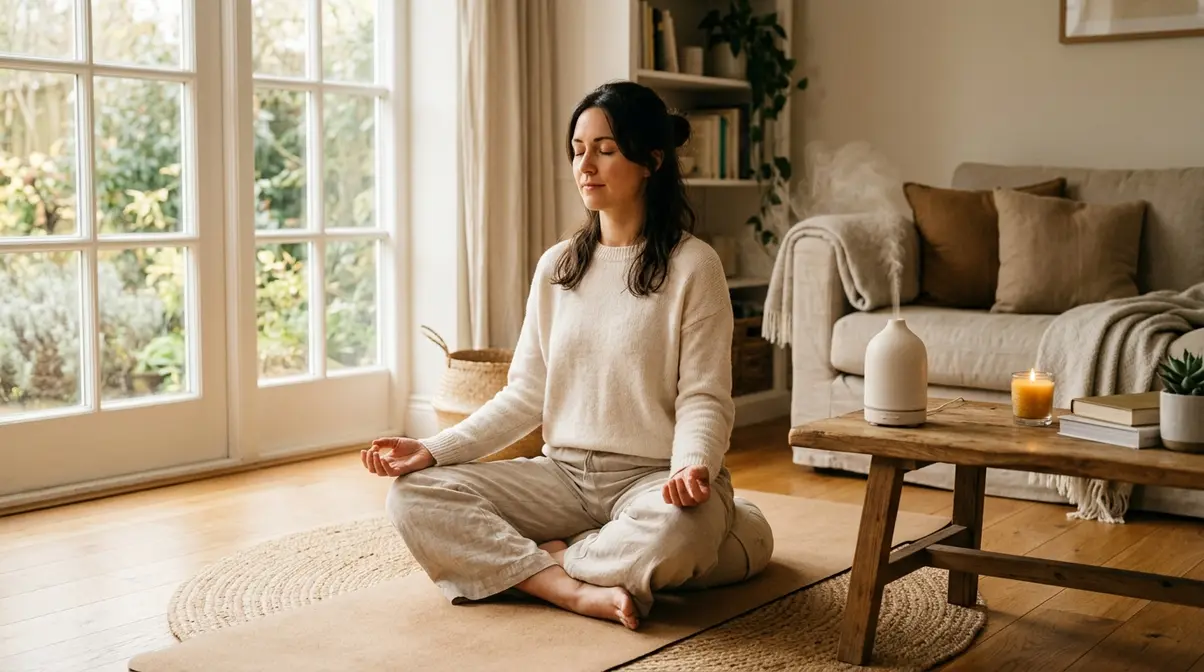
I’d rather be honest than sell you a bottle: aromatherapy is a pleasant, low-risk support for stress, not a treatment for it. Johns Hopkins frames it the same way – a complement to care, not a replacement (Johns Hopkins Medicine). The things that reliably shift stress are less glamorous:
- Slow breathing – a longer exhale than inhale, for two minutes. The fastest tool you have, and it pairs naturally with the three-breath step above.
- Sleep – the single biggest lever, and where the linen spray earns its place as a cue rather than a sedative.
- Movement and daylight, ideally early.
- Progressive muscle relaxation if your stress lands in your body as tension.
Use the oils as the ritual that gets you to do those things consistently. That’s their real job.
Troubleshooting
| Problem | Likely cause | Fix |
|---|---|---|
| Can’t smell it any more | Olfactory adaptation – normal | Run the diffuser in bursts, rotate blends weekly |
| Skin redness or itching | Too strong, or a sensitivity | Stop, wash with carrier oil then soap; drop to 1% |
| Headache after diffusing | Too many drops, poor ventilation | Halve the drops, crack a window, shorten the session |
| Blend smells flat | No base note, or oils oxidised | Add a drop of cedarwood; replace citrus older than a year |
| Nothing seems to help | Expecting pharmacology, not ritual | Pair with breathing and sleep; see a doctor if stress is persistent |
Safety
- Always dilute for skin and patch-test new blends for 24 hours.
- Never ingest essential oils.
- Pets – many oils are toxic to cats especially; diffuse only where an animal can leave the room.
- Children and pregnancy – use much lower dilutions with children, avoid peppermint and eucalyptus with young ones, and check with your provider if pregnant.
- Persistent stress, anxiety or low mood deserves real care. If it’s affecting your sleep, work or relationships, talk to a doctor – a roller bottle is not the answer to that.
Frequently asked questions
Where should you apply essential oils for stress relief?
Pulse points – inner wrists, back of the neck, behind the ears and inner elbows – where the skin is thin and warm so the scent lifts steadily. Roll on, press rather than rub, then take three slow breaths with your hands cupped near your face.
How long should I run a diffuser?
30-60 minutes, then off, using 3-5 drops per 100 mL of water. Running it continuously wastes oil, dulls your perception of the scent, and can bother sensitive people and pets.
How long before I notice anything?
The scent itself is immediate, but the useful part – the blend becoming a reliable wind-down cue – takes a couple of weeks of consistent use. Judge it after two weeks, not two days.
What is the best home remedy for stress?
Honestly, slow breathing and decent sleep outperform any oil. Aromatherapy works best as the ritual that reliably gets you to do them – a pleasant, low-risk support rather than a treatment.
Can I put essential oil straight on my skin for stress?
No. Dilute to 2% in a carrier oil (about 4 drops in a 10 mL roller) and patch-test first. Neat oils can burn and can cause a permanent sensitivity to that oil.
The bottom line
You don’t need seven oils and a shelf of equipment. Pick one method, dilute to 2%, keep the diffuser to short sessions, apply to your wrists and actually breathe, and hang the whole thing off something you already do daily. Then pair it with the boring stuff that genuinely works – slow exhales and a decent bedtime. That’s a stress routine you’ll still be using in a month.
Medical disclaimer: This article is general information, not medical advice. Aromatherapy is not a treatment for anxiety, depression or any medical condition. Never ingest essential oils or apply them undiluted, keep them away from cats and young children, and speak to a qualified professional if stress or low mood is persistent or affecting your daily life.