Nebulizer vs Ultrasonic Diffuser: Which Is Better for You?
This post contains affiliate links. If you buy through these links, I earn a small commission at no extra cost to you.
By Ellen Cooper, independent essential-oil reviewer (hands-on since 2018, no MLM affiliation)
Here is a question I get asked at least once a week: should I buy a nebulizer or an ultrasonic diffuser? After eight years of testing diffusers – and owning far too many of them – I still think it is the most consequential choice you make in this hobby, because the two machines solve different problems and cost very different amounts to run.
TL;DR: Quick Answer
TL;DR: Choose a nebulizer diffuser if you want the strongest, purest scent and don’t mind spending more on oil. Choose an ultrasonic diffuser if you want a quiet, budget-friendly unit with light humidity. Nebulizers deliver undiluted essential oil particles – making them roughly 3-5x more potent in scent throw – but they cost 2-4x more upfront and consume oil faster. Ultrasonics dilute oils in water, producing a gentle mist that’s perfect for bedrooms and overnight use. Most aromatherapy enthusiasts end up owning both.
Side-by-Side Comparison: Nebulizer vs Ultrasonic Diffuser
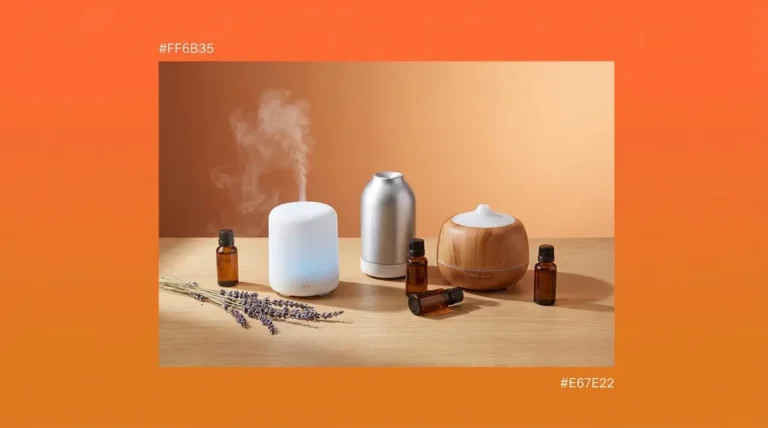
Ultrasonic models account for the majority of home diffuser sales, while nebulizers dominate in professional aromatherapy settings. Here’s how they compare across every metric that matters for everyday use.
| Feature | Nebulizer Diffuser | Ultrasonic Diffuser | Winner |
|---|---|---|---|
| Diffusion Method | Pressurized air atomizes pure oil | Ultrasonic vibrations create water + oil mist | Depends on needs |
| Water Required | No | Yes | Nebulizer (simpler) |
| Scent Strength | Strong and concentrated | Light to moderate | Nebulizer |
| Scent Purity | 100% undiluted oil | Diluted in water | Nebulizer |
| Room Coverage | Up to 800-1,000 sq ft | Up to 300-500 sq ft | Nebulizer |
| Noise Level | Soft buzz (35-55 dB) | Near silent (20-35 dB) | Ultrasonic |
| Oil Consumption | Higher (3-5 mL per hour) | Lower (5-15 drops per session) | Ultrasonic |
| Upfront Cost | $60-$150+ | $15-$60 | Ultrasonic |
| Ongoing Cost (Oil) | Higher | Lower | Ultrasonic |
| Maintenance | Alcohol cleaning weekly | Quick wipe every few days | Ultrasonic |
| Humidity Benefit | None | Light humidifying effect | Ultrasonic |
| Timer Options | Usually interval-based (on/off cycles) | Multiple timer settings (1h, 3h, 6h, continuous) | Ultrasonic |
| LED Lights | Some models (subtle) | Most models (color-changing) | Ultrasonic |
| Fragile Parts | Glass reservoir (breakable) | Plastic body (durable) | Ultrasonic |
| Pet Safety | Higher oil concentration (use caution) | Lower concentration (generally safer) | Ultrasonic |
| Best For | Aromatherapy purists, offices, large rooms | Bedrooms, beginners, families | Depends on use case |
How they actually differ in use
The mechanism. A nebulizer uses pressurised air to atomise neat oil – no water, no heat, nothing diluting what reaches you. An ultrasonic diffuser vibrates a ceramic disc under water with a few drops of oil in it, producing a cool mist. Same goal, completely different physics, and every difference below follows from that one fact.
Scent strength and purity. The nebulizer wins outright and it is not close. Because nothing dilutes the oil, lavender smells like lavender rather than lavender-scented water vapour. An ultrasonic diffuser gives you a softer, rounder version of the same oil, which some people actually prefer for long evenings.
Room coverage. Nebulizers reach further – 800 to 1,000 sq ft is normal for a good one, against roughly 300 to 500 sq ft for a mid-size ultrasonic. If you are trying to scent an open plan rather than a bedroom, that gap decides it.
Noise. The ultrasonic wins here. Its hum is genuinely faint; a nebulizer has a small air pump and you will hear it in a quiet room. For a bedside table, that alone is often the deciding factor. Neither machine comes close to a level that threatens hearing – the CDC puts the risk threshold far above anything a diffuser produces – but “quiet” and “silent” are not the same thing at 2am.
Price, then running cost. Nebulizers cost more upfront – typically two to four times an ultrasonic unit – and then keep costing more, because neat oil disappears fast. The consumption numbers below are the part people underestimate.
Maintenance. Ultrasonic units need the tank emptied and the disc wiped regularly, or output fades and mineral scale builds up. Nebulizers need the glass reservoir rinsed with high-proof alcohol, more often with thick or resinous oils. Neither is demanding; both punish neglect.
Humidity. Neither humidifies a room in any meaningful sense. An ultrasonic diffuser adds a trace of moisture as a side effect of making mist, and a nebulizer adds none at all. Indoor humidity is worth managing properly – the EPA recommends keeping it between roughly 30% and 50% – and no diffuser will get you there. If dry air is the real problem, read our diffuser vs humidifier guide first – you need a different machine.
Pets. Treat nebulizers as the higher-risk option, simply because they put more oil into the air. Cats cannot process many essential-oil compounds and groom droplets off their fur, so a diffuser running in a room a cat uses is not a safe compromise. The ASPCA maintains poison-control guidance, the National Association for Holistic Aromatherapy publishes the general safety framework, and I would ask a vet before running either type around animals.
Which Type Uses More Essential Oil?
Oil consumption is the hidden cost that surprises most new nebulizer owners. A nebulizer uses pure oil, and it goes through it fast – typically 3 to 5 mL per hour on a continuous setting. According to Plant Therapy’s usage guidelines, a standard 10 mL bottle of essential oil costs between $6 and $25 depending on the oil. That means a nebulizer can burn through a bottle in just 2-3 hours of continuous use.
Here’s what my actual oil consumption looked like over a typical month. I tracked this carefully for three months to give you real numbers:
| Usage Pattern | Nebulizer (Raindrop 2.0) | Ultrasonic (ASAKUKI 500 mL) |
|---|---|---|
| Daily use (4 hours/day) | ~10-15 mL per week | ~2-3 mL per week (70 drops) |
| Monthly consumption | ~40-60 mL | ~8-12 mL |
| Monthly cost (using lavender at ~$8/10 mL) | $32-$48 | $6-$10 |
That’s a real difference. The nebulizer costs roughly 4-5x more to operate each month. Most nebulizer owners (myself included) mitigate this by using the interval timer. My Raindrop 2.0 runs 2 minutes on, 1 minute off – which cuts oil usage significantly while still keeping the room pleasantly scented. Still, if you’re on a tight budget, this is worth factoring into your decision.
Want to stretch your oils further? I recommend starting with affordable workhorse oils like lavender, peppermint, and sweet orange. Check out my list of most popular essential oils for beginner-friendly options that won’t break the bank.
Citation Capsule: A nebulizer diffuser running 4 hours daily consumes approximately 40-60 mL of essential oil per month, costing $32-$48 for a standard lavender oil. An ultrasonic diffuser running the same hours uses roughly 8-12 mL monthly, costing $6-$10. This makes ultrasonic diffusers approximately 4-5x cheaper to operate on an ongoing basis.
Which one should you buy?
Buy a nebulizer if scent strength is the point – a large or open-plan room, or you simply want the oil to smell the way it does in the bottle – and you accept a higher oil bill and a faint pump noise.
Buy an ultrasonic if it is going in a bedroom, you want to run it for hours without thinking about cost, or you are buying your first diffuser and do not yet know which oils you like. It is the forgiving choice.
Own both, eventually. That is what I ended up doing, and it is not indulgence: an ultrasonic on the bedside table overnight and a nebulizer in the living room when people are over covers two genuinely different jobs. Start with the ultrasonic.
If you have settled on a type, we have dedicated roundups for nebulizing diffusers and ultrasonic diffusers, plus picks for large rooms and the car. For what to put in them, see the most popular essential oils.
My Top Picks: Best Nebulizers and Ultrasonic Diffusers
Based on my years of hands-on testing, here are the four diffusers I recommend most often. Two nebulizers, two ultrasonics – each the best at what it does. These are the models I personally own, use regularly, and confidently recommend to friends and readers.
Best Overall Nebulizer: Raindrop 2.0 by Organic Aromas
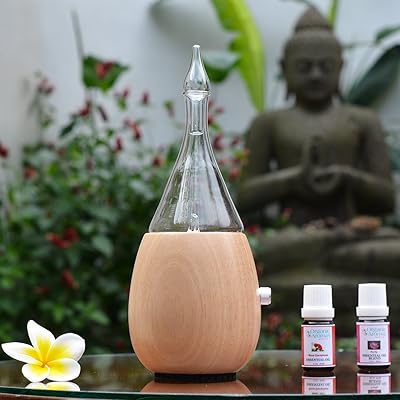
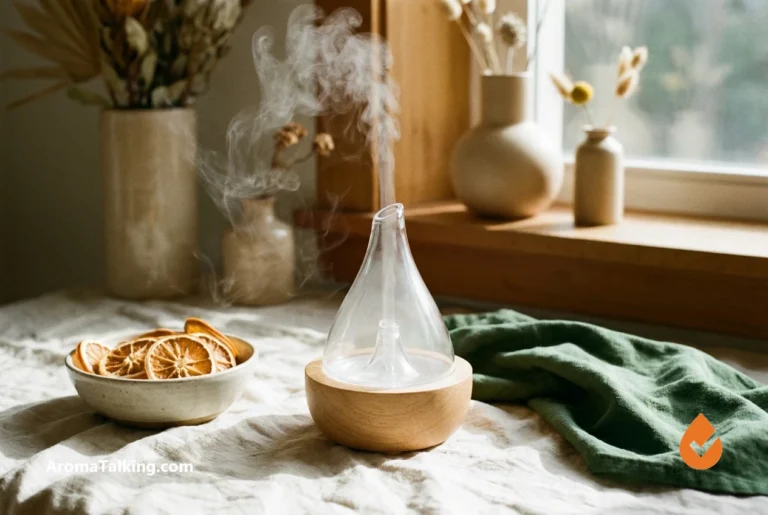
The Raindrop 2.0 is the nebulizer I use most often and recommend to anyone who asks. It covers up to 800 sq ft, features a gorgeous hand-blown glass reservoir on a light wood base, and has adjustable mist intensity so you can dial it from subtle to room-filling. The 2-minute-on, 1-minute-off interval cycle helps manage oil consumption.
What I love most is the scent quality. Because there’s no water dilution, you smell the oil exactly as it’s meant to be experienced. Lavender smells like lavender – not “lavender-scented water vapor.” The build quality is excellent, the run time is about 2 hours per session, and the auto shut-off gives me peace of mind.
Pros: Beautiful design, adjustable mist, excellent scent throw, covers 800 sq ft, auto shut-off, quiet for a nebulizer
Cons: Glass is fragile, uses oil quickly on high settings, pricier than ultrasonic models
Best Nebulizer for Large Rooms: Sofia by Pilgrim Collection
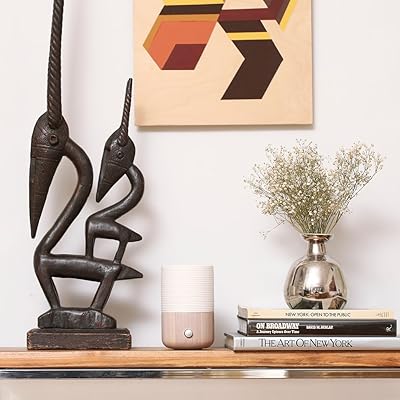
If you need to scent a large space – 600 sq ft or more – the Sofia is the one I’d pick. It covers up to 1,000 sq ft with dual glass reservoirs, which also means you can switch between two different oils without cleaning in between. The ceramic and oak base looks stunning, and the overall build feels premium.
The Sofia runs on a 1-minute-on, 1-minute-off continuous cycle, which helps conserve oil while maintaining consistent room coverage. It’s also one of the quieter nebulizers I’ve tested. I’ve used it in my open-plan living and dining area, and the scent reaches every corner within 5-10 minutes. For yoga studios or larger professional spaces, this is the model I recommend.
Pros: Massive 1,000 sq ft coverage, dual reservoirs, beautiful design, relatively quiet, great for professionals
Cons: Higher price point, larger footprint, glass still requires careful handling
Best Overall Ultrasonic Diffuser: ASAKUKI Premium 500 mL
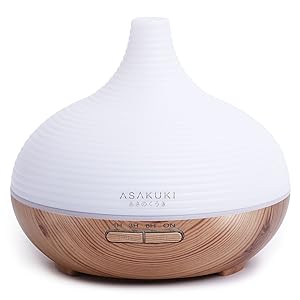
The ASAKUKI Premium 500 mL is my daily driver for bedroom and living room use. The 500 mL tank runs for 10-16 hours on continuous mode, which means I can fill it before bed and it’s still going in the morning. The mist output is strong for an ultrasonic, and it fills my 300 sq ft bedroom with noticeable scent within about 10 minutes.
The design is clean and modern – a smooth, rounded shape in a neutral tone that doesn’t scream “electronic gadget.” It has four timer options (1h, 3h, 6h, continuous), two mist modes, and 7-color LED lighting. The auto shut-off when the water runs low is a feature I appreciate for overnight peace of mind. At around $25-30, it’s arguably the best value in the ultrasonic category.
Pros: Huge tank, marathon run time, excellent mist output, multiple timers, affordable, attractive design
Cons: Plastic build (not as premium-feeling as glass nebulizers), LED can be bright in dark rooms if not dimmed
Best Budget Ultrasonic Diffuser: URPOWER 2nd Generation 100 mL
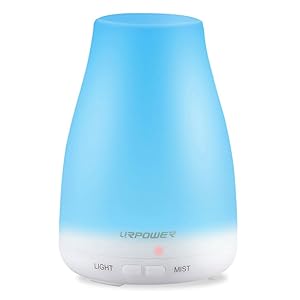
The URPOWER 2nd Gen proves you don’t need to spend much to get a reliable diffuser. At under $15, it’s the most affordable diffuser I’ve ever recommended – and I’ve been recommending it for years because it just works. The 100 mL tank gives you 3-6 hours of run time, and the scent throw is surprisingly good for its size. In my 250 sq ft bedroom, I detected lavender from across the room within 8 minutes.
It’s simple – two mist modes, 7-color LED, auto shut-off. Nothing fancy. That’s the point. If you’re new to aromatherapy and not sure you’ll stick with it, or you just want a cheap diffuser for the bathroom or guest room, this is where I’d start. I’ve recommended it to at least a dozen friends, and every single one has been happy with it.
Pros: Incredibly affordable, reliable, compact, easy to use, great for beginners
Cons: Small tank (frequent refills for heavy users), limited room coverage (150 sq ft), no timer settings
Ready to buy? These ultrasonic diffusers are reliable picks:
Recommended on Amazon
As an Amazon Associate we earn from qualifying purchases, at no extra cost to you. Product details and availability are subject to change – check the live listing on Amazon.
| Image | Product | Best for | Buy |
|---|---|---|---|
 | InnoGear Essential Oil Diffuser | Budget starter | Buy on Amazon |
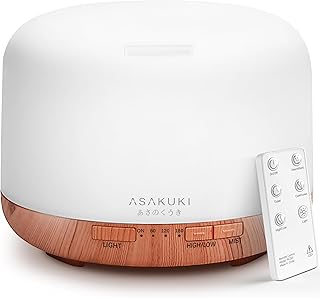 | ASAKUKI Essential Oil Diffuser for Home | Budget starter | Buy on Amazon |
 | URPOWER 150ML Essential Oil Diffusers for Home | Large 500ml, long runtime | Buy on Amazon |
 | Ultimate Aromatherapy Diffuser & Essential Oil Set | Compact bedroom pick | Buy on Amazon |
Affiliate links · details and availability change · check the live Amazon listing.
Frequently Asked Questions
Is a nebulizer diffuser better than an ultrasonic diffuser for aromatherapy?
For pure therapeutic aromatherapy, yes – nebulizers are more effective. They disperse undiluted essential oil particles, delivering the full concentration of aromatic compounds into the air. Aromatherapy practitioners and the NAHA generally consider nebulizers the gold standard for therapeutic use. However, ultrasonic diffusers still provide real aromatherapy benefits at a lower intensity, and they’re better suited for long, gentle sessions like overnight sleep support.
Can I use any essential oil in both nebulizer and ultrasonic diffusers?
Most essential oils work in both types, but thicker oils (like vetiver, sandalwood, and myrrh) can clog nebulizer glass more quickly and may need to be blended with a thinner oil first. Ultrasonic diffusers handle thick oils more easily because they’re diluted in water. For either type, always use 100% pure essential oils – never fragrance oils or oils with synthetic additives, which can damage the mechanisms. Check out my most popular essential oils guide for beginner-friendly options.
How long should I run a nebulizer vs an ultrasonic diffuser?
I recommend running a nebulizer for 15-30 minute sessions (with interval timers), especially in smaller rooms. The concentrated output means you don’t need hours of continuous diffusion. Ultrasonic diffusers can safely run for longer – 3 to 8 hours or more, depending on the tank size. For overnight bedroom use, an ultrasonic with a 500 mL+ tank on a 6-hour timer is the sweet spot I’ve found through years of nightly use.
Do nebulizer diffusers waste essential oil?
They use more oil per session than ultrasonic diffusers – that’s a fact. But “waste” depends on your perspective. If you’re using a nebulizer for focused therapeutic sessions, every drop is delivering full-strength aromatherapy. The key is using the interval timer (most nebulizers have one) rather than running on continuous mode. My Raindrop 2.0’s 2-minutes-on, 1-minute-off cycle delivers great scent while cutting oil consumption by roughly a third compared to continuous mode.
What’s the difference between a waterless diffuser and a water-based diffuser?
“Waterless diffuser” is just another name for a nebulizer – it uses no water, only pure essential oil. “Water-based diffuser” typically refers to an ultrasonic model that mixes oil with water. The main practical difference is concentration: waterless diffusers produce stronger, more potent scent, while water-based models produce a gentler mist. Heat diffusers and reed diffusers also exist, but nebulizers and ultrasonics are the two most popular powered diffuser types for home use.
Can I use tap water in my ultrasonic diffuser?
You can, but I’d recommend distilled or filtered water if your area has hard water. Mineral deposits from tap water build up on the ultrasonic disc over time, reducing mist output and requiring more frequent cleaning. I used tap water exclusively for my first year and noticed the difference after switching to distilled – the mist plume was visibly stronger. It’s a small change that makes a real difference in performance and longevity.
Final Thoughts: Which Diffuser Is Right for You?
After eight years of testing, buying, breaking, cleaning, and recommending diffusers, here’s what I keep coming back to: there is no single “best” diffuser type. There’s only the best diffuser for your situation.
Key Takeaways:
- Nebulizers deliver the strongest, purest scent – ideal for therapeutic use, large rooms, and intentional aromatherapy sessions
- Ultrasonic diffusers offer quiet, affordable, low-maintenance daily use – perfect for bedrooms, families, and beginners
- Nebulizers cost 4-5x more to operate monthly due to higher oil consumption
- Ultrasonic models are safer around pets and children due to lower oil concentration
- Most experienced aromatherapy users end up owning both types for different situations
If I had to start over with just one diffuser, I’d grab the ASAKUKI Premium 500 mL for its versatility and value. But the moment I got serious about aromatherapy, I’d add the Raindrop 2.0 for those times when I want the full, unfiltered experience. Together, they cover every use case I can think of.
Still exploring the world of essential oils? Start with my beginner’s guide to essential oils, or browse my full nebulizer diffuser reviews and complete ultrasonic diffuser guide for detailed product breakdowns. Happy diffusing!
Last updated: March 2026. Ellen Cooper is the founder of AromaTalking.com and has been testing essential oil products for over 8 years.