Diffuser vs. Humidifier: 7 Key Differences (2026)
By Ellen Cooper, independent essential-oil reviewer (hands-on since 2018, no MLM affiliation)
People buy the wrong one of these constantly, and the mistake is expensive in a quiet way: you spend $60, the thing does something, and you never quite work out why the problem you bought it for did not go away. So here is the difference in one line, and then the detail underneath it.
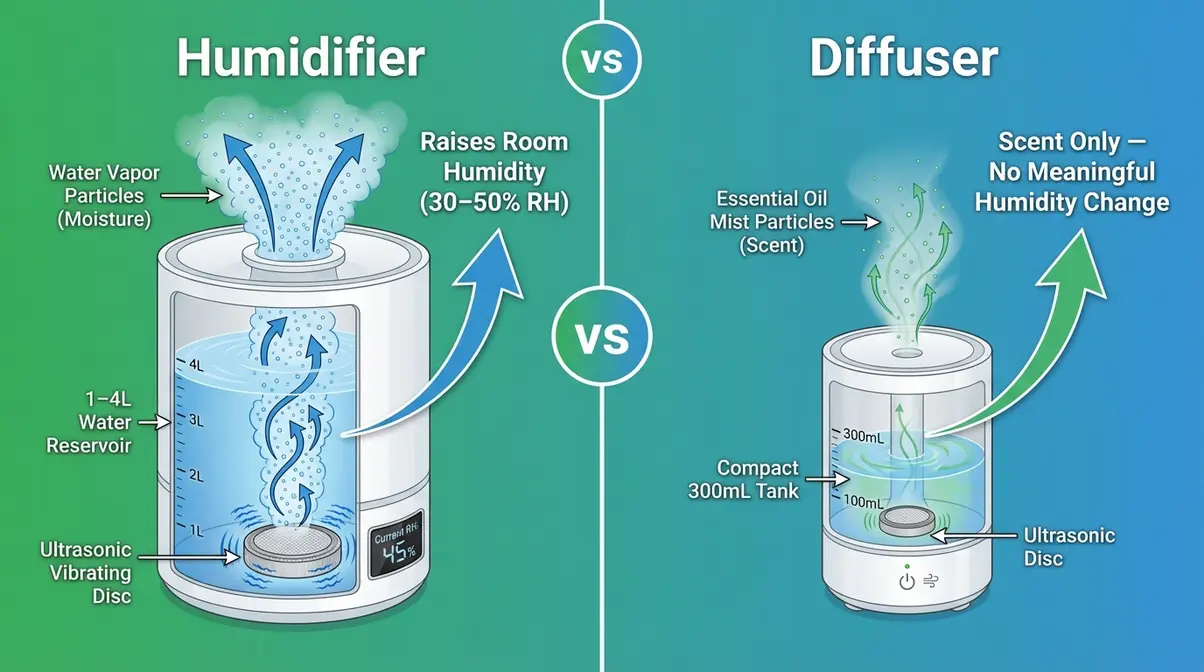
The short answer: A humidifier adds water to your air to fix dryness – it holds litres and runs for hours. A diffuser adds scent – it holds a few hundred millilitres and changes how a room smells, not how humid it is. If your skin is cracking and your throat is dry in winter, you need a humidifier. If you want the room to smell of lavender, you need a diffuser. They are not interchangeable, and a diffuser cannot humidify a room.
Humidifier vs diffuser: the difference at a glance
| Humidifier | Diffuser | |
|---|---|---|
| Job | Raise room humidity | Disperse scent |
| Tank size | 2-6 litres | 100-500 ml |
| Run time | 12-24 hours | 1-8 hours |
| Coverage | A whole room | The space around it |
| Essential oils | Usually not – oils damage the plastic | Yes, that is the point |
| Buy it for | Dry air, winter heating, congestion, dry skin | Atmosphere, aromatherapy, masking odours |
The confusion is understandable, because most consumer diffusers and most cool-mist humidifiers use the same ultrasonic mechanism – a disc vibrating fast enough to fling water into a fine mist. Same physics, wildly different scale. A 300 ml diffuser emptied into a bedroom raises the humidity by an amount you could not measure reliably.
Can a diffuser be used as a humidifier?
No, and the numbers explain why better than any argument.
A bedroom needs litres of water over a night to shift its relative humidity. A diffuser holds a few hundred millilitres and is designed to run out. Even running one continuously, you are adding a fraction of what a humidifier delivers, into the small volume of air immediately around it.
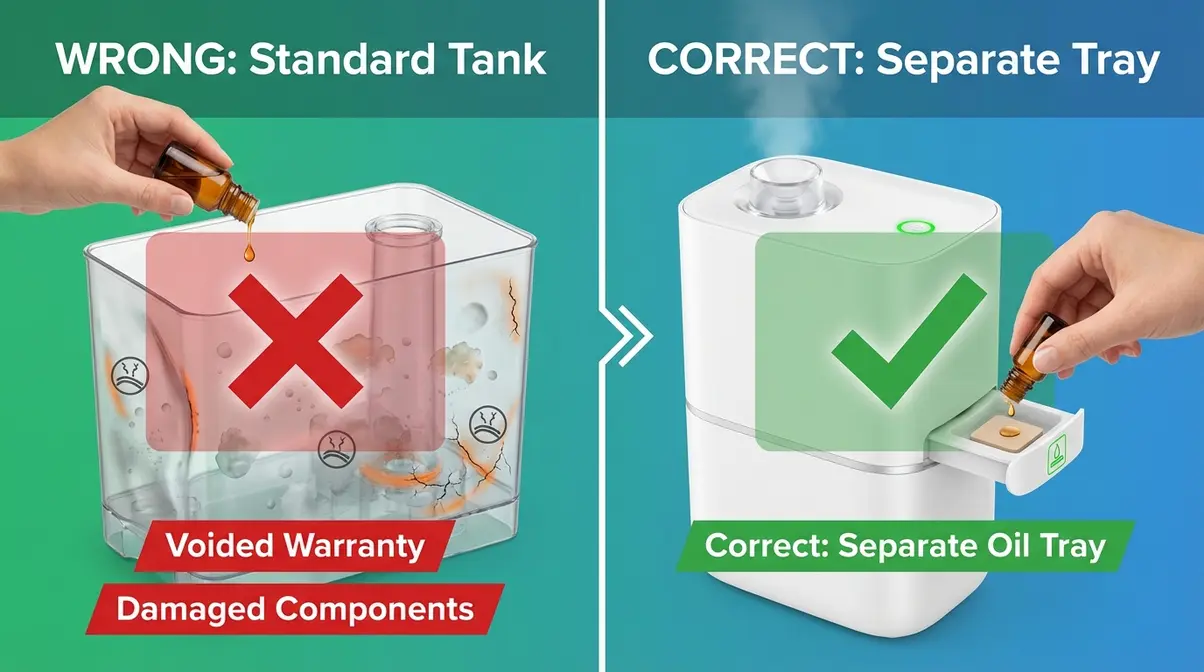
The reverse is worse. Do not put essential oils in a standard humidifier. Oils degrade the plastics and seals in tanks that were designed for water, and you will crack the reservoir or gum up the mechanism. Some humidifiers include a separate aroma tray, physically isolated from the water, and that is the only safe way to combine the two functions in one unit.
Which one do you actually need?
Work backwards from the symptom rather than the product.
Buy a humidifier if: your skin and lips crack in winter, you wake with a dry throat or blocked nose, static shocks are constant, your wooden furniture is splitting, or a doctor suggested humidity for congestion. The EPA recommends keeping indoor relative humidity between roughly 30% and 50% – below that you get the dryness problems, above it you invite mould and dust mites.
Buy a diffuser if: you want a room to smell a particular way, you use essential oils and want to inhale them, or you want to mask cooking or pet odours. That is the whole list. A diffuser is an atmosphere device.
On the health side, be careful about what you expect. Humidified air can genuinely ease the discomfort of a cold – the Mayo Clinic notes cool-mist humidifiers may relieve congestion symptoms – but it does not treat the infection. And if anyone in the house has asthma, take advice first: the CDC’s asthma guidance is the place to start, and both damp air and airborne scent can be triggers.
Is diffusing essential oils safe?

Mostly, with real exceptions that deserve stating plainly.
Diffusing releases volatile organic compounds into the air. That is not a scandal – so does cooking – but it does mean ventilation matters and that continuous running is a bad habit, and indoor-air research has looked specifically at emissions from these devices (PubMed). The French agency ANSES has called for vigilance over essential-oil sprays and diffusers for exactly this reason. Half an hour at a time, in a room you can air out, is the sensible pattern.
Cats are the serious case. They lack the liver enzyme needed to process many essential-oil compounds, and diffused droplets settle on fur and get swallowed during grooming, so an active diffuser is not a safe workaround. Our guide to using essential oils safely covers the wider rules, and the ASPCA maintains poison-control guidance for pets.
Babies and nurseries: use a cool-mist humidifier, not a diffuser. Keep it about three feet from the cot, clean it daily, and skip the oils entirely for infants.
Cool mist, warm mist, or a vaporiser?
If you have settled on a humidifier, this is the only remaining decision that matters.
Cool mist is the default and the right answer in almost every household with children – no heating element, so nothing to scald anyone. Warm mist boils the water first, which kills microbes in the tank and feels pleasant in winter, but the hot water is a burn risk and it uses more electricity. A vaporiser is a warm-mist device intended for medicated inhalants in a sick room, for adults – a pulmonologist’s rundown is worth reading if you are buying for someone with a respiratory condition.
Whichever you choose, the maintenance is not optional: the EPA’s guidance on home humidifiers is blunt that a dirty tank aerosolises whatever is growing in it. Empty it daily, clean it properly, and use distilled water if your tap water is hard.
What about air purifiers?
Different job again, and worth stating because it completes the set. An air purifier removes particles – dust, dander, pollen. A humidifier adds moisture. A diffuser adds scent. Only the purifier improves air quality in the filtration sense; running a humidifier does nothing for allergens, and a diffuser adds compounds rather than removing them.
For allergy households, the asthma and allergy friendly certification programme lists humidifiers that have been independently tested, which is a more useful filter than marketing claims.
Humidifier-diffuser combos: worth it?
Sometimes, if the design is right.
A genuine combo has a separate aroma tray isolated from the water tank – that is the feature to check for, and its absence is the whole difference between a combo and a humidifier that will die early. Combos are a sensible compromise for one room where you want both functions and have space for one device. They are a poor choice if you seriously need either function: a combo humidifies less than a dedicated humidifier and scents less than a dedicated diffuser.
If you want the dedicated versions instead, we have picks for ultrasonic diffusers, nebulizing diffusers (no water, strongest scent), large rooms, and the nebulizer vs ultrasonic comparison if you are deciding between the two types. Our full ultrasonic diffuser roundup goes through the individual picks.
| User Type | Best Choice | Why | Price Range |
|---|---|---|---|
| Dry air, congestion, or tight skin in winter | Humidifier (any cool-mist) | Raises actual room humidity, the only device that solves these problems | $30-$80 |
| Aromatherapy, sleep scent, stress relief only | Diffuser (ultrasonic) | Right tool for scent; doesn’t waste money on humidity you don’t need | $25-$100 |
| Want both moisture and scent | LEVOIT Dual 200S combo | Separate oil tray + 3L tank solves both needs without device damage | $50-$55 |
| Nursery for infant or toddler | Cool-mist humidifier only (no oils) | Essential oils are unsafe for infants; moisture supports healthy breathing | $35-$60 |
| COPD or asthma (consult physician first) | Cool-mist humidifier at 40-50% RH | Physician-guided humidity support; avoid diffusers (VOC risk) | $40-$120 |
| Houseplants in dry climate | Humidifier (larger capacity) | Diffusers cannot raise ambient humidity enough for tropical plants | $50-$150 |
| Allergies, dust, pet dander | Air purifier (not either device) | Neither humidifier nor diffuser cleans air, a HEPA purifier does | $80-$300 |
If you want a device that does both, these combo units are the popular picks:
Popular options on Amazon
As an Amazon Associate we earn from qualifying purchases, at no extra cost to you. Product details and availability are subject to change – check the live listing on Amazon.
| Image | Product | Best for | Buy |
|---|---|---|---|
 | InnoGear Essential Oil Diffuser | Budget aroma diffuser | Buy on Amazon |
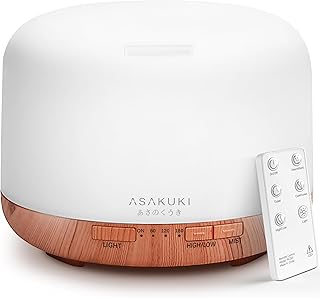 | ASAKUKI Essential Oil Diffuser for Home | Large-tank combo (500 mL) | Buy on Amazon |
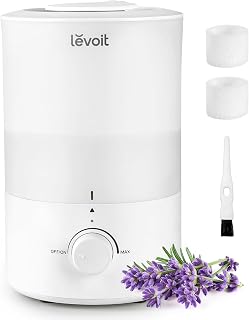 | Levoit Humidifiers for Bedroom | Quiet bedroom combo | Buy on Amazon |
 | Sierra Modern Home Smart WiFi Humidifier | Smart WiFi combo | Buy on Amazon |
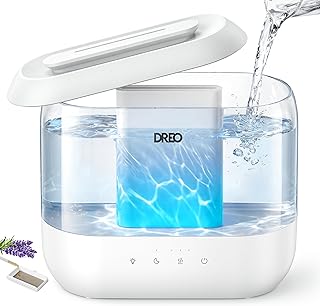 | DREO 4L Humidifiers for Bedroom | Whole-room humidifier | Buy on Amazon |
Affiliate links · details and availability change · check the live Amazon listing.
Plants, and the one case people get right by accident
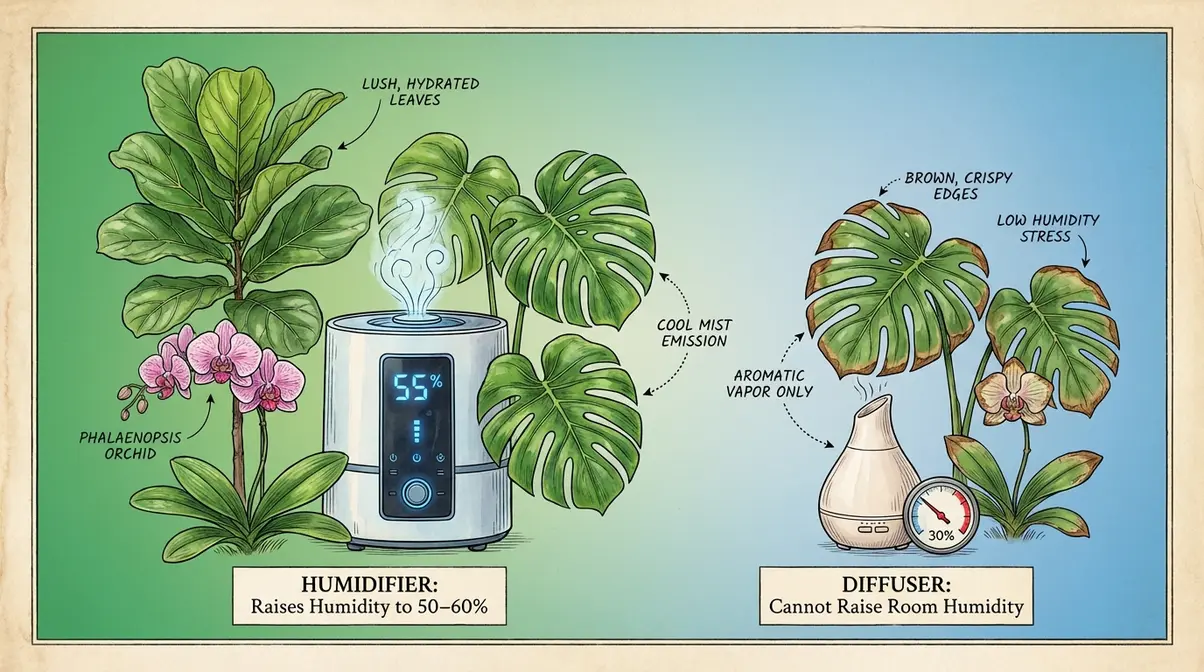
Calatheas, ferns and most tropical houseplants want humidity well above what a heated home provides, and a humidifier is the only one of these devices that helps them. Penn State Extension covers the relationship properly. A diffuser does nothing for a plant except make it smell nice, which the plant does not care about.
The bottom line
Match the device to the problem. Dry air is a humidifier problem; it needs litres of water and a machine built to move them. Scent is a diffuser problem; it needs millilitres. Nothing about owning one substitutes for the other, and putting oil in a water tank ruins the machine.
If you are buying one thing today and are not sure: buy the humidifier if anyone in the house is uncomfortable, and the diffuser if everyone is fine and you just want the room to smell good.
Frequently asked questions
What is the difference between a diffuser and a humidifier?
A humidifier adds moisture to raise a room’s relative humidity, holding 2-6 litres and running for 12-24 hours. A diffuser disperses scent, holds 100-500 ml, and does not meaningfully change humidity. Both often use the same ultrasonic mechanism, but at completely different scales and for different purposes.
Can I use a diffuser as a humidifier?
No. A diffuser’s tank is far too small to shift the humidity of a room – a bedroom needs litres of water overnight, and a diffuser holds a few hundred millilitres by design. It will scent the air near it, and that is all.
Can I put essential oils in my humidifier?
Not in the water tank. Essential oils degrade the plastics and seals in humidifiers built for water, which cracks reservoirs and damages the mechanism. Only add oils if the unit has a dedicated aroma tray that is physically separate from the water.
Which is better for a baby’s room?
A cool-mist humidifier, positioned about three feet from the cot and cleaned daily. Skip essential oils and diffusers for infants. Cool mist rather than warm mist removes any scald risk from hot water.
Is it safe to diffuse essential oils every day?
Run a diffuser in sessions of about 30 minutes in a ventilated room rather than continuously. Diffusing releases volatile organic compounds, and French agency ANSES has urged caution over essential-oil diffusers. Households with cats, infants or anyone with asthma should take advice before diffusing at all. If you are choosing oils to diffuse, our brand reviews cover which companies actually publish test data.
Medical disclaimer: This article is general information, not medical advice, and does not diagnose or treat any condition. Never apply essential oils neat or ingest them, and check with a qualified professional before using them during pregnancy, while nursing, around children, with a medical condition, or alongside medication.