Essential Oils for Anti-Inflammatory Relief: Expert Guide
By Ellen Cooper, independent essential-oil reviewer (hands-on since 2018, no MLM affiliation)
You’ve tried ibuprofen, ice, and the usual advice, and you’re wondering whether a plant oil can do something for the aches and stiffness. It’s a fair question – and it deserves a straight answer, because this is a corner of the wellness world where the claims run way ahead of the evidence. So here’s the honest version up front: several essential oils genuinely calm inflammation in the lab, a couple ease day-to-day soreness and tension nicely, and none of them are a treatment for an inflammatory disease like arthritis. Below I’ll walk you through exactly which oils, why they’re the ones that come up in the research, how to build a soothing blend, and the mistakes that waste your money or irritate your skin.
Quick answer: Frankincense, ginger and copaiba are the most-studied anti-inflammatory oils, and eucalyptus and peppermint help with muscle aches. But almost all of the anti-inflammatory research is from laboratory and animal studies, not human trials – so treat these oils as a gentle complement for ordinary aches, always diluted, and never as a replacement for care from your doctor.
What the science actually shows (and doesn’t)
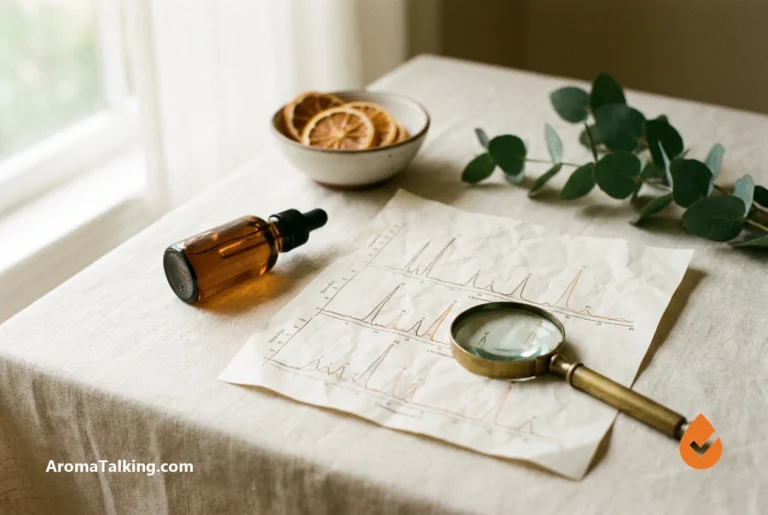
This is the part most articles skip, so I’ll be direct. When you read that “studies prove essential oils reduce inflammation,” those studies are almost entirely preclinical – cell cultures and animal models, not people. A 2024 systematic review of essential oils reported multiple potential benefits but leaned heavily on lab and animal data and explicitly called for more rigorous human research (Pezantes-Orellana et al., Frontiers in Medicine, 2024, retrieved 2026-07-22). A dedicated review of oils and chronic inflammation found they’re “promising tools” that dampen inflammatory signalling (the NF-κB pathway) – but the authors excluded human trials entirely (de Lavor et al., Oxidative Medicine and Cellular Longevity, 2018). And a review of 16 herbal oils found they reduce inflammatory cytokines, while framing them as candidates for future drug development, not established treatments (Zuo et al., eCAM, 2020).
So the mechanism is real and interesting – these compounds do calm inflammation in a dish. What we don’t have is strong proof it translates into treating an inflammatory condition in your body. Set your expectations there: an oil-based massage can soothe a stiff, achy shoulder; it isn’t managing rheumatoid arthritis.
A quick word on how inflammation works
It helps to know what you’re aiming at. Inflammation is the body’s normal repair response – blood flow rises, immune cells rush in, and you feel the familiar heat, swelling, redness and soreness. That’s acute inflammation, and it’s usually a good thing that fades as you heal. The trouble is chronic inflammation, where the response never fully switches off; that’s the territory of real disease, and it’s exactly where a scented oil is out of its depth. The everyday aches most of us actually want help with – a stiff neck, a tight lower back, sore legs after a long day – sit at the mild, self-limiting end, and that’s where a soothing massage oil genuinely earns a place.
The most-studied anti-inflammatory oils
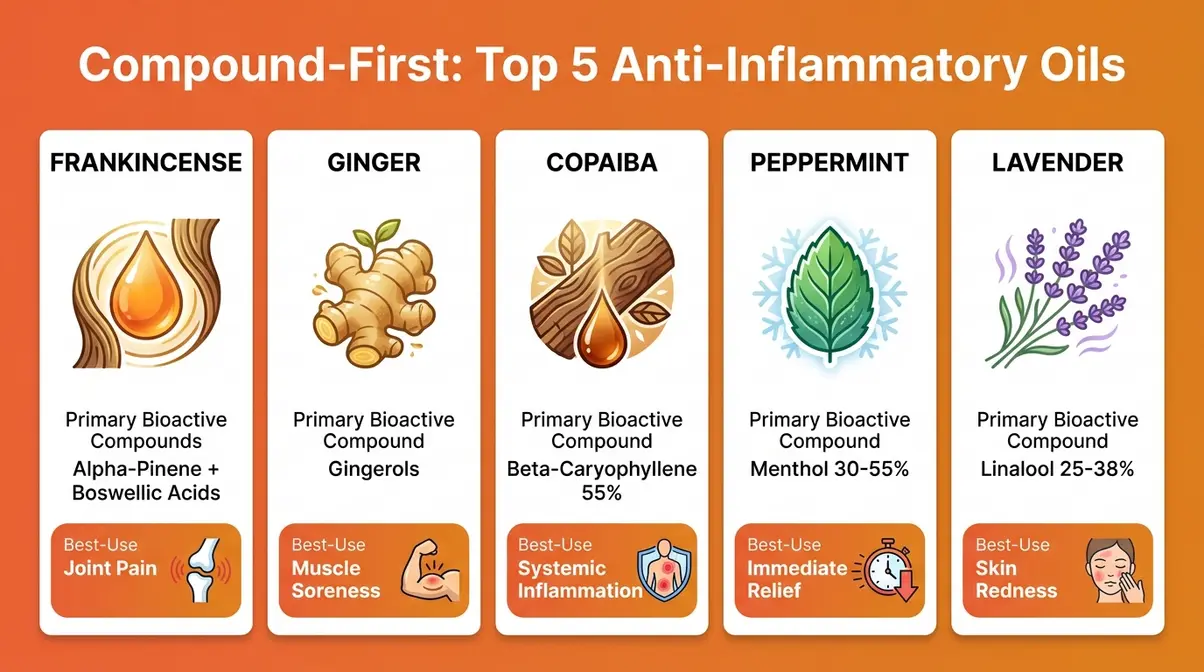
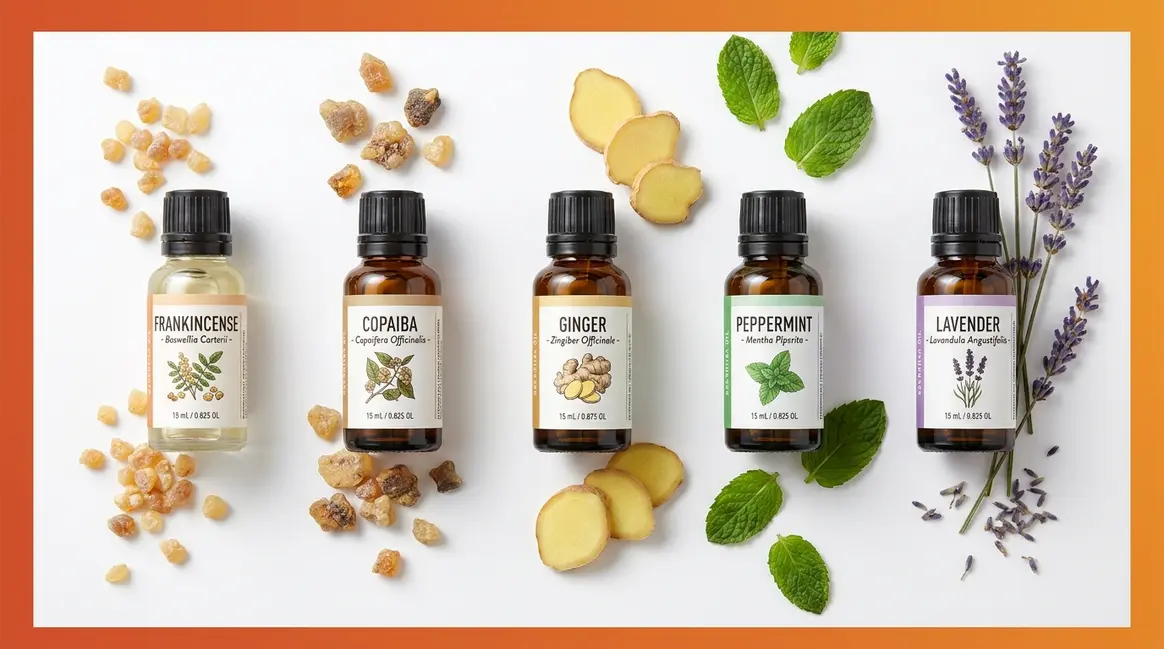
| Oil | Active compound | Best for |
|---|---|---|
| Frankincense | Boswellic acids | Joint and general stiffness |
| Ginger | Gingerol / zingiberene | Muscle aches, warming relief |
| Copaiba | Beta-caryophyllene | Everyday soreness |
| Eucalyptus | 1,8-cineole | Muscle and chest tightness |
| Peppermint | Menthol | Tension, a cooling counter-irritant |
Frankincense – the one I reach for first
Its boswellic acids are the most-studied compounds of the group, and frankincense is the closest thing here to an oil with some human interest for joint comfort. It has a warm, resinous, slightly woody scent that most people find grounding, and it blends beautifully into a massage oil. If you only buy one oil off this list for a stiff, achy shoulder or lower back, make it this.
Ginger – warming relief for a cold, stiff joint
Ginger brings a genuine warming quality to a blend – lovely on a stiff, cold-weather shoulder or an achy knee that feels better with heat. Its gingerol and zingiberene are the active compounds. Because it’s warming, go easy: it can feel hot on sensitive skin, so keep the dilution low and pair it with a gentler carrier.
Copaiba – the smooth, gentle soreness oil
Copaiba is prized for its high beta-caryophyllene content and has a mild, almost peppery-sweet scent that blends smoothly for a gentle daily massage oil. It’s one of the gentler oils here, which makes it a good base note to build a blend around when you want something you can use often.
Eucalyptus and peppermint – for muscle tightness
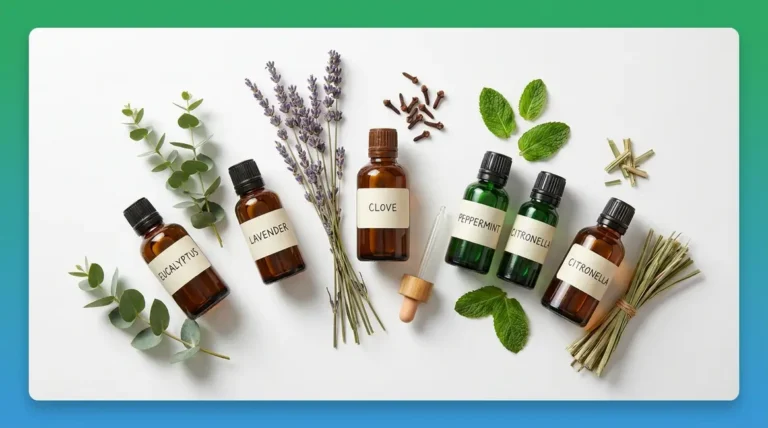
These two round out the group for muscle and tension complaints. Eucalyptus (rich in 1,8-cineole) has a fresh, opening quality that suits chest and shoulder tightness, while peppermint’s menthol works as a cooling counter-irritant – the same trick that helps a tension headache and makes sore legs feel refreshed. Both are potent and strongly scented, so a little goes a long way. None of these oils needs to be exotic or expensive; pure single oils from an honest brand do the job.
Which oil for which ache?
People reach for these oils for slightly different reasons, so here’s how I’d match them to the everyday complaint – always as a soothing complement, never a cure.
| If you’ve got… | Try | Why |
|---|---|---|
| A stiff joint or lower back | Frankincense + copaiba | Grounding, gentle, good for repeat use |
| Sore muscles after exercise | Peppermint + eucalyptus | Cooling, refreshing counter-irritant feel |
| A cold, achy shoulder or knee | Ginger + frankincense | Warming, comforting with gentle heat |
| General end-of-day tension | Copaiba + a little lavender | Soft, calming, easy on skin |
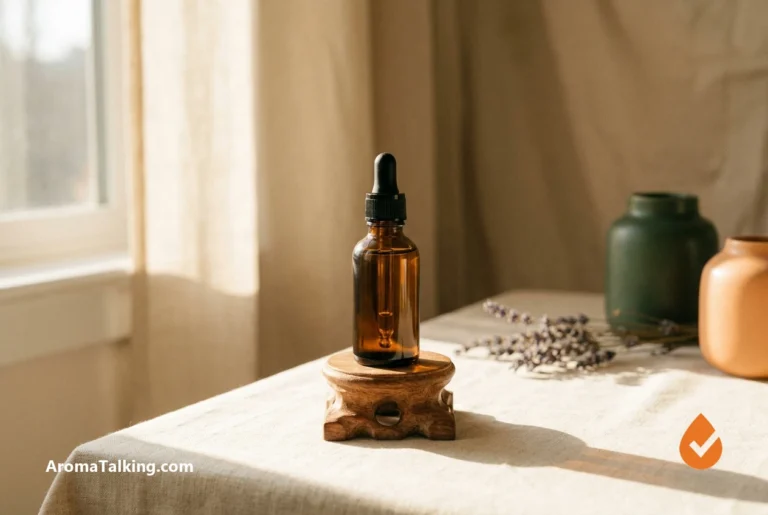
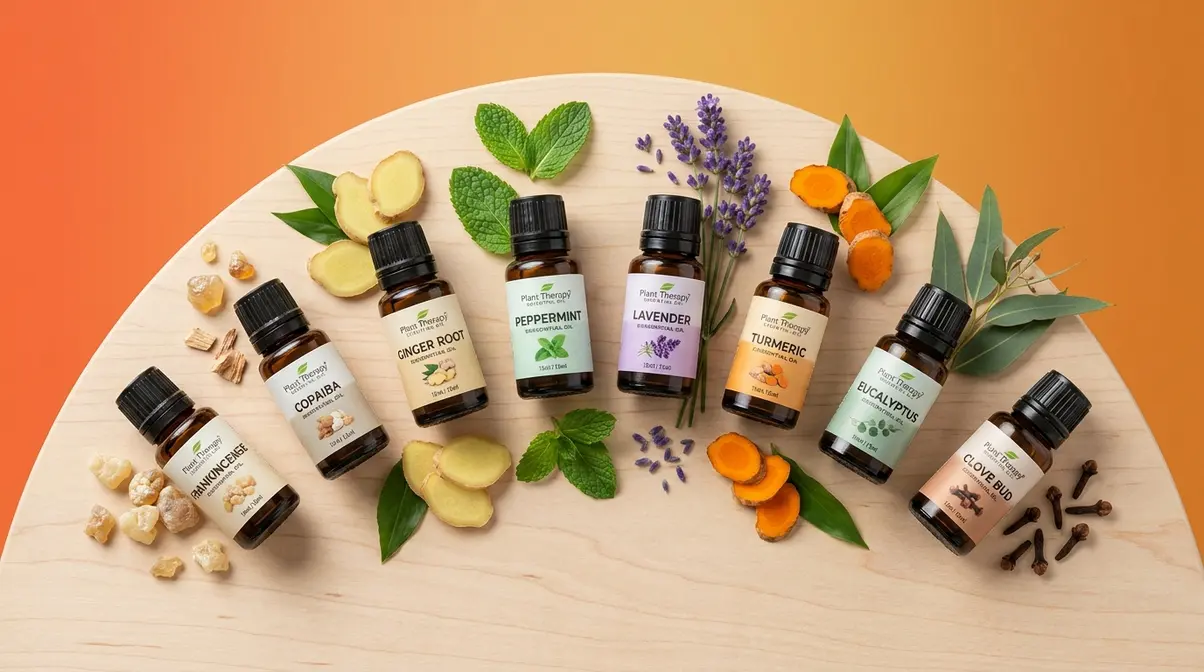
The frankincense oils I use for a soothing massage blend.
Recommended oils on Amazon
As an Amazon Associate we earn from qualifying purchases, at no extra cost to you. Product details and availability are subject to change – check the live listing on Amazon.
| Image | Product | Best for | Buy |
|---|---|---|---|
 | Organic Frankincense Essential Oil 30 ml | Organic, for massage | Buy on Amazon |
 | Majestic Pure Essential Oil with Glass Dropper | Everyday massage oil | Buy on Amazon |
 | Handcraft Blends Frankincense Essential Oil | Budget frankincense | Buy on Amazon |
 | Cliganic Organic Frankincense Essential Oil | Large value bottle | Buy on Amazon |
Affiliate links · details and availability change · check the live Amazon listing.
How I use them
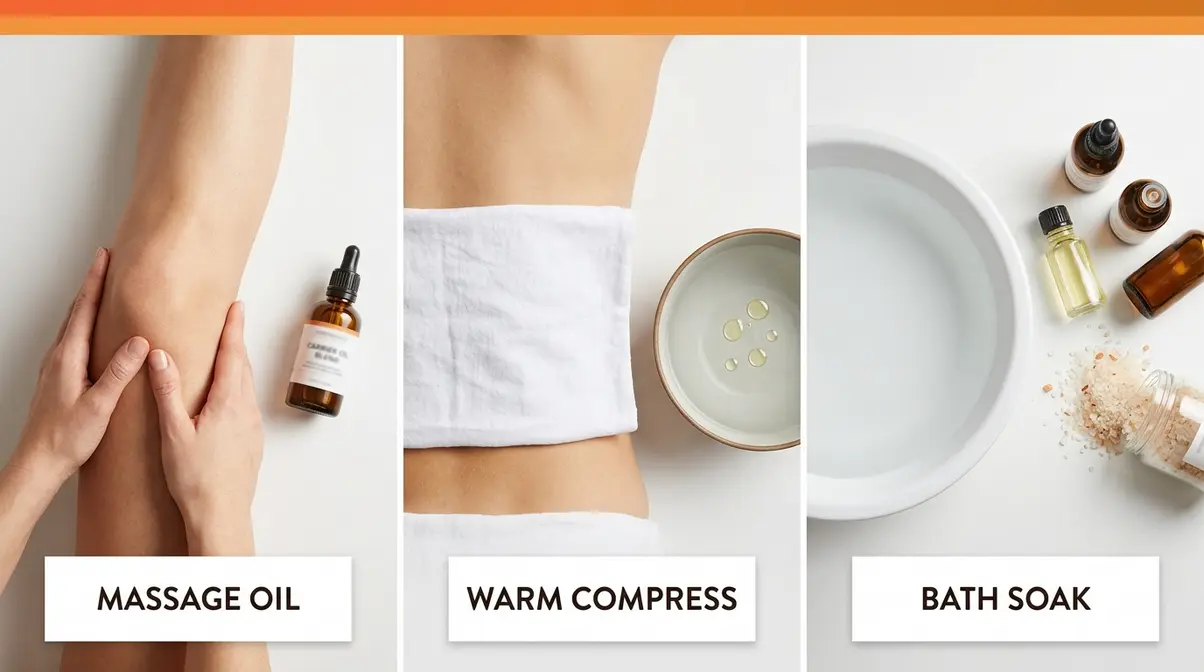
- Massage oil – my favourite for a sore spot. Dilute to 2% (about 12 drops per ounce / 30 mL of a carrier oil), or 1% for sensitive skin, and rub into the achy area. Never apply oils neat.
- Warm compress – a few drops of a diluted blend on a warm, damp cloth over a stiff joint or lower back; the heat helps a cold, tight muscle relax.
- Cool compress – for a spot that feels hot or freshly overworked, a cool cloth with a drop of diluted peppermint is more comfortable than heat.
- Roller bottle – the easiest way to keep a pre-mixed 2% blend handy for the exact spot that flares up during the day.
- Warm bath – 5-8 drops pre-mixed into a tablespoon of carrier oil (oils don’t dissolve in water on their own), added to a warm bath for whole-body tension.
- Diffusion – for the calming, whole-room version; gentler and less targeted, better for winding down than for a specific ache.
Three simple blends to start with
- Soothing joint roller – 4 drops frankincense + 3 drops copaiba + 2 drops ginger in a 10 mL bottle topped with fractionated coconut oil. My everyday go-to.
- Cooling muscle rub – 5 drops peppermint + 4 drops eucalyptus in 30 mL of carrier oil, for legs and shoulders after exercise.
- Warming winter blend – 4 drops ginger + 4 drops frankincense in 30 mL of carrier, for a cold, stiff joint that likes heat.
Blend by the drop, write down what works, and store finished blends in dark glass away from heat. For the full basics on carrier oils and ratios, see our beginner’s guide to using essential oils and how to dilute an oil safely.
Common mistakes to avoid
- Applying oils neat. Undiluted oils can burn or sensitize skin – once you sensitize to an oil, the reaction can be permanent. Always dilute and patch-test.
- Expecting a cure. These oils soothe ordinary aches; they don’t treat arthritis or any inflammatory disease. If you’re reaching for them to replace medical care, that’s the wrong tool.
- Going too strong. More drops isn’t more relief – it’s more irritation. 2% (1% on sensitive skin or the face) is plenty.
- Ingesting them. Never swallow essential oils for inflammation; there’s no safe reason to, and real risk in it.
- Ignoring “warming” oils on sensitive skin. Ginger and peppermint can feel hot or cold intensely – test a small area first and keep the dilution low.
Safety, and when to see a doctor
- Always dilute, and patch-test a new blend on your inner arm for 24 hours – undiluted oils can burn or sensitize skin.
- Pregnancy – several of these (including rosemary and clary sage) are best avoided; check with your provider first.
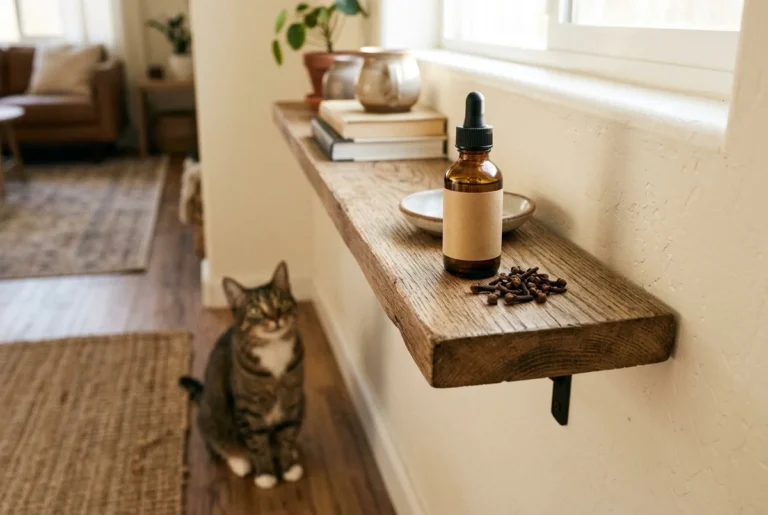
- Pets – cats especially can’t process many oil compounds; diffuse only where a pet can leave, and never apply oils to an animal.
- Medication – if you take anti-inflammatory or blood-thinning medicine, mention topical oils to your doctor.
- Children – keep dilutions very low, avoid peppermint and eucalyptus on young children, and store oils out of reach.
And the line that matters: real inflammation – persistent joint swelling, pain that limits you, redness and heat, or anything getting worse – needs a medical work-up, not a diffuser. Essential oils sit alongside proper care, not instead of it. As Johns Hopkins puts it, aromatherapy can support wellbeing, but it’s a complement to treatment (Johns Hopkins Medicine).
Frequently asked questions
What is the most anti-inflammatory essential oil?
Frankincense is the most-studied, thanks to its boswellic acids, with ginger and copaiba close behind. That said, most of the evidence is from lab and animal studies, so think “soothing for minor aches,” not a proven treatment for an inflammatory disease.
Can essential oils reduce inflammation in the body?
In laboratory and animal studies they calm inflammatory signalling, but there isn’t strong human-trial proof they treat an inflammatory condition. They can ease day-to-day soreness and stiffness as a complement, used diluted on the skin.
How do you use essential oils for inflammation?
Dilute to about 2% (12 drops per ounce of carrier oil) and massage into the sore area, or use a warm compress. Never apply them undiluted, and patch-test first.
Which is better for sore muscles – peppermint or ginger?
They work differently. Peppermint gives a cooling, refreshing counter-irritant feel that suits freshly overworked muscles, while ginger is warming and better for a cold, stiff joint that eases with heat. Many people keep both and choose by how the ache feels.
Can I use essential oils instead of my arthritis medication?
No. Oils are not a treatment for arthritis or any inflammatory disease, and you should never stop prescribed medication to use them. Talk to your doctor about adding them as a complement.
The bottom line
Essential oils earn a modest, honest place for the ordinary aches: frankincense, ginger and copaiba in a diluted massage oil can genuinely take the edge off a stiff, sore day. Just keep the framing straight – the anti-inflammatory research is mostly from the lab, not from people, so these are a gentle complement, never a substitute for treating a real inflammatory condition. Start with a simple 2% massage blend on the achy spot, and let your doctor handle anything that’s swelling, worsening, or slowing you down.
Medical disclaimer: This article is general information, not medical advice, and does not diagnose or treat any condition. Essential oils are not a treatment for arthritis or any inflammatory disease. Never apply oils neat or ingest them, and check with a qualified professional before using them during pregnancy, around children or pets, with a medical condition, or alongside medication.