How to Use Essential Oils Without a Diffuser: 10 Methods
By Ellen Cooper, independent essential-oil reviewer (hands-on since 2018, no MLM affiliation)
You’ve got a shelf of essential oils, a room that could use freshening, and no diffuser in sight – maybe you’re travelling, renting, or just not sure a $50 gadget is worth it. Good news: I use oils without a diffuser constantly, and honestly some of these methods work better for certain situations than a diffuser does. Below I’ll walk through every method I actually reach for – from the ten-second cotton-ball trick to a reed diffuser you can build tonight – with the how-to and the safe way to do each one.
Quick answer: You don’t need a diffuser. A drop on a cotton ball or tissue, a bowl of steaming water, a DIY roller or room spray, reed sticks, or a few drops in a bath all deliver the scent – some instantly, some all day. The only rules that carry over: dilute anything that touches skin, and never ingest oils.
Ten ways to use oils without a diffuser
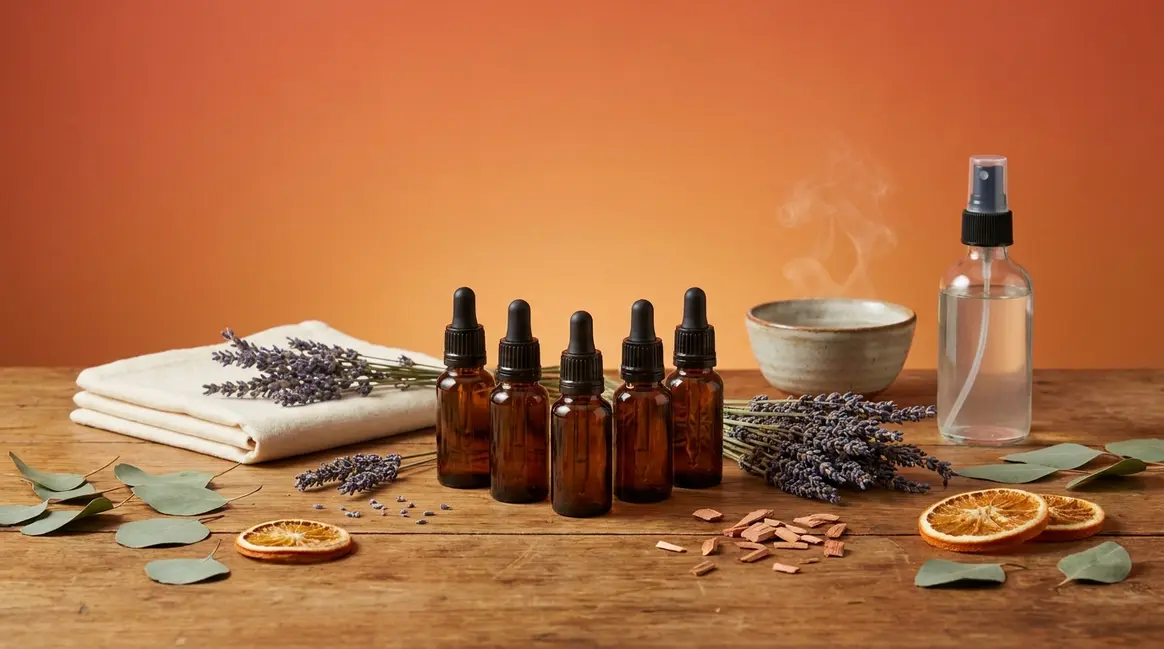
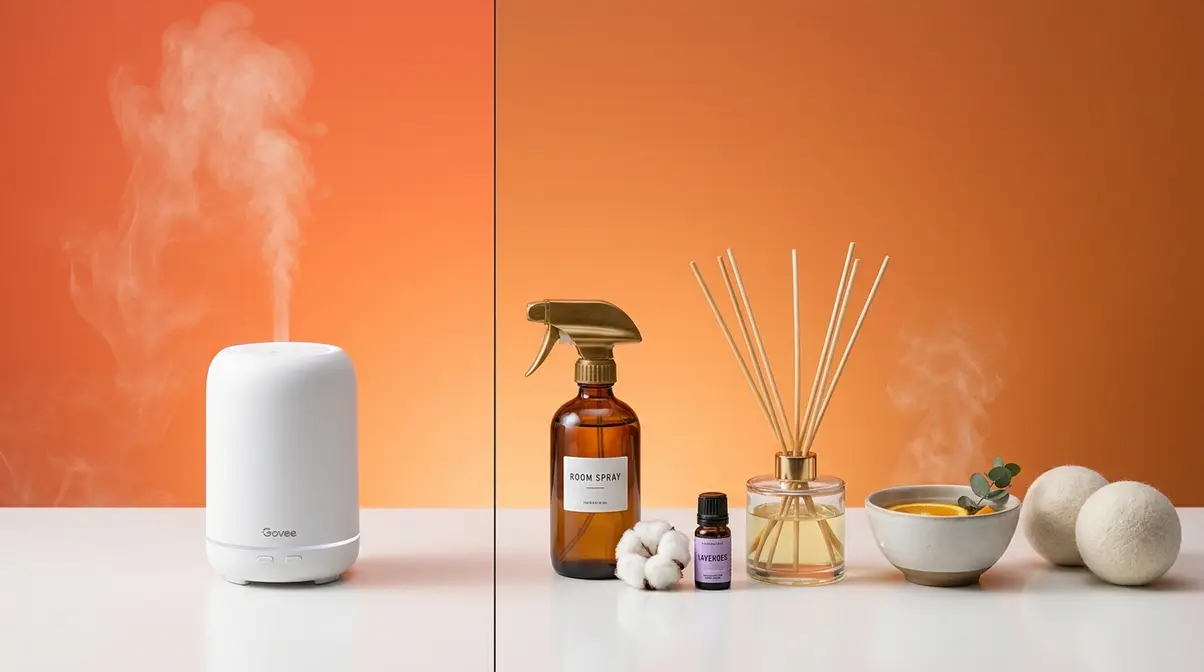
Here’s the full toolkit, quickest first. Every one of these works with things you probably already own.
1. Cotton ball or tissue – the ten-second method
A drop or two on a cotton ball, tucked by a vent, in the car, in a drawer or a gym bag. It’s the fastest, cheapest way to move fragrance into a small space, and it’s completely portable. The trade-off is reach – it perfumes the air a foot or two around it, not the whole space – and the aroma fades within a few hours, so you top it up. Perfect for a car, a suitcase, or a stuffy closet.
2. Personal inhaler – discreet and pocket-sized
A blank aromatherapy inhaler is a little tube with a cotton wick inside. Add a few drops to the wick, cap it, and sniff whenever you want a lift – on a train, at a desk, before a meeting. Because you’re inhaling directly and not perfuming the air, it’s the most discreet option and the one I travel with. Peppermint for a pick-me-up, lavender to settle.
3. Steam bowl – for a stuffy nose
Add 2-3 drops to a bowl of hot (not boiling) water, drape a towel over your head, close your eyes, and breathe gently for a minute or two. The rising steam carries the oil straight to your sinuses, which makes it the best method for congestion. It’s potent, though: keep it brief, keep your eyes shut, and never lean over boiling water. Eucalyptus is the classic choice here.
4. DIY roller – the most useful everyday method
A roller bottle turns any oil into a wearable scent. Dilute to 2% – about 12 drops of essential oil in a 10 mL bottle topped with a carrier like fractionated coconut or jojoba – and roll onto your wrists, the back of your neck, or your temples. It’s the method I use most: portable, mess-free, and it doubles as a soothing touch-point through the day. Halve the drops (1%) for sensitive skin or the face.
5. Room spray – freshen a whole room fast
In a small glass spray bottle, combine distilled water, a splash of witch hazel or vodka (it helps the oil disperse instead of floating on top), and 15-20 drops of oil. Shake before each use and mist the air, linens or upholstery. It’s the quickest way to freshen a whole room, and you control exactly what’s in it. See the full recipe below.
6. Reed diffuser – scent for weeks, no power
Reed sticks standing in a jar of oil wick the aroma up and release it slowly into the air – no electricity, no heat, no noise. It’s the best hands-off option for a bathroom or entryway, and one jar can last for weeks. I’ll show you how to build one below; it takes five minutes.
7. Warm bath – whole-body wind-down
Oils don’t dissolve in water on their own, so pre-mix 5-8 drops into a tablespoon of carrier oil (or an unscented bath gel), then swirl that into a warm bath. Skipping the carrier is the classic mistake – neat drops float and can touch skin at full strength. Lavender or roman chamomile make this a proper wind-down.
8. Simmer pot – fills the kitchen
A couple of drops in a pot of gently simmering water sends fragrance through the whole kitchen and beyond – lovely with orange and clove in cold weather. Keep the heat low, top up the water, and never leave it unattended. This one’s about ambience more than therapy.
9. Scent your linens
A diluted linen spray misted lightly on a pillow, or a drop of oil on a wool dryer ball tossed in with the load, leaves bedding and towels softly perfumed. Don’t put neat oil directly on fabric that touches skin, and go light – a little lingers longer than you’d think.
10. Lava-stone or terracotta pendant
A porous bead or clay pendant holds a drop of oil and releases it slowly as you wear it – a portable, all-day version of the cotton ball. Refresh it with a drop when the scent fades. Great if you want the benefit close to you without perfuming everyone around you.
Which method for which job?
| You want to… | Best no-diffuser method |
|---|---|
| Freshen a whole room | Room spray or reed diffuser |
| Calm down on the go | Personal inhaler or roller |
| Clear a stuffy nose | Steam bowl |
| Wind down for sleep | Roller on wrists + a linen spray |
| Set a cosy mood | Simmer pot or reed diffuser |
| Scent a car or small space | Cotton ball or vent clip |
Which lasts longest?
If longevity is what you’re after, a reed diffuser wins hands down – it can run for weeks off a single jar. A room spray is instant but fleeting (minutes to an hour). A soaked cotton ball and a pendant sit in the middle, lasting a few hours before they need refreshing. Match the method to how long you need it: reeds for a space you want permanently pleasant, a spray for a quick reset before guests arrive.
Handy no-diffuser picks – ready rollers and empty bottles for your own blends:
Recommended on Amazon
As an Amazon Associate we earn from qualifying purchases, at no extra cost to you. Product details and availability are subject to change – check the live listing on Amazon.
| Image | Product | Best for | Buy |
|---|---|---|---|
 | Migrastil Migraine Stick Roll On | Ready-made peppermint roller | Buy on Amazon |
 | PrettyCare 4 Pack Amber Glass Oil Roller Bottles… | Empty rollers for DIY | Buy on Amazon |
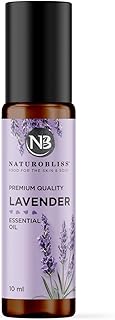 | NaturoBliss Lavender Essential Oil Roll On | Ready-made lavender roller | Buy on Amazon |
Affiliate links · details and availability change · check the live Amazon listing.
Two recipes worth saving
A homemade room spray
In a 100 mL glass spray bottle: fill about three-quarters with distilled water, add roughly two teaspoons of witch hazel or plain vodka (the disperser), then 20-25 drops of essential oil. Cap, shake hard, and shake again before every spritz – there’s no emulsifier, so the oil will always want to separate. Try lemon plus a little rosemary for a clean kitchen, or lavender plus bergamot for a bedroom. It keeps a couple of weeks; make small batches.
A five-minute reed diffuser
Fill a small narrow-necked jar or bottle with about 60 mL of a light carrier (fractionated coconut or sweet almond oil), add 20-30 drops of essential oil and a teaspoon of vodka to help the aroma travel up the reeds, and stir. Stand 5-8 rattan reeds in it. Flip the reeds every few days to refresh the strength. That’s it – an aroma source that runs for weeks with no power and no fuss.
Common mistakes to avoid
- Adding neat oil to bathwater. Without a carrier, drops float and can hit skin at full strength – always pre-mix into a tablespoon of carrier first.
- Over-dosing a small space. More drops isn’t better; it’s overwhelming and wasteful. Start with the low end and build up.
- Using tap water in a spray. Distilled water keeps the spray clearer and lasts longer than tap.
- Rolling neat oil on skin. A roller still needs a carrier – “roller” doesn’t mean “undiluted.”
- Leaving a simmer pot unattended. It can boil dry; treat it like anything on the stove.
A few safety basics
- Dilute anything that touches skin (2%, or 1% for sensitive skin), and patch-test a new oil. Never apply neat, and never ingest oils – the FDA regulates them as cosmetics, not something to swallow.
- Children – go gentle and well-diluted; some oils (like peppermint and eucalyptus) aren’t suitable for young children (Johns Hopkins Medicine).
- Pets – many oils are toxic to cats; keep sprays and simmer pots where a pet can leave the room.
- Ventilate – steam and simmer methods are potent; a little goes a long way.
For the full basics, see our beginner’s guide to using essential oils and how to dilute an oil.
Frequently asked questions
How can I use essential oils without a diffuser?
Plenty of ways: a drop on a cotton ball or tissue, a steam bowl, a DIY roller or room spray, reed sticks, a simmer pot, or a few diluted drops in a bath. Some give an instant scent, others last all day.
How do you make a room smell good with essential oils?
A homemade room spray (distilled water + a splash of witch hazel + 15-20 drops of oil) or a reed diffuser are the easiest whole-room options. A simmer pot works well in the kitchen.
How do you make a reed diffuser at home?
Fill a narrow jar with about 60 mL of light carrier oil, add 20-30 drops of essential oil and a teaspoon of vodka, stir, and stand 5-8 rattan reeds in it. Flip the reeds every few days to refresh the scent. It runs for weeks with no power.
Can you put essential oils directly on your skin?
Not undiluted. Always dilute to about 2% in a carrier oil first and patch-test – neat oils can cause irritation or a lasting sensitivity. A roller bottle makes this easy.
Is it safe to heat essential oils in water?
A steam bowl or a gentle simmer pot is fine in short bursts and good for scent – just keep it low, ventilate, and never leave a simmer pot unattended. Don’t overheat oils or breathe concentrated steam for long.
The bottom line
A diffuser is convenient, but it’s optional. For quick scent, reach for a cotton ball or inhaler; for a whole room, a spray or reed diffuser; for on-the-go calm, a roller; for congestion, a steam bowl. Keep the two rules that always apply – dilute for skin, never ingest – and you can get everything you wanted from a diffuser with things you already own.