Carrier Oil for Essential Oils: Which to Use and How
By Ellen Cooper, independent essential-oil reviewer (hands-on since 2018, no MLM affiliation)
A carrier oil is the base oil you mix essential oils into so they’re safe to put on your skin. Essential oils are far too concentrated to use neat, and a good carrier dilutes them, helps your skin absorb them, and moisturizes at the same time. The tricky part isn’t whether to use one – it’s which one, and how much. This guide compares the main carrier oils for essential-oil use (by skin type, feel, pore-clogging, and the shelf-life nobody talks about), then gives you the exact dilution math. It pairs with our complete essential oils guide and our beginner’s guide to using essential oils.
Peppermint is the one worth treating separately. At roughly 40% menthol it is less forgiving than most, and the drop counts commonly quoted for it run a percentage point strong. See carrier oil for peppermint for the corrected ratios.
Rosemary is the one people ask about most, largely because of its reputation for hair growth, and it carries cautions the others do not. We cover the ratio, the carrier picks and what the research actually shows in our guide to carrier oil for rosemary oil.
Quick answer: The easiest all-purpose carrier is fractionated coconut oil (odorless, light, very long shelf life) or jojoba (best for the face). Dilute to a standard 2% — about 12 drops of essential oil per 1 ounce (30 mL) of carrier; use 1% (6 drops/oz) for the face, sensitive skin, or children. Never apply essential oils neat, and don’t put carrier oil in a diffuser.
What is a carrier oil?
A carrier oil is a fatty, pressed plant oil – like jojoba, coconut, or sweet almond – used to “carry” a tiny amount of essential oil onto your skin. Unlike essential oils, which are volatile and evaporate, carrier oils are non-volatile: they stay put, dilute the potent essential oil, and feed your skin their own fatty acids and vitamins (Healthline; American College of Healthcare Sciences, retrieved 2026-06-30). They’re sometimes called base oils.
Why you have to use a carrier oil
Essential oils are concentrated plant extracts – a single drop can be the equivalent of many cups of the plant. Applied undiluted (“neat”), they can cause irritation, burning, and sensitization: a delayed allergy that, once triggered, can stick for good. The rule from aromatherapy safety references is simple – the less carrier you use relative to essential oil, the higher your sensitization risk (Plant Therapy; Tisserand & Young, Essential Oil Safety, 2nd ed.). A carrier oil is what makes topical use safe.
The best carrier oils for essential oils, compared
There’s no single “best” carrier – it depends on your skin and what you’re making. Here’s how the common ones stack up. Comedogenic is a 0–5 pore-clogging scale (lower is safer for acne-prone or facial use); shelf life is how fast the oil oxidizes (goes rancid).
| Carrier oil | Best for | Feel | Comedogenic (0-5) | Shelf life |
|---|---|---|---|---|
| Fractionated coconut (FCO) | All-purpose, beginners | Light, dry, odorless | 0-1 (low) | Very long (years) |
| Jojoba | Face, sensitive skin | Silky, non-greasy | 2 | Very long (a wax, stable) |
| Sweet almond | Body, massage | Light, slightly rich | 2 | ~1 year (tree-nut allergy caution) |
| Grapeseed | Oily / acne-prone skin | Lightest, fast-absorbing | 1-2 | Short (oxidizes fast; refrigerate) |
| Argan | Face, hair | Light, nourishing | 0 | ~2 years |
| Rosehip | Scars, mature skin, face | Dry, fast-absorbing | 1 | Short (refrigerate) |
| Avocado | Dry / mature skin | Rich, heavy | 3 | ~1 year |
| Castor | Scalp, hair, brows | Very thick (cut with a lighter oil) | 1 | Long |
| Virgin coconut (solid) | Hair, oral use | Solid below ~24°C, scented | 4 (can clog) | Long |
Comedogenic ratings from dermatology indices; use FCO over solid virgin coconut for facial blends.
If you want one bottle to cover most uses, fractionated coconut is the most forgiving – it stays liquid, lasts for years, and doesn’t compete with your essential oil’s scent. Jojoba is the one I keep for facial blends, because it behaves like skin’s own sebum and absorbs without a greasy film. For an oil you’ll use on your face daily, the comedogenic column matters most (argan and jojoba are safest); for a massage blend, slip and feel matter more than pore-clogging, which is where sweet almond shines. And if your blend is going near the mouth – oil pulling or a sore tooth – skip jojoba and use an edible carrier; our complete clove oil guide walks through that for a “hot” oil.
Shelf life: the part most guides skip
Carrier oils go rancid, and a rancid carrier can irritate your skin and spoil a whole blend – yet most “best carrier oil” lists never mention it. This is the real difference between them. Oils high in stable fats resist oxidation; oils high in delicate polyunsaturated fats turn fast. Jojoba and fractionated coconut are the standouts: jojoba is technically a liquid wax, not a true oil, so it barely oxidizes and keeps for years, and fractionated coconut is processed down to its most stable fraction, so it lasts almost indefinitely. Grapeseed, rosehip, and sweet almond are the opposite – rich in polyunsaturated fats that oxidize in months, not years.
So treat the fast oxidizers differently: buy them in small bottles, store them somewhere cool and dark (the fridge is fine for rosehip and grapeseed), and smell-test before each use. A fresh carrier smells faintly nutty or neutral; if it smells sharp, sour, or like old crayons, it’s oxidized – toss it, because oxidized oil is itself a skin irritant. Whichever you buy, remember the carrier, not the essential oil, is what sets your finished blend’s shelf life, so date your bottles.
Do the oils in my kitchen count?
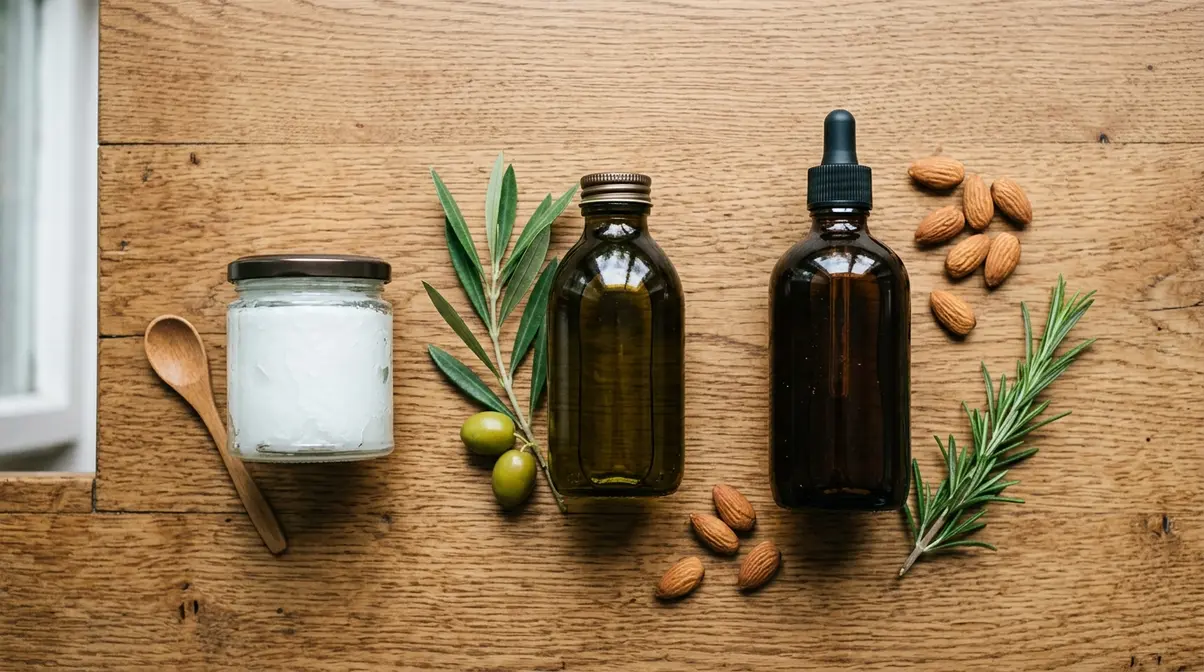
Mostly yes – with caveats worth knowing.
- Coconut oil – yes, and it’s the most common starting point. But there are two very different products here: fractionated coconut oil stays liquid, is nearly odourless and lasts for years, while virgin coconut oil is solid at room temperature and smells strongly of coconut. For blending, fractionated is the easier one – I’ve written a full guide to fractionated coconut oil.
- Olive oil – yes, and its high oleic acid content (roughly 55-83%) makes it genuinely nourishing for very dry or mature skin. The catch is the smell: it’s assertive enough to fight with a delicate floral oil.
- Castor oil – yes, though it’s thick and sticky enough that most people blend it with a lighter oil rather than using it alone. It’s popular for scalp and hair treatments.
One honest caveat on the kitchen options: a review of plant-based cosmetic oils notes that coconut and olive oils are comedogenic – they can clog pores and trigger breakouts on acne-prone or sensitive skin (review of plant-based cosmetic oils, 2024). For the face, that’s a real reason to reach for jojoba or grapeseed instead. Jojoba is the one I recommend most for facial use, because its structure is unusually close to the skin’s own sebum.
How to choose a carrier oil by use
- Face / sensitive skin: jojoba or argan (low comedogenic, light). Skip heavy avocado and solid coconut.
- Body & massage: sweet almond or fractionated coconut – enough slip to glide, not too greasy.
- Oily or acne-prone skin: grapeseed or jojoba (lightest, lower pore-clogging).
- Scalp & hair: jojoba for fine hair; castor for thicker treatments (cut it 50/50 with a lighter oil). See our clove oil for hair guide for an example.
- Mouth / gums (oral): use an edible carrier – virgin coconut or olive oil – never jojoba.
How to dilute essential oils with a carrier
Dilution is just a percentage of essential oil in carrier. The standard for general adult skin use is 2%; drop to 1% for the face, sensitive skin, or children. At a typical 20 drops per millilitre:
| Carrier amount | 1% (face / sensitive / kids) | 2% (general adult) |
|---|---|---|
| 1 teaspoon (5 mL) | 1 drop | 2 drops |
| 1 tablespoon (15 mL) | 3 drops | 6 drops |
| 1 ounce (30 mL) | 6 drops | 12 drops |
Measure the carrier first, then add the essential oil by the drop, and patch-test any new blend on your inner forearm for 24 to 48 hours. One important exception: “hot” oils like clove, cinnamon bark, and oregano need a much lower ceiling (around 0.5%) because they’re strong skin sensitizers – see our clove oil dilution guide for that method.
Are carrier oils safe? Patch testing and allergies
Carrier oils are gentle for most people, but they’re not allergy-proof – and the nut question is a real one. Sweet almond, argan and macadamia oils all come from tree nuts. If you have a tree-nut allergy, skip those and use jojoba (technically a wax from a shrub seed), fractionated coconut, grapeseed or sunflower instead.
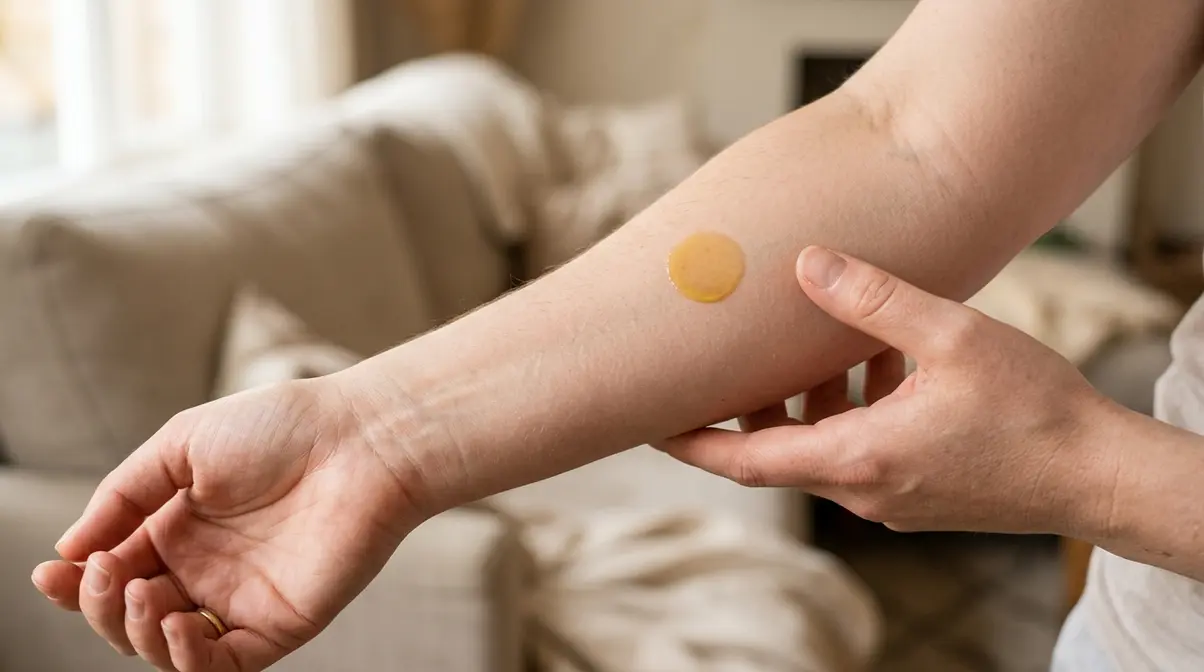
How to patch test properly: mix the blend at the dilution you actually intend to use – carrier plus essential oil, not the carrier on its own, since either component (or the combination) can be the culprit. Dab a small amount on your inner forearm, leave it uncovered, and wait a full 24 hours before using it more widely. Redness, itching or bumps mean stop.
What if you don’t have a carrier oil?
Don’t skip dilution – substitute. An unscented body lotion or aloe vera gel will both dilute an essential oil safely for topical use, and either beats applying the oil neat. The Children’s Hospital of Philadelphia notes that plant oils such as sunflower, almond and coconut are appropriate for skin application, including in infant massage (CHOP) – so the sunflower oil in the cupboard is a perfectly reasonable stand-in until you buy something purpose-made.
Do you use carrier oil in a diffuser?
No – and this is a common mix-up. An ultrasonic diffuser uses a few drops of essential oil in a water reservoir; a nebulizing diffuser uses neat essential oil with no water at all. Carrier oil belongs on your skin, not in either machine – adding it can gum up the ultrasonic plate or clog a nebulizer. Carrier oils are for topical dilution; diffusers handle the essential oil directly.
Which carrier oil to buy
Look for 100% pure, cold-pressed carrier oils (fractionated coconut is the exception – it’s processed to stay liquid and odorless). Buy oxidation-prone oils like grapeseed in smaller bottles. For most people, a bottle of fractionated coconut plus a small bottle of jojoba covers nearly everything.
Popular carrier oils on Amazon
As an Amazon Associate we earn from qualifying purchases, at no extra cost to you. Product details and availability are subject to change – check the live listing on Amazon.
| Image | Product | Best for | Buy |
|---|---|---|---|
 | Handcraft Fractionated Coconut Oil | All-purpose, long shelf life | Buy on Amazon |
 | Cliganic Organic Jojoba Oil | Face & sensitive skin | Buy on Amazon |
 | NOW Foods Sweet Almond Oil | Body & massage | Buy on Amazon |
 | Handcraft Castor Oil | Scalp & hair (thick) | Buy on Amazon |
 | Majestic Pure Fractionated Coconut Oil | All-purpose, lightweight | Buy on Amazon |
Affiliate links · details and availability change · check the live Amazon listing.
Frequently asked questions
What is the best carrier oil for essential oils?
For most people, fractionated coconut oil – it’s light, odorless, won’t clog pores, and lasts for years. Jojoba is the best pick for the face, and sweet almond is great for body massage. For a deeper look at two of the most popular carriers, see our guides to fractionated coconut oil and jojoba oil.
What happens if I don’t use a carrier oil?
Applying essential oils neat can cause burning, redness, and sensitization – a delayed allergy that can become permanent. Always dilute; the carrier is what makes topical use safe.
Can I use any cooking oil as a carrier?
Olive oil works in a pinch (it’s edible and a real carrier), but it’s heavy and scented. Skip strongly flavored or highly processed cooking oils. A dedicated light carrier like fractionated coconut or jojoba gives a far better result.
Do you put carrier oil in a diffuser?
No. Ultrasonic diffusers use essential oil in water; nebulizers use neat essential oil. Carrier oil can clog or damage them – it’s only for topical dilution.
How much essential oil per ounce of carrier?
About 12 drops per ounce (30 mL) for a 2% adult blend, or 6 drops for a gentler 1%. “Hot” oils like clove need far less – around 0.5%, or 3 to 4 drops per ounce.
The bottom line
A carrier oil is the difference between safe, pleasant essential-oil use and an irritated mess. Keep it simple: a bottle of fractionated coconut for everyday blends, jojoba for your face, and dilute to 2% (or 1% for delicate skin). Buy pure and cold-pressed, store the fast-oxidizing oils cool and use them up, and never apply essential oils neat or pour carrier into a diffuser. Get those right and any essential oil becomes easy to use well.
Medical disclaimer: This article is general information, not medical advice. Essential oils aren’t FDA-evaluated to treat any condition. Patch-test new blends, and check with a qualified professional before using essential oils during pregnancy, on children, or if you have a skin condition or nut allergy.