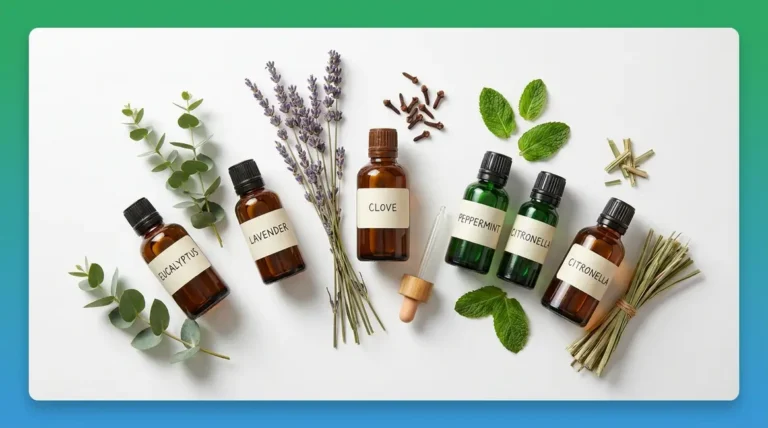
Young Living essential oils review showing three amber essential oil bottles with botanical botanicals on green-blue gradient

Young Living Essential Oils Reviews: Purity, Price & Verdict

⚠️ Medical Disclaimer: The information in this article is for educational purposes only. Essential oils are not approved by the FDA to treat, cure, or prevent any disease or medical condition. Always consult a licensed healthcare professional before using essential oils for health purposes.
⚠️ Financial Disclaimer: This article discusses the Young Living MLM business model. Income claims associated with MLM participation are not typical. The majority of MLM participants do not earn significant income. Do not interpret any content here as financial or investment advice.

Something smells off — and it’s not just the peppermint oil. A 15 mL bottle of Young Living Peppermint retails for roughly $33 at full price, while a comparable 15 mL bottle from Rocky Mountain Oils costs around $13. That’s a price gap of more than 150% for what many certified aromatherapists describe as chemically comparable oil. Young Living Lavender sits in a similar range — roughly $33 retail — versus under $15 for transparent, GC/MS-tested alternatives.

If you’ve been pitched by a friend, seen the Facebook posts, or stumbled onto a glowing distributor blog, you’ve hit a wall of conflicting opinions. Most “review” pages are either written by paid distributors cheerleading the brand, or angry bloggers calling it a dangerous scam. Neither gives you the honest picture. And most haven’t been updated since 2018. For anyone doing serious young living essential oils reviews research before spending real money, that’s a problem.

By the end of this guide, you’ll know exactly what makes Young Living tick — the genuine quality, the real price drivers, the FDA warnings, and three honest alternatives — so you can spend your money with confidence. We’ll cover purity standards, the MLM pricing mechanics, specific product reviews, and a practical quality checklist you can apply to any brand you’re considering.

Key Takeaways

Young Living essential oils are genuine quality products — but their premium price is driven largely by the MLM commission structure, not by oil purity alone. Non-MLM brands like Plant Therapy and Eden’s Garden offer GC/MS-tested oils for significantly less.

  • Purity: Young Living does test its oils, but does NOT routinely publish batch-specific GC/MS reports publicly
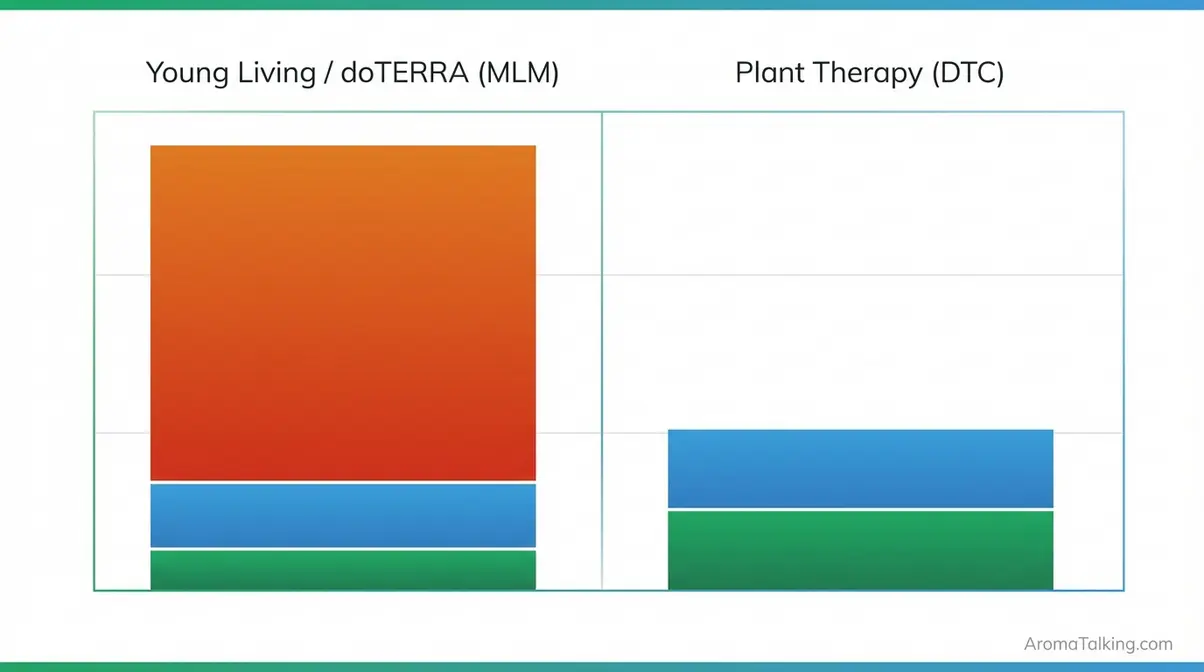
  • Price driver: The MLM Markup Tax — distributor commissions add an estimated 30–50% to retail prices
  • FDA warnings: Young Living received formal FDA warning letters in both 2014 and June 2022 for illegal health claims
  • Best alternative: Plant Therapy offers transparent, publicly available GC/MS reports at a fraction of the cost
  • Bottom line: Young Living may be worth it if you value the brand community — but not if purity alone justifies the price

What Is Young Living? Brand Overview

Young Living brand overview showing essential oil bottle and multi-level marketing distributor network structure diagram
Young Living operates through an independent Brand Partner network spanning over 100 countries — a structure that shapes both the product pricing and the review landscape.

Young Living Essential Oils LC is a Utah-based company founded in 1993 by Gary Young. Today it operates in more than 100 countries and sells through a network of independent distributors. Understanding the company’s structure is the first step toward understanding why young living essential oils reviews vary so wildly across the internet.

What Young Living Actually Sells

Young Living sells single essential oils, signature blends (Thieves, Joy, Peace & Calming), ultrasonic diffusers, vitamins (NingXia Red, Master Formula), and personal care products. The product range is genuinely broad — broader than most competitors. You can build an entire household cleaning and wellness routine from their catalog. See our foundational Young Living brand review for a full product breakdown.

What makes Young Living distinctive — and what drives most of the price debate — is its business model. Young Living is an MLM, or multi-level marketing company (a sales structure where independent distributors earn commissions by selling products and recruiting new sellers).

These distributors are called “Brand Partners.” When your friend sells you a bottle of Peppermint, she earns a commission on that sale. Her upline distributor — the person who recruited her — also earns a commission. That chain can extend three to four levels deep. Every commission at every level is built into the retail price before you even click “add to cart.” This is the foundation of what I call The MLM Markup Tax — more on that in the pricing section.

“Young Living Essential Oils LC operates in over 100 countries through an independent Brand Partner network, making it one of the largest essential oil companies in the world by distributor count.”

Our Evaluation Methodology

For our Young Living essential oils reviews, we applied five consistent criteria across every aspect of the brand:

  1. Purity claims and third-party GC/MS testing availability — Can you independently verify what’s in the bottle?
  2. FDA regulatory history — What formal actions has the government taken, and why?
  3. Comparative pricing against non-MLM brands — Are you paying for quality, or for commissions?
  4. User sentiment synthesis — Aggregated feedback from Trustpilot, Reddit r/essentialoils, and BBB reviews
  5. Expert consensus — Input from certified aromatherapist professional communities

Our team at AromaTalking has been evaluating essential oil brands for over 8 years, using this methodology consistently. Think of this like a forensic price audit — we open the box and show you exactly what you’re paying for. This review does not make medical recommendations, does not endorse or condemn MLM as a business model, and does not evaluate Young Living as a financial opportunity. It evaluates product quality and value for the end consumer.

What Is “Seed to Seal”?

Seed to Seal concept showing lavender farm field and amber essential oil bottle representing Young Living farm-to-bottle process
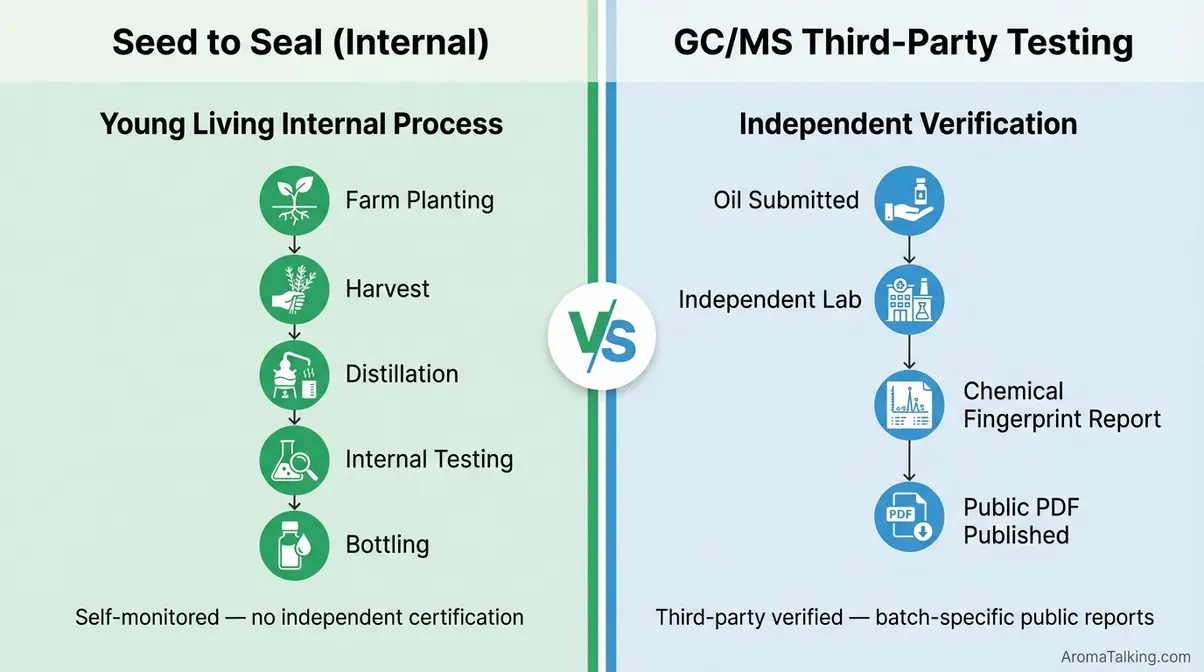
Young Living’s Seed to Seal program covers planting through bottling across company-owned farms — a genuine internal commitment that lacks independent third-party certification.

Seed to Seal is Young Living’s proprietary quality standard describing their farm-to-bottle process. According to Young Living, they control planting, harvesting, distilling, testing, and packaging. They do own farms — including a lavender operation in St. Maries, Idaho and a juniper farm in Mona, Utah. This is a genuine internal commitment, not pure marketing invention.

“Young Living’s ‘Seed to Seal’ quality pledge is a proprietary, self-monitored standard — it is not independently certified by any third-party body.”

Here’s what Seed to Seal is NOT: it is not USDA Organic certification, not ISO certification, and not an independent third-party audit program. The term “therapeutic grade” — often used alongside it — is also a self-created Young Living marketing term, not a recognized standard from any government body or independent scientific organization. Any company can print “therapeutic grade” on a label. GC/MS testing for essential oil purity — short for Gas Chromatography-Mass Spectrometry — is the scientific gold standard that independent labs use to verify what’s actually inside an oil (NCBI, 2023). Seed to Seal doesn’t replace that verification; it operates alongside it, internally.

Plant Therapy, by contrast, uses independent third-party GC/MS labs, publishes the results publicly for every batch, and costs significantly less — without a proprietary brand name attached. The most accurate framing of Seed to Seal: it’s a meaningful internal commitment that lacks independent verification. That’s neither a scam nor a guarantee.

Infographic comparing Young Living Seed to Seal internal process versus independent GC/MS third-party essential oil purity testing methodology
Young Living’s Seed to Seal covers the farm-to-bottle journey internally; GC/MS testing by independent labs provides the third-party chemical verification Seed to Seal alone cannot.

Caption: Young Living’s Seed to Seal covers the farm-to-bottle journey internally; GC/MS testing by independent labs provides the third-party chemical verification Seed to Seal alone cannot.

Are Young Living Oils Actually Pure?

GC/MS laboratory testing machine analyzing essential oil purity with chromatogram results showing chemical compound breakdown
GC/MS testing separates and identifies every molecular compound in an essential oil — the scientific gold standard for verifying purity that Young Living does not publicly publish per-batch.

The most common question in young living essential oils reviews is straightforward: are these oils actually 100% pure? The honest answer is more nuanced than distributors or critics typically admit. Young Living does test its oils. The gap isn’t in whether they test — it’s in whether you can verify those results yourself.

What GC/MS Testing Is

GC/MS stands for Gas Chromatography-Mass Spectrometry. Think of it like a nutritional label — but instead of listing calories and fat, it lists every molecular compound present in an oil and their exact percentages. The machine separates each chemical component and identifies it individually.

Why does this matter? Adulterated oils — those diluted with synthetic chemicals or blended with cheaper oils — will show unexpected compounds in the report. A 100% pure lavender (Lavandula angustifolia) oil has a specific chemical fingerprint: it should be predominantly linalool and linalyl acetate. If a report shows unexpected compounds, or if the percentages are off, you know something has been added or swapped. According to GC/MS testing for essential oil purity research published in NCBI (2023), this process is the scientific gold standard required for verifying exact chemical composition and detecting hidden adulteration in essential oils.

“GC/MS testing is the scientific gold standard for essential oil purity — and brands that don’t publish batch-specific results are asking you to trust, not verify.”

A brand like Plant Therapy posts these reports on every product page, labeled by batch number. You can download a PDF and check your specific bottle before you buy.

Does Young Living Publish GC/MS?

Young Living does conduct testing — they reference independent labs and internal testing throughout their Seed to Seal documentation and state that all oils are tested for purity and potency. That is a genuine quality commitment, and it’s worth acknowledging.

The transparency gap is specific: unlike Plant Therapy (which publishes batch-specific GC/MS PDFs on every product page) or Rocky Mountain Oils, Young Living does not routinely provide publicly accessible, batch-specific GC/MS reports for individual consumer verification. You need to contact member services to request them. That’s an extra step that most buyers never take. To compare with affordable non-MLM options like Plant Therapy in detail, see our full Plant Therapy review.

Certified aromatherapists in professional communities flag this difference consistently — not as proof of impurity, but as a trust verification barrier. Community consensus on Reddit r/essentialoils reflects this distinction: “Young Living oils are ok, untrained and offer dangerous advice.” That anecdotal pattern is reinforced by the FDA regulatory record (covered next). Put plainly: Plant Therapy publishes per-batch GC/MS reports. Rocky Mountain Oils publishes per-batch GC/MS reports. Young Living does not.

3-Step Oil Quality Checklist

Three-step essential oil quality checklist icons showing GC/MS report verification, botanical name check, and third-party lab confirmation
Apply this three-step checklist to any essential oil brand: check for public GC/MS batch reports, verify botanical name and origin, and confirm third-party lab testing.

Use these three steps before buying any essential oil brand — Young Living or otherwise. This is the framework our team applies when evaluating every brand we review.

Step 1: Look for public, batch-specific GC/MS reports. Go to the brand’s website and search the product page directly. Can you download a GC/MS PDF tied to your specific bottle’s batch number? If yes — that’s a transparency pass. If no — you’ll need to contact customer service, which adds friction and is a signal worth noting.

Step 2: Check the botanical name and country of origin. Every legitimate oil should list both. Lavender should show Lavandula angustifolia from France or Bulgaria. A label that reads only “lavender” with no country of origin is a red flag for quality-conscious buyers.

Step 3: Verify third-party testing — not in-house only. Does the brand name the external lab that confirmed purity? Third-party testing means a lab with no financial stake in the result independently confirmed the oil’s composition. In-house testing alone, without external verification, is harder for consumers to evaluate.

Young Living Pricing & the MLM Markup Explained

MLM markup tax bar chart comparison showing Young Living commission stack price versus direct-to-consumer Plant Therapy essential oil pricing
The MLM commission stack — visible in proportion here — adds an estimated 30–50% to every Young Living retail bottle compared to direct-to-consumer alternatives.

Why are Young Living oils so expensive? This is the #1 pricing question across every forum, Facebook group, and comment section where essential oils are discussed. The answer is mechanical, not mysterious — and it has a name: The MLM Markup Tax.

Pros, Cons & Real-World Usage

Pros

  • Rich, potent aromas frequently praised by long-term users
  • Extensive catalog covering signature blends, supplements, and household cleaning products
  • Internal Seed to Seal commitment ensures detailed farm-to-bottle oversight

Cons

  • MLM markup makes the oils significantly more expensive than comparable DTC alternatives
  • Lack of public, batch-specific GC/MS transparency directly on product pages
  • Documented history of FDA warnings related to unregulated distributor health claims

Real-World Usage In everyday practice, Young Living oils perform exceptionally well for both home aromatherapy and diluted topical applications. The Thieves blend has become a staple for natural household cleaning, while their lavender oil provides a reliable aromatic richness for nighttime diffusion that many users swear by. However, the purchasing experience can be polarizing; buying retail is straightforward but comes at a steep premium, whereas joining as a wholesale member secures a 24% discount but requires navigating their MLM enrollment structure.

The MLM Commission Stack Explained

In a direct-to-consumer brand, money flows simply: production → brand → you. In an MLM like Young Living, it flows: production → Young Living corporate → regional distributor → your upline (potentially three to four levels of distributors) → you. Each layer earns a commission on your purchase. Those commissions are built into the retail price before you ever see it.

Young Living’s own income disclosure data makes the economics clear. According to Young Living’s 2024 U.S. Income Disclosure Statement, 68.1% of all active Brand Partners hold Associate rank — with average annual earnings of just $31 and a median of $5. This isn’t to say the business opportunity is worthless; some distributors at higher ranks earn substantial income. But it does illustrate that the vast majority of the distributor layer earns very little, while still representing a commission cost baked into every retail bottle you buy.

An investigation into improper health claims by distributors by Business Insider documented that Young Living required distributors to delete over 1,500 improper health claim posts — illustrating how the distributor layer operates with significant autonomy from corporate controls (Business Insider, 2020). To see how this compares to our doTERRA analysis, which operates a similar MLM commission structure, our full review covers the parallel pricing dynamics.

This user review from Trustpilot captures the frustration many price-conscious buyers feel after doing their research:

“Absolutely not worth it. The prices have nothing to do with the quality, it’s all the overheads, marketing and sundries.”
— Trustpilot reviewer

That’s probably the most honest summary I’ve seen. And they’re not entirely wrong.

Competitor Price Comparison Table

Here’s how the prices actually stack up. Prices verified as of July 2026 — check brand websites for current pricing, as these figures are subject to change.

BrandBusiness Model15 mL Lavender (Retail)15 mL Peppermint (Retail)GC/MS Reports Public?Price/mL (Lavender)
Young LivingMLM~$33~$33No (available on request)~$2.20
doTERRAMLM~$39~$27No (available on request)~$2.60
Plant TherapyDirect-to-Consumer~$10 (10 mL)~$9 (10 mL)Yes (every batch, publicly)~$1.00
Eden’s GardenDirect-to-Consumer~$14 (10 mL)~$13 (10 mL)Yes (every batch, publicly)~$1.40
Rocky Mountain OilsDirect-to-Consumer~$13~$13Yes (every batch, publicly)~$0.87

Prices as of July 2026. Note: Plant Therapy and Eden’s Garden list 10 mL as their standard single size; price/mL calculated accordingly. Verify current pricing at each brand’s official website before purchasing.

The “Price/mL” column is the most honest comparison — it strips out bottle size differences. You’re paying roughly 2.5–3x more per mL for Young Living than for comparable DTC brands, for oil that non-MLM certified aromatherapists describe as comparable in quality. Revive Essential Oils, a newer DTC entrant, also competes in the sub-$10 price range with third-party testing transparency. You can also compare with affordable non-MLM options like Plant Therapy in our dedicated review for a deeper price-per-quality breakdown.

“The MLM Markup Tax — the distributor commission layer built into every Young Living retail price — can represent 30–50% of what you pay at checkout.”

Is the Seed to Seal Premium Justified?

Young Living’s Seed to Seal program is not theater — they do own farms, they do test oils, and long-term users consistently report high aroma quality and genuine potency. For people who value the brand community, the education resources, and the trust built over years of use, the premium can feel justified.

Where it doesn’t hold up: independent certified aromatherapists consistently state that comparable-quality oils are available from non-MLM brands at a fraction of the price. One certified aromatherapist summarized it: “Young Living oils are ok, but they are not of any higher quality” than reputable non-MLM alternatives. A watchdog investigation into deceptive health claims by consumer watchdog TINA.org documented a recurring pattern of Young Living distributors using unsubstantiated health claims to justify premium oil prices — a problem rooted in the structure of the MLM model, not necessarily the oil itself.

The core of The MLM Markup Tax problem: the quality gap between Young Living and the best non-MLM brands is narrower than the price gap. That’s the uncomfortable math that most distributor pitches don’t acknowledge.

FDA Warnings & Company Controversies

FDA warning letter document with red warning stamp next to essential oil bottle representing regulatory action against health claim violations
The FDA has issued formal warning letters to Young Living in both 2014 and 2022 — each documenting illegal marketing of essential oils as treatments for specific medical conditions.

Young Living has received formal regulatory action from the U.S. Food and Drug Administration — not once, but twice. For any serious buyer, this history matters. Before diving in, a quick definition: an FDA warning letter is an official notice that a company is marketing a product in violation of federal law. It does not mean a product is physically dangerous — it means the marketing claims crossed a legal line under federal drug regulations.

FDA Warning Letters (2014 & 2022)

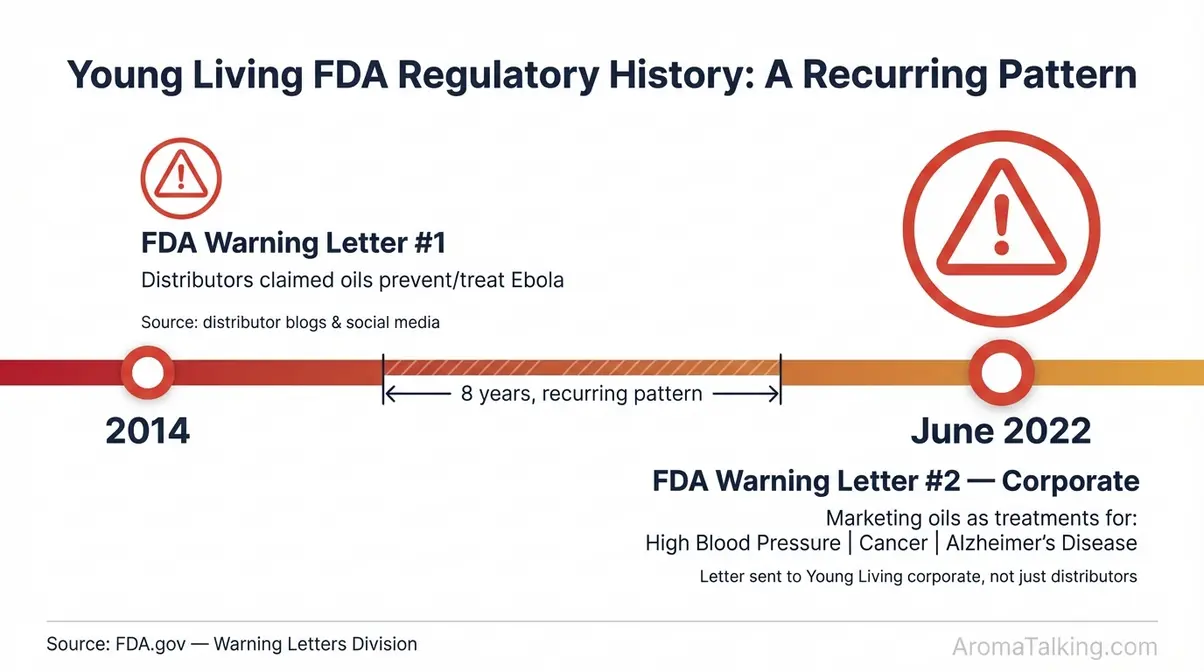
In 2014, the FDA issued warning letters to Young Living (and doTERRA) after distributors published illegal health claims — specifically that their oils could prevent or treat Ebola. These claims appeared on personal distributor blogs and social media, not on official company channels. The FDA acted because marketing essential oils as treatments for specific diseases violates federal law, regardless of where the claim originates.

In June 2022, the FDA issued a second formal warning letter directly to Young Living corporate — not just to distributors. This letter cited illegal marketing of essential oil products as unapproved new drugs for serious conditions including high blood pressure, cancer, and Alzheimer’s disease. This is documented in the FDA warning letter regarding unapproved medical claims issued to Young Living in June 2022 (FDA, 2022).

“In June 2022, the FDA formally warned Young Living for illegally marketing essential oils as treatments for serious conditions including high blood pressure, cancer, and Alzheimer’s disease.”

The repeated pattern — 2014, then 2022 — is significant context for any buyer evaluating the brand’s credibility.

Timeline infographic showing Young Living FDA warning letters in 2014 and June 2022 with documented health claim violations for each
Two FDA warning letters across eight years document a recurring pattern of illegal health claims — originating from both distributors and, in 2022, corporate-level marketing.

Caption: Two FDA warning letters across eight years document a recurring pattern of illegal health claims — originating from both distributors and, in 2022, corporate-level marketing.

The 1,500-Post Deletion Incident

The 2022 FDA letter didn’t happen in a vacuum. An investigation into improper health claims by distributors by Business Insider (2020) documented that Young Living required distributors to delete over 1,500 improper health claim posts from social media. These posts claimed oils could cure Ebola, treat cancer, and replace prescription blood pressure medications — none of which has scientific support.

This is an important distinction for objective analysis: the improper claims problem is primarily a distributor problem, not solely a corporate quality problem. The MLM structure, by design, creates thousands of independent sellers who operate with significant autonomy from corporate compliance teams — and whose sales incentives drive overclaiming. Young Living has updated its distributor compliance guidelines in response to FDA pressure. The 2022 warning letter shows that enforcement pressure continues.

The distributor layer that drives up prices is also the layer that drives unregulated health claims — because individual distributors operate with significant latitude. That’s a structural feature of the MLM model, not a Young Living-specific failure.

The MLM Business Model & Legal History

Selling young living essential oils as a business opportunity carries additional legal context worth knowing. A federal class-action lawsuit alleging a pyramid scheme business model was filed against Young Living, alleging the company operates as an illegal pyramid scheme — with members losing money because the business model relies heavily on recruitment rather than retail sales (Top Class Actions). Young Living has disputed these allegations. The lawsuit’s status should be independently verified before anyone considers joining as a distributor. If you’re considering becoming a Brand Partner rather than simply a buyer, this legal history is important context. To read about regulatory controversies in the essential oil MLM space more broadly, our doTERRA review covers parallel issues.

Top Young Living Products Reviewed

Young Living top essential oils review flat-lay showing lavender, peppermint, and Thieves blend bottles with botanical props
Young Living’s top-selling oils — lavender, peppermint, and the Thieves blend — consistently earn praise for aroma richness and potency, even among users skeptical of the brand’s pricing.

Young Living’s loyal fanbase exists for good reasons. Setting aside the pricing and regulatory controversies, several specific products genuinely earn their reputation. Here’s an honest look at what the brand actually does well.

Top Oils & Signature Blends

Young Living oils consistently receive praise for aroma richness and potency — and the top sellers reflect this reputation.

Lavender (Lavandula angustifolia): One of Young Living’s most consistently praised products. Clinical research supports lavender inhalation for relaxation and modest blood pressure reduction. A 2022 study on lavender oil reducing blood pressure found that inhaling lavender oil significantly reduced systolic blood pressure, heart rate, and subjective anxiety in patients with essential hypertension (PubMed, 2022). Additionally, research on inhaling essential oils for blood pressure demonstrates that inhalation of lavender and ylang-ylang can lower blood pressure by reducing serum cortisol levels and alleviating cardiac excitation (NCBI, 2012). Young Living’s lavender aroma is frequently described as rich, potent, and deeply floral in user reviews — a quality mark that even skeptics acknowledge.

Peppermint: Popular for topical muscle rub (always diluted with a carrier oil), headache relief at the temples (diluted), and diffusing. Important safety note for beginners: always dilute peppermint with a carrier oil before skin contact. Never apply undiluted peppermint to children under 10.

Thieves Blend: Young Living’s most famous proprietary blend — designed for immune support and household use. Young Living’s Thieves blend contains clove, lemon, cinnamon bark, eucalyptus, and rosemary — a combination with documented antimicrobial properties, though skin sensitivity warnings apply. Safety note: cinnamon bark and clove are strong sensitizers. For skin use, dilute heavily — 1 to 2 drops per tablespoon of carrier oil for adults. Thieves Household Cleaner is genuinely one of the brand’s most practically useful products and consistently earns positive reviews across platforms.

Are Young Living Diffusers Worth It?

Two ultrasonic essential oil diffusers side by side comparing premium Young Living diffuser style versus budget third-party alternative
Young Living diffusers ($50–$120) are well-made and aesthetically premium — but functionally comparable ultrasonic alternatives from third-party brands work with any essential oil brand for $20–$40.

If you’re looking for a young living essential oil diffuser, the brand offers several ultrasonic models—the Dewdrop, Desert Mist, and Aria among the most popular. They’re well-made, aesthetically pleasing, and function reliably. However, functionally comparable ultrasonic diffusers from third-party brands are available for $20–$40, versus Young Living’s $50–$120 range (prices as of July 2026 — verify at youngliving.com).

Here’s the key thing beginners often don’t know: you don’t need a Young Living diffuser to use Young Living oils. Any quality ultrasonic diffuser compatible with water and pure essential oils will work. The diffuser is a discretionary upgrade, not a requirement. To learn how different essential oil diffusers operate — including which specs actually matter — our diffuser guide breaks it down by use case.

Vitamins & Master Formula Review

When looking at young living vitamins reviews, the Master Formula is a whole-food-based multivitamin supplement that frequently appears. Based on young living master formula reviews on platforms like Trustpilot, user feedback is mixed — some report genuine benefits; others note the high cost relative to comparable supplements available at retail pharmacies. NingXia Red, Young Living’s wolfberry-based antioxidant supplement, has a loyal daily-use following, though clinical evidence for wolfberry-based supplements specifically remains limited.

Important framing: Young Living vitamins and NingXia Red are dietary supplements, not medications. The FDA does not evaluate dietary supplements for efficacy or safety before they go to market. That’s a standard consumer protection note that applies to every supplement brand, not a Young Living-specific concern.

How and Where to Buy Young Living Safely

Young Living products are available through two official channels: as a retail customer at full price, or as a wholesale member (Brand Partner) at approximately a 24% discount. The simplest path for most buyers is starting as a retail customer at youngliving.com to try a few oils before committing to a membership.

Where to Buy Young Living Oils

Buy only through youngliving.com or directly from an authorized Brand Partner. This is non-negotiable for authenticity. Young Living does not authorize third-party Amazon sellers — oils listed on Amazon by third parties carry real risks of counterfeiting, improper storage, and expired product. There is no way to verify the authenticity of a Young Living bottle purchased from an unauthorized Amazon seller, and customer service will not honor issues from those purchases.

If your order has issues, Young Living member services can be reached through the official website. Having your order number and distributor information ready speeds up the process significantly. For navigating Young Living’s large catalog — which runs to hundreds of products — see our guide to explore our comprehensive guide to popular essential oils to identify which oils are most widely used and why.

Membership vs. Retail Customer

Young Living offers two purchase tiers. Retail customers pay full price with no commitment. Wholesale members (Brand Partners) receive approximately a 24% discount but are enrolling in the MLM structure — which means you’re technically eligible to sell and recruit, though you don’t have to.

For personal use only, the wholesale discount can make financial sense if you buy consistently. Run the math: if you spend $50/month on oils, a 24% discount saves roughly $144/year. Weigh that against whether you’re comfortable with the MLM enrollment structure. You do not need to recruit or sell to anyone to keep your membership active.

Pitfalls, Safety & Alternatives

Essential oil safety dilution guide showing amber oil drops and carrier oil teaspoon for proper topical dilution ratio
Safe dilution is the most critical beginner skill: 2–3 drops of essential oil per teaspoon of carrier oil for adults — never apply concentrated oils like Thieves or oregano directly to skin.

Essential oils are concentrated plant extracts — powerful enough to cause real harm when used incorrectly. This section covers what beginners most commonly get wrong, and when Young Living simply isn’t the right fit.

5 Common Beginner Mistakes

Safety issues with essential oils are usually beginner mistakes, not brand-specific failures. These apply to Young Living and every other brand.

  1. Applying oils neat (undiluted) to skin. Most Young Living oils — especially Thieves, cinnamon, and oregano — must be diluted with a carrier oil (coconut, jojoba) before skin contact. A safe adult ratio: 2–3 drops essential oil per teaspoon of carrier oil.
  2. Ingesting oils without supervision. Do not ingest essential oils without direct guidance from a licensed aromatherapist or healthcare professional. See the ingestion section below for details.
  3. Using citrus oils before sun exposure. Bergamot, lemon, and lime are photosensitive — applying before going outside can cause serious skin burns.
  4. Using adult dilutions on children. Children ages 2–10 require a 0.5–1% dilution (roughly 1 drop per teaspoon carrier oil). Several oils should never be used on children at all, including eucalyptus and peppermint for children under 10.
  5. Storing oils in heat or light. Essential oils degrade quickly when exposed to heat, humidity, or direct light. Store in dark, cool locations in dark glass bottles.

Weight loss claims for essential oils — which do circulate in Young Living distributor communities — are unsubstantiated and not FDA approved. Treat any such claims with skepticism.

Blood Pressure & Ingestion Safety

Lavender essential oil diffuser beside blood pressure monitoring equipment representing aromatherapy safety considerations for hypertension
Lavender inhalation has modest clinical evidence for blood pressure support — but always consult your doctor before using aromatherapy alongside prescribed hypertension medications.

If you have high blood pressure, avoid stimulating essential oils including rosemary, sage, and thyme — these may increase heart rate. Lavender and ylang-ylang have modest clinical evidence supporting blood pressure reduction through inhalation specifically, as documented in clinical research on inhaling essential oils for blood pressure (NCBI, 2012). That evidence applies to diffusion and inhalation — NOT to internal use or undiluted topical application. Always consult your doctor before using aromatherapy alongside prescribed blood pressure medications.

On ingestion: do not ingest essential oils. This is not a fringe position — it is the consensus of independent medical professionals and professional aromatherapy organizations. Essential oils are extremely concentrated plant extracts. Internal use can cause chemical burns to mucous membranes, liver stress, and dangerous interactions with prescription medications. The FDA’s 2022 warning letter to Young Living specifically cited internal consumption claims as part of the regulatory violation. For safe application guidelines for essential oils — covering topical dilution, diffusion, and what to avoid — our safety guide covers every common scenario.

Consult a licensed healthcare professional before using essential oils if you have any medical condition or take prescription medications. This is not a formality — it’s genuinely important for YMYL health content.

Which Brands Are Worth Choosing?

The right brand depends on what you’re prioritizing. Here’s a clear framework:

Choose Young Living if: You value the brand community and education resources, you have a trusted Brand Partner who provides genuine guidance, or you’re already a wholesale member receiving the 24% discount.

Choose Plant Therapy if: Transparent GC/MS reports matter most to you and you want to spend significantly less per mL for comparable oil quality.

Choose Eden’s Garden if: You want a slightly wider organic oil range at competitive DTC prices, with full testing transparency.

Choose Rocky Mountain Oils if: You’re building a serious home aromatherapy practice and want premium DTC transparency with a broad catalog at a mid-range price point.

Approach with caution: Any essential oil brand — MLM or DTC — that cannot provide batch-specific GC/MS reports, doesn’t list botanical names, or makes disease-treatment claims. Those are red flags regardless of the brand name.

Frequently Asked Questions

Are Young Living Oils 100% Pure?

Young Living essential oils undergo testing and are marketed as 100% pure through their internal Seed to Seal program. However, unlike their non-MLM alternatives, they do not routinely publish batch-specific Gas Chromatography-Mass Spectrometry (GC/MS) test reports publicly online. To verify this purity for yourself, you must request these specific lab reports directly from their member services team.

Why are Young Living oils so expensive?

Young Living essential oils carry a premium price primarily because of their multi-level marketing (MLM) commission structure. Every single purchase helps fund commissions distributed across multiple Brand Partner levels. According to pricing comparisons, direct-to-consumer competitors with public testing transparency offer comparable oils for roughly 50-70% less per mL. The built-in MLM structure, not the oil quality alone, is what drives the vast majority of this price gap.

Which Brand Has the Purest Oils?

No single brand holds an exclusive claim to the absolute purest essential oils, as purity is objectively verified through independent GC/MS testing. Certified aromatherapists frequently recommend non-MLM brands like Plant Therapy or Eden’s Garden precisely because they publish these third-party lab reports publicly on every individual product page.

Oils to Avoid with High Blood Pressure

If you have high blood pressure, you should actively avoid stimulating essential oils like rosemary, sage, and thyme since they may increase your heart rate. Conversely, clinical research from NCBI supports lavender inhalation for modest blood pressure reduction. Never ingest essential oils as a medical treatment. They are not FDA-approved medications and carry serious internal risks. Always consult your licensed healthcare professional before using aromatherapy alongside prescribed blood pressure medications.

Are Young Living Oils Safe to Ingest?

Ingesting essential oils is strongly discouraged by independent medical professionals and professional aromatherapists. These highly concentrated plant extracts can easily cause chemical burns, severe liver stress, and dangerous drug interactions when used internally. The FDA even issued a formal warning letter to Young Living in June 2022 regarding unapproved internal consumption marketing claims. Always use oils topically with a carrier oil or diffuse them safely.

Verdict: Who Should Buy Young Living

Prices and features verified as of July 2026. Young Living pricing and product availability are subject to change — verify at youngliving.com before purchasing.

For skeptical buyers doing their young living essential oils reviews research, the honest verdict is nuanced. Young Living produces genuine, quality oils — but their premium price is primarily driven by The MLM Markup Tax, not by oil quality that non-MLM brands can’t match. Plant Therapy and Eden’s Garden offer comparable purity with more transparent GC/MS reporting at 50–70% less per mL. The FDA formally documented illegal health claims in both 2014 and 2022, with the 2022 letter going directly to Young Living corporate — context every serious buyer deserves to know.

Use the 3-Step Essential Oil Quality Checklist from this article — look for public GC/MS reports, botanical names, and named third-party labs — before buying from any brand. The MLM Markup Tax is a structural feature of any MLM-sold essential oil, not a Young Living-specific flaw. Knowing this framework protects your money regardless of which brand you choose next.

Ready to compare side by side? Start with Plant Therapy’s free GC/MS reports on their website — you can verify your oil’s purity before spending a dollar. If you’re committed to Young Living, join as a wholesale member rather than a retail customer to reduce the markup by approximately 24%. And if you have any medical condition or take prescription medications, speak with your healthcare provider before adding essential oils to your routine.

Similar Posts