How to Use Essential Oils: A Beginner’s Guide
By Ellen Cooper, independent essential-oil reviewer (hands-on since 2018, no MLM affiliation)
So you’re ready to learn more about getting started with essential oils? That’s great. This essential oils how to use walkthrough covers the basics so you can understand what essential oils are, how to use them safely, and how to fit them into your daily routine.
We’ll cover what essential oils actually are, how they’re made, the three main ways to use them, proper dilution (this part is really important), carrier oils, safety for children and pets, and a recommended starter kit of three oils to begin with.
This guide is based on aromatherapy safety guidance and published research, not first-party laboratory testing. Where a number appears, it comes from a cited source.
Are you ready? Here we go.
Affiliate disclosure: AromaTalking is reader-supported. We may earn a commission from qualifying purchases made through links on this page, at no extra cost to you.
Essential oils can be used three ways: aromatically (diffusing), topically (on your skin, always diluted), and internally (with extreme caution). Hundreds of plant species yield essential oils, which contain many volatile aromatic compounds; lavender, peppermint, and tea tree are the most widely used worldwide. Always dilute essential oils to 2-3% for adults (about 2-3 drops per teaspoon of carrier oil) before applying to skin. Start with lavender, peppermint, and lemon, they’re versatile, affordable, and beginner-friendly.
⚠️ Important: The information in this guide is for educational purposes only and does not constitute medical advice. Essential oils are not FDA-approved to diagnose, treat, cure, or prevent any disease. Always consult a qualified healthcare provider before using essential oils, especially if you are pregnant, nursing, taking medication, or using oils on children or pets. Never ingest essential oils without guidance from a licensed healthcare professional.
What Are Essential Oils?
Essential oils are highly concentrated plant extracts that capture the natural scent and aromatic compounds of flowers, leaves, bark, roots, and fruit peels. Hundreds of plant species yield essential oils, which contain many volatile aromatic compounds, as documented in research published in the National Institutes of Health database (NIH PMC, 2020). These aren’t “oils” in the kitchen sense, they’re concentrated hydrophobic liquids carrying the plant’s aromatic compounds.
What surprises many beginners is just how concentrated these extracts are. NAHA notes that it takes roughly 250 pounds of lavender flowers to produce just one pound of lavender essential oil, and about 1,500 lemons to make a single pound of lemon oil, according to the National Association for Holistic Aromatherapy (NAHA). That’s a whole lot of plants crammed into one little bottle.
This extreme concentration is exactly why essential oils are so potent, and why a little goes a very long way. Just a drop or two is usually all you need. When stored properly (more on that below), most essential oils have a shelf life of 1-2 years for citrus oils and up to 6+ years for heavier oils like patchouli and sandalwood.
How Are Essential Oils Made?
The way essential oils are extracted directly affects their quality and purity. There are three primary methods, and understanding them will help you make smarter buying decisions. According to NAHA, the extraction method must match the plant material, using the wrong method can destroy the very aromatic compounds that define the oil (NAHA).
Steam Distillation
This is the most common extraction method and has been used for hundreds of years. Steam passes through plant material (leaves, stems, roots, petals, or bark), rupturing tiny sacs that hold the essential oil. The steam carries the oil vapor into a condenser, where it cools back into liquid. The essential oil naturally separates from the water, and what’s left behind is called a “hydrosol” or floral water, which also has mild aromatic properties.
Most of the essential oils you’ll encounter, lavender, peppermint, eucalyptus, tea tree, rosemary, are steam distilled.
Cold Press Extraction
Citrus oils are different. Steam distillation doesn’t work well for fruits like oranges, lemons, limes, and grapefruits. Instead, the peels are mechanically pressed without heat or solvents, which preserves their bright, fresh aroma. If you’ve ever peeled an orange and noticed the fine mist that sprays from the rind, that’s the essential oil being released.
One important note about cold-pressed citrus oils: they contain natural compounds called furanocoumarins that can cause photosensitivity. We’ll cover this in the safety section, but the short version is: don’t apply cold-pressed citrus oils to skin that will be exposed to sunlight within 12-18 hours.
Solvent Extraction (Absolute Oils)
Some delicate flowers, like rose, jasmine, and tuberose, can’t survive steam distillation without losing their scent. For these, a chemical solvent (often hexane or ethanol) is used to extract the aromatic compounds. The result is called an “absolute” rather than an essential oil.
Absolutes are wonderful for perfumery and aromatherapy diffusing, but because trace amounts of solvent may remain, they’re generally not recommended for direct skin application or ingestion. If you see “rose absolute” on a label, now you know what that means.
A word on purity: essential oils are sometimes adulterated, stretched with cheaper oils or synthetics, which is why third-party testing matters. Investigations have documented adulterated lavender oil sold online (Nutritional Outlook), and the broader problem of essential-oil adulteration is well described in the scientific literature (PMC, 2021).
What Are the Benefits of Essential Oils?
Aromatherapy, the practice of using essential oils for health and wellbeing, has been used for thousands of years across cultures. Research suggests inhaled lavender may reduce anxiety, with a meta-analysis of randomized trials finding measurable anxiolytic effects (PubMed, PMID 31655395). That said, essential oils aren’t miracle cures, and it’s worth being honest about what they can and can’t do.
Here are the areas where essential oils are most commonly found useful:
Physical wellness support:
- Easing muscle tension and minor aches (peppermint, eucalyptus, diluted topically)
- Supporting respiratory comfort during cold season (eucalyptus, tea tree, diffused)
- Soothing minor skin irritations (lavender, tea tree, properly diluted)
- Easing occasional headaches (peppermint, diluted, applied to temples)
- Supporting healthy digestion (ginger, peppermint, inhaled or diluted topically on abdomen)
Mental and emotional wellbeing:
- Promoting relaxation and better sleep (lavender, chamomile, diffused)
- Improving focus and mental clarity (rosemary, peppermint, diffused)
- Lifting mood and reducing everyday stress (citrus oils, frankincense, diffused)
- Creating calming bedtime routines for the family
Around the house:
- Natural household cleaning (lemon, tea tree, in DIY cleaning sprays)
- Freshening air without synthetic fragrances
- Natural insect deterrent (citronella, peppermint)
- Homemade body care products (lip balms, bath salts, room sprays)
One honest note: while many people experience real benefits from essential oils, the scientific research is still catching up. Essential oils are not a replacement for medical treatment. They’re a complementary tool that, when used safely, can support overall wellbeing.
How Do You Use Essential Oils?
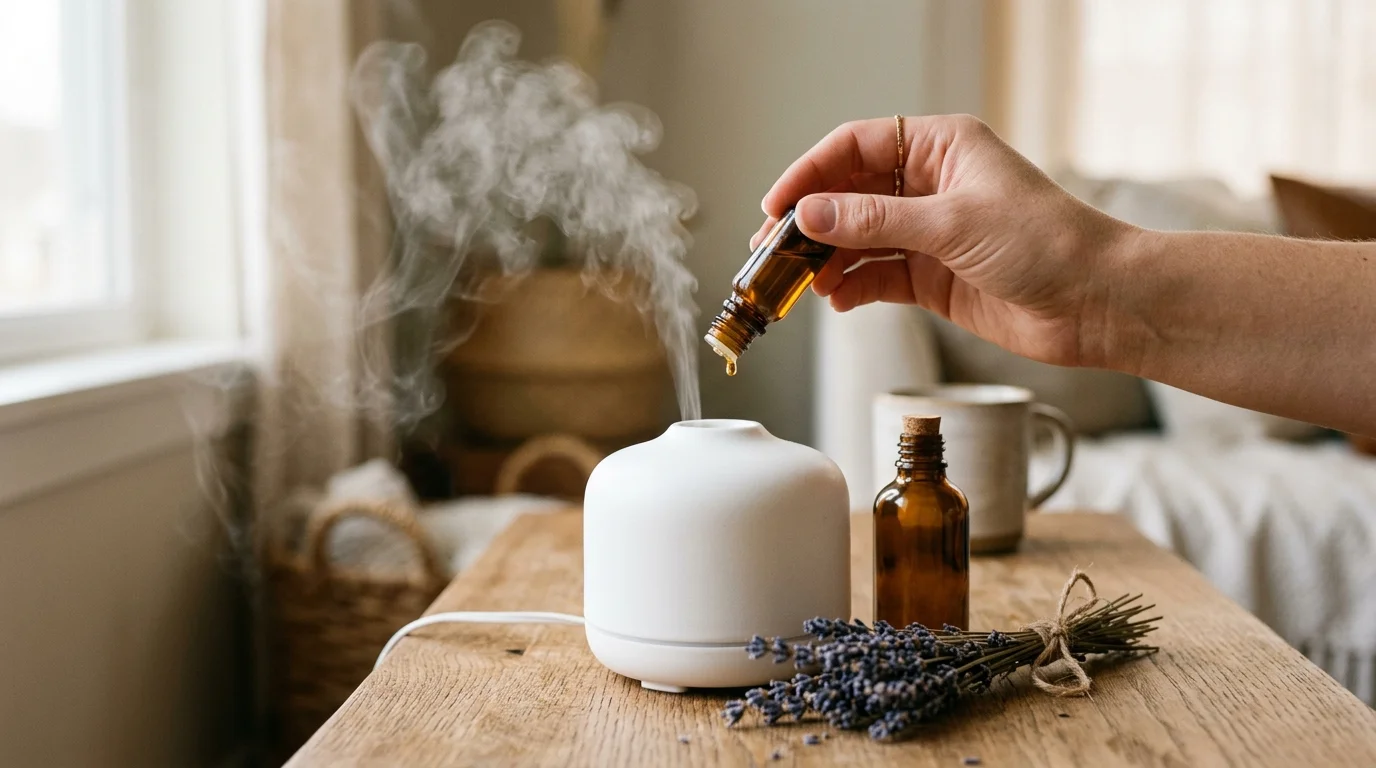
There are three primary methods for using essential oils: aromatic (breathing them in), topical (applying to skin), and internal (ingesting). The most popular and safest method for beginners is aromatic use through a diffuser, in fact, the National Association for Holistic Aromatherapy recommends inhalation as the safest and most effective delivery method for most applications. This essential oils how to use section breaks down each one.
Aromatic Use (Diffusing and Inhalation)
The simplest way to enjoy essential oils is to breathe them in. When you inhale essential oil molecules, they interact with olfactory receptors in your nose and can reach your brain within seconds. Pretty amazing, right?
You can simply open a bottle and take a sniff, but most people don’t want to stop and sniff a bottle throughout the day. That’s where a diffuser comes in. Here are your main options:
| Diffuser Type | Best For | Price Range | Room Coverage | Noise Level |
|---|---|---|---|---|
| Ultrasonic | Home, bedroom | $20-$60 | Medium room | Very quiet |
| Nebulizer | Therapeutic use | $40-$100 | Large room | Moderate hum |
| Ceramic / Reed | Office, desk | $5-$15 | Personal space | Silent |
| Jewelry locket | On-the-go | $10-$30 | Personal | None |
| Car vent clip | Commuting | $10-$25 | Car interior | None |
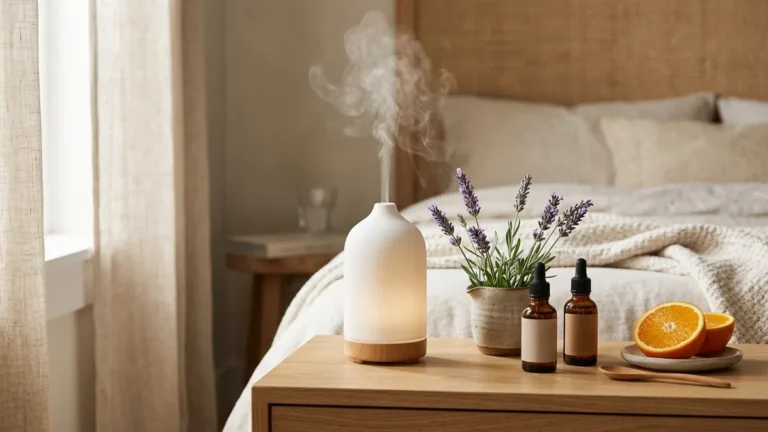
A popular choice for home use is an ultrasonic diffuser. These create a cool mist (important, heat can damage the aromatic compounds in your oils) and double as a light humidifier. A common setup is one diffuser in the bedroom for lavender at night and one in the kitchen for citrus during the day.
A jewelry diffuser (a locket with a cotton pad inside) is a popular on-the-go option. A couple of drops of peppermint or eucalyptus, and your favorite oil goes with you all day, especially handy in winter when cold and flu germs are everywhere.
Diffusing tip: Don’t run your diffuser continuously for hours. The sweet spot is 30-60 minutes on, then 30-60 minutes off, in a ventilated room. This gives your body time to process the compounds and prevents olfactory fatigue (where your nose stops noticing the scent).
Topical Application
Applying essential oils to your skin is the second most popular method, and it’s an effective way for the oils to absorb through the skin. But here’s the most important rule in all of essential oil use: almost every essential oil must be diluted with a carrier oil before it touches your skin.
Some sources (and even some brands) say that certain oils like lavender and tea tree are safe to apply “neat”, meaning undiluted. But modern aromatherapy safety guidelines, including those from NAHA and clinical aromatherapist Robert Tisserand, recommend against this practice. Repeated neat application can cause sensitization, a permanent allergic reaction where your body starts reacting to an oil it previously tolerated. This is worth avoiding.
Where you apply essential oils depends on what you’re using them for:
- All-over benefits: The bottoms of the feet. The pores there are more absorbent than almost anywhere else on the body. A common winter practice is to dilute an immune-support blend with carrier oil and massage it into the soles of the feet, then put on a pair of socks.
- Muscle or joint discomfort: Apply directly to the affected area (always diluted).
- Minor skin issues: A dab of properly diluted tea tree oil right on the spot.
- Relaxation: Behind the ears, on the wrists, or along the back of the neck.
⚠️ Photosensitivity Warning: Cold-pressed citrus oils (lemon, lime, bergamot, grapefruit) contain furanocoumarins that can cause severe burns, blistering, or dark pigmentation when skin is exposed to UV light within 12-18 hours of application. If you apply citrus oils topically, keep the treated skin covered or stay out of direct sunlight.
Patch test first: Before using any new essential oil on your skin, apply a small amount of the diluted oil to the inside of your forearm. Wait 24 hours. If there’s no redness, itching, or irritation, you’re good to go.
Internal Use, Why Extreme Caution Matters
Let’s be really straightforward here: internal use of essential oils is the most controversial and potentially dangerous application method. The FDA has not approved essential oils for internal use as drugs, and many qualified aromatherapists advise against ingestion entirely without supervision from a licensed healthcare professional.
Why? Because essential oils are extremely concentrated. Remember, it takes roughly 1,500 lemons to make one pound of lemon oil. Ingesting even one drop delivers a level of plant compounds the body wasn’t designed to handle in that concentration. Some oils that seem harmless, wintergreen, for example, can be toxic if swallowed. Poison control centers receive many calls each year about essential oil exposure, often involving children who accidentally ingested oils (American Association of Poison Control Centers).
The widely recommended approach is to stick with aromatic and topical use. These methods are safe, effective, and well-supported by aromatherapy tradition and research. If you’re determined to explore internal use, please do so only under the guidance of a licensed healthcare professional or certified clinical aromatherapist, not based on what you read on a blog or from an MLM distributor.
And please, keep all essential oils stored where children and pets absolutely cannot reach them. These small bottles with their appealing scents are a real hazard.
What Is the Proper Dilution for Essential Oils?
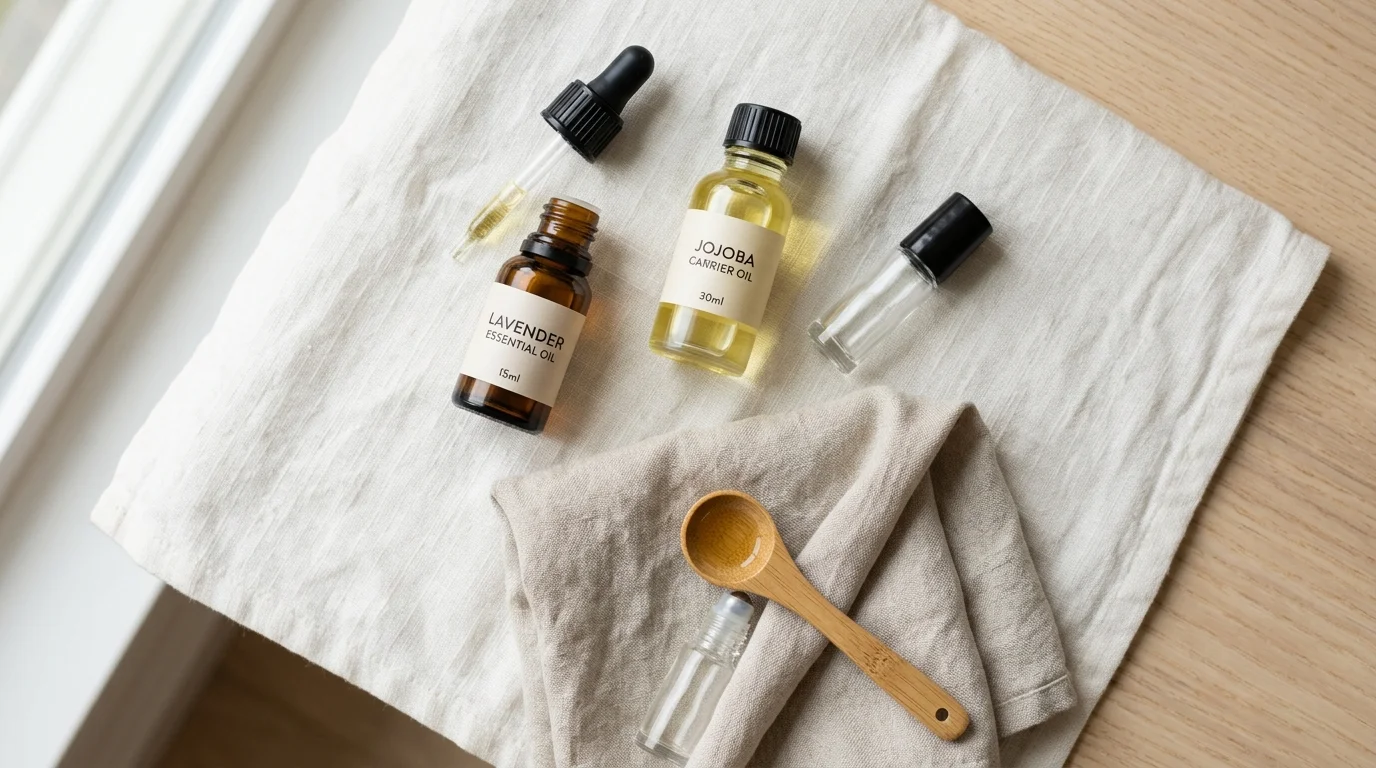
Dilution is probably the single most important practical skill in essential oil use. The National Association for Holistic Aromatherapy provides clear dilution guidelines based on age, health status, and application area. Getting this right protects your skin and actually makes the oils more effective, properly diluted oils absorb better and reduce the risk of adverse reactions.
Here’s a quick reference chart for beginners:
| Who / What | Dilution % | Drops of EO per Teaspoon of Carrier Oil | Notes |
|---|---|---|---|
| Adults (body) | 2-3% | 2-3 drops | Standard for most applications |
| Adults (face) | 0.5-1% | ½-1 drop | Facial skin is more sensitive |
| Elderly / sensitive skin | 1% | 1 drop | Start low, increase if tolerated |
| Children 6-12 years | 1-1.5% | 1 drop | Limited oil selection, see safety section |
| Children 2-6 years | 0.5-1% | ½-1 drop | Avoid eucalyptus, peppermint near face |
| Under 2 years | 0.25% max | 1 drop per 4 tsp | Diffusion preferred, consult pediatrician |
| Pregnancy | 1% max | 1 drop | Many oils should be avoided, consult provider |
| Bath | N/A | 5-8 drops total | Mix with carrier oil FIRST, then add to water |
How to measure: One teaspoon is about 5 ml of carrier oil, and a standard dropper gives roughly 20 drops per ml. That works out at about one drop per teaspoon for every 1%, so a 2% dilution is 2 drops per teaspoon and 3% is 3 drops. For larger batches, a 1-ounce bottle takes about 12 drops for 2% or 18 drops for 3%. Drop size does vary a little with the viscosity of the oil and the shape of the orifice reducer, which is another reason to round down rather than up. When in doubt, go with fewer drops – you can always add more next time.
Which Carrier Oil Should You Use?
A carrier oil is any mild, plant-based oil used to dilute essential oils before skin application. They’re called “carriers” because they literally carry the essential oil onto and into your skin. Choosing a carrier oil doesn’t have to be complicated, here’s a practical summary.
Reliable carrier oils:
- Fractionated coconut oil, Lightweight, odorless, absorbs well, very long shelf life. A great everyday choice.
- Jojoba oil, Technically a liquid wax, it closely mimics your skin’s natural sebum. Great for face applications.
- Sweet almond oil, Affordable, slightly nutty scent, great for massage. Avoid if you have nut allergies.
- Grapeseed oil, Light, affordable, absorbs quickly. Grapeseed is a popular, affordable starting carrier.
- Avocado oil, Thicker and more nourishing. Nice for dry skin but can feel heavy.
Beginners often start with whatever mild oil is on hand (grapeseed, even olive oil in a pinch), then upgrade to fractionated coconut oil for most things and jojoba for face applications. It’s not glamorous, but it works. Don’t let the “perfect carrier oil” question stop you from getting started.
One tip: Never use mineral oil or petroleum-based products as carriers. They don’t absorb well and can actually block your skin from absorbing the essential oil.
Are Essential Oils Safe for Children and Pets?
This is one of the most important sections in this guide, and more essential oil resources should be upfront about it. Children and pets are NOT small adults, their bodies process these concentrated compounds very differently.
Children
Children’s skin is thinner and more permeable than adult skin, which means they absorb essential oils faster and at higher concentrations. The general rule: lower dilution, fewer oils, and always with supervision.
Aromatherapy safety guidance, for example Robert Tisserand, cautions against the following oils around young children (under 6):
- Peppermint, Contains menthol, which can cause breathing difficulties in young children
- Eucalyptus (1,8-cineole type), Same concern as peppermint; keep away from the face
- Wintergreen, Contains methyl salicylate, which is toxic in small amounts
- Rosemary (camphor-rich varieties), Can trigger seizures in susceptible children
Safer options for children (properly diluted, age 2+): lavender, chamomile (Roman), sweet orange, frankincense, and cedarwood. Some brands, like Edens Garden, offer dedicated “OK for Kids” lines that are pre-diluted to child-safe ratios.
For babies under 2, stick to light diffusion only (in a well-ventilated room, 30 minutes max) and consult your pediatrician first.
Pets
This is critical: cats and dogs metabolize compounds very differently from humans, and several oils that are perfectly safe for us can be toxic, even fatal, to pets. According to the ASPCA Animal Poison Control Center, essential oil toxicity is a growing concern as aromatherapy becomes more popular in homes with pets.
The ASPCA warns that cats lack the liver enzymes needed to process certain compounds in essential oils, which makes the following toxic to cats:
- Tea tree (melaleuca), highly toxic
- Eucalyptus, peppermint, wintergreen
- Citrus oils (lemon, orange, lime)
- Clove, cinnamon, pine, ylang ylang
The ASPCA also warns that several oils are risky for dogs:
- Tea tree, toxic even in small topical amounts
- Pennyroyal, can cause liver failure
- Wintergreen, clove, pine, at concentrated levels
If you diffuse essential oils in a home with pets, make sure the room is well-ventilated and your pet can always leave the room. Never apply essential oils directly to your pet’s skin or fur without veterinary guidance. If your pet shows symptoms like drooling, vomiting, trembling, or difficulty breathing after essential oil exposure, contact your veterinarian or the ASPCA Poison Control hotline immediately.
How Should You Store Essential Oils?
Proper storage can mean the difference between oils that stay potent for years and oils that go rancid in months. Essential oils are volatile compounds, they’re sensitive to heat, light, and oxygen. Here’s how to keep them at their best:
- Dark glass bottles only. Essential oils should always be stored in amber or cobalt blue glass. The chemicals in plastic containers will leach into your oils and contaminate them. This is why reputable brands always sell in dark glass, it’s not just for aesthetics.
- Keep away from light. Don’t store your oils on a windowsill or anywhere with direct sunlight. UV light breaks down the aromatic compounds faster than almost anything.
- Room temperature. Avoid extreme temperatures. Don’t leave oils in a hot car, near a stove, or in checked luggage in an airplane cargo hold. A cool, dark cabinet is ideal.
- Keep caps tight. Oxygen exposure speeds degradation. After using an oil, replace the cap immediately. The orifice reducer (that little plastic insert in the bottle opening) helps minimize air exposure.
- Keep away from children and pets. This cannot be stressed enough. These small, appealing bottles are a serious hazard. Store them up high or in a locked cabinet.
Shelf life by oil type:
- Citrus oils (lemon, orange, grapefruit): 1-2 years
- Herbaceous oils (lavender, tea tree, peppermint): 2-3 years
- Woody and resinous oils (frankincense, sandalwood, patchouli): 4-8+ years
If an oil smells “off” compared to when you first opened it, sour, flat, or just different, it’s probably oxidized. Oxidized oils are more likely to cause skin irritation, so when in doubt, replace it.
Quick Start: Your First 3 Essential Oils
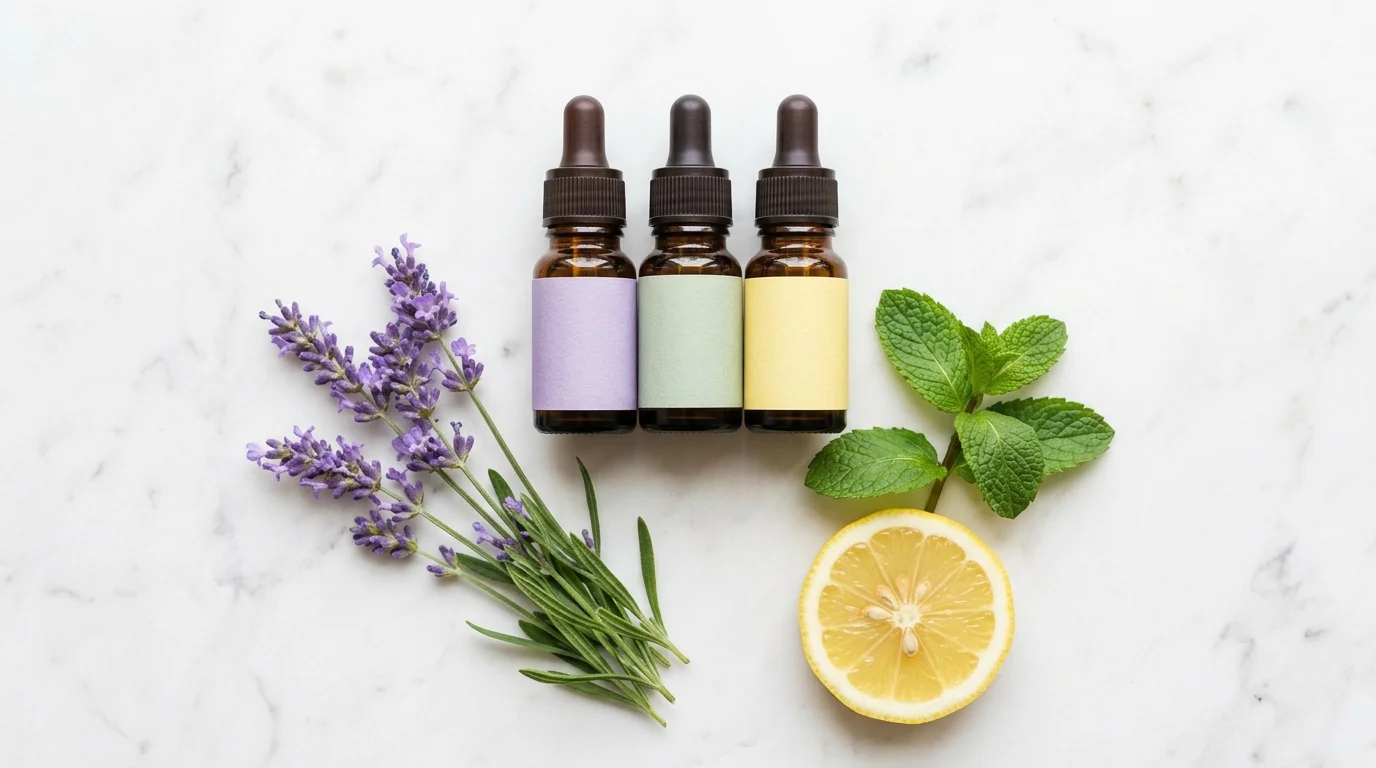
If you’re just getting started and feeling overwhelmed by the sheer number of oils available, here’s a simple essential oils uses guide. A great starting point is just three oils, which cover most everyday needs.
1. Lavender (Lavandula angustifolia)
The most versatile essential oil, period. It is commonly used for sleep (a few drops in the diffuser at bedtime), minor skin irritation (diluted, of course), and just creating a calm atmosphere at home. It’s mild, it’s affordable (around $8-$12 for a quality 10ml bottle), and it blends well with almost everything. Read our full lavender guide for detailed uses and safety information.
2. Peppermint (Mentha piperita)
Energizing, cooling, and incredibly useful. It is commonly diffused in the morning for a mental boost, applied diluted to the temples when a headache is coming on, and added to DIY cleaning sprays. Just remember: keep it away from young children’s faces and don’t use it around cats. About $7-$10 for 10ml.
3. Lemon (Citrus limon)
Fresh, clean, and uplifting. It is commonly added to homemade cleaning sprays (a few drops in water and white vinegar), diffused for a mood boost, and used in seasonal diffuser blends. It’s also one of the most affordable oils, typically $6-$8 for 10ml. Remember the photosensitivity warning: don’t apply it to skin before sun exposure.
These three oils will cover an enormous range of everyday needs. To expand from there, good next additions are eucalyptus (for respiratory support), tea tree (for skin care), and frankincense (for calming and skin health). Check out our full list of the 15 most popular essential oils when you’re ready to grow your collection.
For trusted brands to purchase from, take a look at our reviews of Plant Therapy, Edens Garden, and Rocky Mountain Oils, all of which offer quality, GC/MS-tested oils at fair prices without MLM markup.
Medical disclaimer: This article is general information, not medical advice, and does not diagnose or treat any condition. Essential oils are not a substitute for professional medical care. Never ingest essential oils or apply them undiluted, and check with a qualified professional before use during pregnancy, around children or pets, with a medical condition, or alongside medication.
Frequently Asked Questions
Can you apply essential oils directly to your skin without diluting?
In almost all cases, no. Essential oils should be diluted with a carrier oil before skin application. The standard adult dilution is 2-3% (about 2-3 drops per teaspoon of carrier oil). Applying undiluted (“neat”) oils, even mild ones like lavender, can cause sensitization over time, leading to permanent allergic reactions. The National Association for Holistic Aromatherapy recommends dilution for all topical applications (NAHA).
How many drops of essential oil should I put in my diffuser?
For most standard ultrasonic diffusers (100-300ml water tank), start with 3-5 drops of essential oil. For larger rooms or nebulizer diffusers, you may use 5-10 drops. More isn’t always better, over-diffusing can cause headaches or nausea. Run your diffuser for 30-60 minutes at a time, then take a break.
Are essential oils safe for children?
Some essential oils are safe for children when properly diluted and used with age-appropriate guidelines. For children ages 2-6, use a 0.5-1% dilution and avoid peppermint, eucalyptus, and wintergreen near the face. For babies under 2, stick to light diffusion only and consult a pediatrician. Several brands offer pre-diluted “kid-safe” lines formulated to appropriate strengths.
Can you ingest essential oils?
This is controversial and generally not recommended without guidance from a licensed healthcare professional. The FDA has not approved essential oils for internal use as drugs. Essential oils are extremely concentrated, a single drop can contain the equivalent of many cups of herbal tea. Poison control centers receive many essential oil exposure calls each year, often involving accidental ingestion by children. Stick with aromatic and topical methods.
How long do essential oils last?
When stored properly (dark glass, room temperature, tightly sealed), most essential oils last 2-3 years. Citrus oils have a shorter shelf life of 1-2 years due to higher oxidation rates. Heavier oils like sandalwood, patchouli, and vetiver can last 6-8 years or longer. If an oil smells sour, flat, or significantly different from when you first opened it, it has likely oxidized and should be replaced.
Thanks for reading this essential oil usage guide. Whether you’re just picking up your first bottle of lavender or building out a full collection, we hope it gives you the confidence to use your oils safely and effectively. Used safely, essential oils can be a positive addition to a daily routine.
Got questions? We’d love to hear from you, drop us a note on the contact page. And if you’re ready to explore specific oils, head over to our guide on the top 15 most popular essential oils or learn about choosing the right diffuser for your home.
Happy oiling. 🌿